

Letters and Papers Foreign and Domestic Henry VIII 1540 is in Letters and Papers Foreign and Domestic Henry VIII.
1540 Execution of Thomas Cromwell
18 Apr 1540 Thomas Cromwell created Earl of Essex and Great Chamberlain

17th June 15401. 535. Cromwell, Earl of Essex [aged 55]. See Grants in April, 31 Hen. VIII., No. 37.
Note 1. The text reads '7 April' but is no doubt associated with Cromwell's elevation to Earl of Essex on the 18th of April, and falls between entires of the 16th and 18th of April.
18 April [1540]. 540. Cromwell [aged 55]. Appointed Great Chamberlain. See Grants in April 31 Hen. VIII., No. 38.
18 April [1540]. 541. Cromwell, Earl of Essex [aged 55]. Hart. MS. 6,074, f. 57b. B. M. Account of the creation of Thos. lord Cromwell, as earl of Essex, at Westminster, 18 April 31 Hen. VIII., the patent of creation being read by Secretary Wriothesley. Immediately afterwards a patent sealed with yellow wax was presented by lord Sandes [aged 70], Chamberlain, and read by Secretary Sadler [aged 33], by which he was created High Chamberlain of England. The King then went to the Queen's chamber to dinner, and the dukes and earls to the Council chamber to dinner, when Mr. Garter proclaimed his style, viz., earl of Essex, Vice-gerent and High Chamberlain of England, Keeper of the Privy Seal, Chancellor of the Exchequer, and Justice of the Forests beyond Trent.
The officers of arms had of the King 5 mks. and of the said Earl 10l., and his gown, &c., to Garter. At the same time the two secretaries, Wriothesley and Sadler, were made knights; and paid their fees, 20s. apiece.
Parchment, pp. 2.
Harl. MS. 158, f. 112. B. M. 2. Note that on Sunday, 18 April 31 Hen. VIII [1540], at Westminster Palace, lord Thos. Cromwell [aged 55], lord Privy Seal and Vice-gerent, was created earl of Essex, and at the same time admitted High Chamberlain of England and the staff of the said office delivered to him by the King. P. 1.
After 10th June 1540. Burnet, iv. 415. 60. Not printed in the Statutes at Large. [c. 62]. Attainder of Thomas Crumwell, Earl of Essex [aged 55], whom the King has raised from a very base and low degree to the state of an earl, and who nevertheless, as is proved by many "personages of great honor, worship, and discretion," has been the most detestable traitor that has been seen during the King's reign, and has of his own authority set at liberty divers persons convicted of misprision of treason and others apprehended upon suspicion of treason; and also has, for sums of money, granted licences for the export of money, corn, &c., contrary to the King's proclamations; and also has appointed commissioners in important affairs without the King's knowledge; and also "being a person of as poor and low degree as few be" within this realm, has said publicly, "That he was sure of you" (i.e. the King), and it is detestable that any subject should speak so of his sovereign; and also has give passports to divers persons to go over sea without search; and also, being a detestable heretic, has dispersed into all shires false and erroneous books, many of which were printed beyond seas, tending to the discredit of the blessed sacrament of the altar and other articles of religion declared by the King by the authority of Parliament, and has caused parts of the said books to be translated into English, and although the report made by the translator thereof has been that the matter was expressly against the sacrament of the altar, has, after reading the translation, affirmed the heresy so translated to be good; and also has obstinately maintained that every Christian may be a minister of the said sacrament as well as a priest; and also, being the King's vicegerent to reform errors and direct ecclesiastical causes, has, without the King's knowledge, licensed heretics to preach and teach, and has actually written to sheriffs in sundry shires, as if it were the King's pleasure, to set at large many false heretics; and also upon complaints being made to him of heretics, has defended the said heretics, and rebuked the credible persons, their accusers, &c.; and moreover, 31 March 30 Henry VIII., in the parish of St. Peter the Poor in London, upon information made to him against certain new preachers, as Robert Barnes and other, whereof part be now in the Tower for preaching against the King's proclamations, did arrogantly say in defence of their preaching, "That if the King would turn from it, yet I would not turn; and if the King did turn and all his people I would fight in the field in my own person with my sword in my hand against him and all other," and held up his dagger saying, "Or else this dagger thrust me to the heart if I would not die in that quarrel against them all; and I trust if I live one year or two it shall not lie in the King's power to resist or let it if he would," and affirming the words by a great oath, &c.; and moreover by bribery and extortion he obtained innumerable sums of money, and, being so enriched, has held the nobles of the Realm in great disdain, "and being put in remembrance of others of his estate which your Highness hath called him unto offending in like treasons," said, 31 Jan. 31 Henry VIII., in the parish of St. Martin in the Fields, Midd., "That if the lords would handle him so, that he would give them such a breakfast as never was made in England, and that the proudest of them should know." To suffer as a heretic or traitor, at the King's pleasure, and forfeit all property held since 31 March 30 Henry VIII. Saving clause excepting the deanery of Wells from forfeiture.
II. Acts printed in the Statutes at Large, but not entered on the Parliament Roll:-.
Cap. 49 original no. [The number of the original Act as preserved in the Parliament Office. 46]. The King's general pardon.
Exception is made of heretical opinions touching the sacrament, treason, murder, and some other crimes. It is not to extend to the following persons:-Cromwell, Marg. Countess of Salisbury, Arthur Lord Lisle, and Honor his wife, Leonard lord Gray, Walter lord Hungerford, Richard Bishop of Chichester, Edward Courteney son to the late marquis of Exeter, Henry Pole son of Lord Montagew, Nich. Wilson, priest, William Byrde vicar of Bradforde, Giles Heron, Marg. wife of William Tyrrell, Richard Fetherston, Thomas Abell, Edward Powell, priest, Laur. Coke late prior of Dancaster, William Horne late lay brother of the Charterhouse, Chr. Joy, Clement Philpot, John Wollar, Edward Corbet now prisoner, John Browne his servant, Edm. Bryndeholme, priest, Thomas Tytchet, William Stevens, William Hawkyns late of Calais, Robert Barnes, priest, Thomas Garrard parson of Hony Lane, William Jerome, priest. Richard Manchester, priest, William More, harper, Darby Gynnyng, Edm. Sexton, Charles Carowe, Ant. Bowgegood, Adam Damplyp, Henry Goderyk parson of Hothefeld in Kent, and all persons who have been attainted by Act of Parliament, or excepted by name out of previous pardons, or have fled the realm for treason, and also John Gynden. A proviso is added excepting all treasons committed beyond sea and the following heresies: (1) that infants ought not to be baptised or should be re-baptised on reaching lawful age, (2) that a Christian may not bear rule in the commonwealth, (3) "that no man's laws ought to be obeyed," (4) that a Christian may not take oath before a judge, (5) "that Christ took no bodily substance of our blessed Lady," (6) "that sinners after baptism cannot be restored by repentance," (7) that every man's death is predetermined by God, so that neither prince's sword nor man's own wilfulness can change it, (8) "that all things be common and nothing several"; and also excepting Gregory Buttolph, priest, Richard Farmour of Eston, Ntht. [Northamptonshire], and Robert Jewet late keeper of Newgate. [This Act was concluded on 16 July.-See Lords' Journals.]
C. 50 [o. n. 78]. The Bill for the Subsidy.
R. O. Kaulek, 193. (The whole text.) 804. Marillac to Montmorency.
[London], 23 June [1540]: Had their posts made as good speed as the English courier, Montmorency should have known of the taking of Cromwell as soon as Wallop did. Nothing else is spoken of here, and in a week at latest the said prisoner is expected to be executed and treated as be deserves, as appears by the presages and arguments here following.
To commence with the day of his taking in the Council Chamber of the King's house at Westminster:—As soon as the Captain of the Guard declared his charge to make him prisoner, Cromwell in a rage cast his bonnet on the ground, saying to the duke of Norfolk and others of the Privy Council assembled there that this was the reward of his services, and that he appealed to their consciences as to whether he was a traitor; but since he was treated thus he renounced all pardon, as he had never thought to have offended, and only asked the King not to make him languish long. Thereupon some said he was a traitor, others that he should be judged according to the laws he had made, which were so sanguinary that often words spoken inadvertently with good intention had been constituted high treason. The duke of Norfolk having reproached him with some "villennyes" done by him, snatched off the order of St. George which he bore on his neck, and the Admiral, to show himself as great an enemy in adversity as he had been thought a friend in prosperity, untied the Garter. Then, by a door which opens upon the water, he was put in a boat and taken to the Tower without the people of this town suspecting it until they saw all the King's archers under Mr. Cheyney at the door of the prisoner's house, where they made an inventory of his goods, which were not of such value as people thought, although too much for a "compaignon de telle estoffe." The money was 7,000l. st., equal to 28,000 crs., and the silver plate, including crosses, chalices, and other spoils of the Church might be as much more. These movables were before night taken to the King's treasury—a sign that they will not be restored.
[23rd June 1540] Next day were found several letters he wrote to or received from the Lutheran lords of Germany. Cannot learn what they contained except that this King was thereby so exasperated against him that he would no longer hear him spoken of, but rather desired to abolish all memory of him as the greatest wretch ever born in England. To commence, this King distributed all his offices and proclaimed that none should call him lord Privy Seal or by any other title of estate, but only Thomas Cromwell, shearman (tondeur de draps), depriving him of all his privileges and prerogatives, and distributing his less valuable moveables among his (Cromwell's) servants, who were enjoined no longer to wear their master's livery. From this it is inferred that he will not be judged with the solemnity accustomed to be used to the lords of this country, nor beheaded; but will be dragged up as an ignoble person, and afterwards hanged and quartered. A few days will show; especially as they have determined to empty the Tower at this Parliament, which finishes with this month.
As to the other prisoners, people know not yet what to say except that there is good hope as regards the Deputy of Calais, of whom the King has said he could not think the said Deputy erred through malice but rather through ignorance.
[23rd June 1540] It remains to name those who have succeeded to Cromwell's estates. Will not depict those whom Montmorency knows already. The Admiral is made lord Privy Seal, and lord Russell Admiral; the bp. of Durham is first secretary; of the office of vicar as to the spiritualty, no decision has yet been come to, but people say that if one is made it will be the bp. of Winchester, who, since the imprisonment of his great adversary, has been called to the Privy Council, which, before, he was not accustomed to enter. For affairs of justice they have deputed the Chancellor, who, among other virtues, can neither speak French nor Latin, and has the reputation of being a good seller of justice whenever he can find a buyer. They have given him for colleague a new chancellor1, of the Augmentations, the most wretched person in England, who was first inventor of the overthrow of abbeys, and of all innovations in the Church, in fact, he invented and Cromwell authorised, and he had the title of the Augmentations for having increased the King's revenue, but might be called, from another point of view, Chancellor of the Diminutions, for having diminished the wealth of the Church and his reputation as a learned and wise man. "Mais il a faict preuve de son sçavoir en toute malheureté" i.e. "But he demonstrated his knowledge in utter misfortune."
Note 1. There is evidently some confusion of statement here, which is partly remedied by inserting, as we have done, a comma after the words "new chancellor." Riche certainly remained Chancellor of the Augmentations, as he was before; but Marillac seems to have understood that he was now to assist lord Chancellor Audeley in his judicial functions.
[23rd June 1540] Would have presented the letters of credence from the King (received with Montmorency's letters on the 15th) sooner, but was confined to his chamber by a fever. However, as Norfolk, to whom, as instructed, he had communicated everything, desired him to address this King in the form which had been written to him, Marillac ventured out the sooner both on account of Norfolk's request, and also to hear news from this King, especially of the end of him who was the commencement of so many evils in England. Has reported the conversation to the King almost as it was spoken; and certes it has been redoubled by his ministers, who now promise marvels, as the obstacle which was always in the way has been taken from their midst, meaning Cromwell.
[23rd June 1540] Omitted to mention that lord Leonard de Clidas [aged 61]1 has been lately taken to the Tower accused of intelligence with the Irish opponents of this King. It is he who took his cousins and nephews in Ireland and brought them here, where they were executed.
French. Modern transcript, pp. 6.
Note 1. Meaning Lord Leonard Grey. "Clidas" is Marillac's attempt at the name "Kildare." Grey's sister married the 9th earl of Kildare, whose son (lord Thomas Fitzgerald) by a former wife, and five half-brothers (Sir James, Oliver, Richard, Sir John and Walter) are the nephew and cousins referred to here. They were executed 3 Feb. 1537.
30th June 1540. Hatfield MS. Burnet, iv., 424. 823. Cromwell [aged 55] to Henry VIII.1
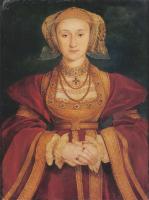
Was charged by the lord Chancellor, the duke of Norfolk, and the lord Admiral, whom the King sent to examine him, to declare upon the damnation of his soul what he knew of the marriage between Henry and the Queen [Anne of Cleves Queen Consort England [aged 24]]. Gave particulars as well as he could remember, which they commanded him to write to the King, as follows:— When the King heard of the lady Anne's arrival at Dover and that her journeys were appointed to Greenwich, and that she should be at Rochester at New Year's Eve at night, he told Cromwell he would visit her there on New Year's Day, adding "to nourish love," which he accordingly did. Next day, Friday, the King returned to Greenwich, and on Cromwell asking how he liked the lady Anne, answered, as Cromwell thought, heavily, "Nothing so well as she was spoken of"; adding that if he had known before as much as he then knew, she should never have come within the realm. He asked in lamentation, "What remedy?" Cromwell said he knew of none, and was very sorry. Next day, after the lady's entrance to Greenwich, after the King had brought her to her chamber, he said to Cromwell, "My lord, is it not as I told you? Say what they will, she is nothing so fair as she hath been reported. Howbeit, she is well and seemly." Cromwell agreed, though he said she had a queenly manner. The King bade him call together the Council, viz., the abp. of Canterbury, Norfolk, Suffolk, my lord Admiral, my lord of Durham, and himself, to know what commission the agents of Cleves had brought for the performance of the covenants sent from hence to Dr. Wotton to be concluded in Cleves, and also touching the declaration how matters stood for the covenants of marriage between the duke of Lorraine's son and the said lady Anne. On this Osleger and Hogeston were called, and, being much abashed, desired that they might make answer next morning, Sunday, when they met early with the Council and answered, as men much perplexed, that as to the commission they had none such, and as to the contract and covenants of marriage they could only say a revocation was made, and they were but spousals. Finally, they offered to be prisoners until they should have procured from Cleves the first articles ratified under the Duke their master's sign and seal, and the copy of the revocation. Cromwell was sent with this answer to the King, who was much displeased, and said, "I am not well handled." Saw the King was fully determined not to have gone through with the marriage at that time; for he said, if it were not that she had come so far, and the great preparations that had been made for her, and for fear of making a ruffle in the world, i.e., of driving her brother into the hands of the Emperor and the French king, who were now together, that he would "never have ne marry her." After dinner the King sent for all his Councillors, and repeated his complaint, and suggested that she should make a protestation before them and notaries that she was free from all contracts; which she did. On this, he said to Cromwell, "Is there none other remedy but that I must needs, against my will, put my neck in the yoke?" Cromwell left him pensive, yet he determined next morning to go through. That morning (Monday), while the King was preparing for the ceremonies, there was a question who should lead her to the church. It was arranged that the earl of Essex, deceased, and an earl2 that came with her should do so. As Essex had not come, Cromwell was ordered to lead her, but, shortly after he got to her chamber, Essex arrived, and Cromwell went back to inform the King, who then said to him, "My lord, if it were not to satisfy the world and my realm, I would not do that I must do this day for none earthly thing." And therewith, being informed that she was coming, the King repaired into the gallery towards the closet, where he waited for her. He afterwards went through the ceremonies, "travelled the day, as appertained, and the night, after the custom." On Tuesday morning Cromwell repaired to his privy chamber, and finding him not so pleasant as he hoped, asked how he liked the queen? He "soberly" answered "that I was not all men. Surely, my Lord, as ye know, I liked her before not well, but now. I like her much worse"; for he had felt her belly and breasts, and thought she was no maid; that he was struck to the heart, and left her as good a maid as he found her. Also, after Candlemas and before Shrovetide, he once or twice said that he had never known her carnally, although he had lain nightly or every second night by her. The King also showed him last Lent when he had some conversation with her of the lady Mary that she began to wax stubborn and wilful, and after Easter and in Whitsun week he lamented his fate that he should never have any more children if he so continued, declaring that before God he thought she was not his lawful wife. Since Whitsuntide he has said he had done as much to move the consent of his heart and mind as ever man did, but the obstacle would not out of his mind.
My lord Admiral can show what Cromwell said to him after the King came from Rochester, even after his marriage. Doubts not that since Whitsuntide many of the Council have perceived that the King was not satisfied with his marriage. Prays for the King and Prince.
Written at the Tower, this Wednesday, the last of June, with the heavy heart and trembling hand of your Highness' most heavy and most miserable prisoner and poor slave,
Most gracious prince, I cry for mercy, mercy, mercy!"
Pp. 8.
Note 1. Burnet professes to print this letter from "an original" in the Cottonian MS. Otho C. x., one of the volumes which were seriously injured by the fire; and it has been supposed that the original letter, which he printed, was entirely consumed. This may be so, for it would seem that Cromwell wrote the same things over more than once; but the MS. in the Hatfield library is certainly "an original" in Cromwell's own hand, and the variations from the printed text are such as might have been due merely to careless editing. There are, however, two notarial copies of this letter in contemporary handwritings (MSS. Harl. 1061 and Addit. 10,451, B.M.), in the former of which a few of Burnet's variations are justified, while the other generally agrees with the Hatfield MS. The following is a list of all the variations, &c.:—Page 424, 1. 14 (of text), "they" after "heard" seems to be written "theym" (them). But if this be not an error of Cromwell's own, the word "which" at the beginning of the sentence must stand for "who," the construction being:—"Which, when they had heard them, in your Majesty's name," &c. The Harl. and Add., however, both read "they."Page 425, l. 8, for "unto" read "in to."" l. 14, for "and said" Hatf. reads "saying"; but A. agrees with Burnet." l. 15, after "that" supply "yet."" l. 21, for "commissions" read "commission."" l. 27, for "Olesleger" read "Osleger."" ib., for "proposed" read "purposed," and so in ll. 32 and 37." l. 30, dele "the" before "Sunday"" l. 31, "together"; om. in Hatf. and Add., but Harl. has it.Page 426, l. 1, for "sponsals" read "spousals" (in MS. "spowsaylles")." l. 8, before "council" Hatf. and A. insert "said."" ib., instead of "their answer" Hatf. and A. read "what answer they had made."" l. 9, for "you" Hatf. and A. read "your Highness."" l. 10, for "unto" read "to."" l. 15, for "unto" read "into."" l. 17, after "making" insert "of."" l. 18, "that is to mean." The text is quite right, except as to punctuation.Page 426, l. 20, for "married" read "marry."" l. 22, after "yet" insert "content."" ib., for "proceedings" Hatf. and Harl. read "proceeding."" l. 24, for "in" read "and in," striking out the comma which follows, and inserting one on the line before, after "counsellors."" l. 26, substitute comma for full stop after "son," and a small i for the capital in "It."" l. 36, after "so" insert "I."" l. 40, for "ceremonies" read "ceremony."" ib., after "lead" read "her."Page 427, l. 4, for "to" read "unto."" ib., after "not" insert "yet."" l. 6, for "into" Hatf. and Harl. read "unto."" l. 7, for "her" read "the."" l. 18, dele "for."" l. 21, for "afterwards" Hatf. reads "afterward"; but Harl. and A., "afterwards."" 1 27, after "surely," insert "my Lord."" l. 31, for "strook" read "strake."" l. 35, for "made me" read "I was."" l. 36, for "Showstie" read "Shrovetide." The spelling in the Hatf. MS. is "Shorofftyde."" l. 40, the reading should be:—"to lie with her nightly or every second night."Page 428, l. 3, after "shewed" dele "to."" l. 7, for "never had" read "had never."" l. 15, for "utmost" read "uttermost."" l. 18, after "Whitsuntide" insert "declared the like to me."" l. 19, for "to do" read "done."" l. 27, for "uttermost" Hatf. reads "utterest"; but Harl. and A. "utter most."" l. 29, after "no man" insert "living." The words "as I think" are in the Hatf. MS. an interlineation badly inserted just after "I am sure"; and this order of the words is followed by A., but Harl. agrees with Burnet." l. 30, for "excepted" Hatf. reads "except."" l. 33, after "and" insert "also."Page 429, ll. 1, 2, Hatf. and A. read "who ever in all your causes hath"; Harl. agrees with Burnet." l. 3, for "will now" Hatf. and A. read "now will"; Harl. agrees with Burnet." l. 5, for "with" read "wealth," with comma after." l. 15, after "I" Hatf. and A. insert "am"; but Harl., like B., omits the word.
Note 2. The Earl of Overstein.
9th July 1540. 851. (From Cranmer's Register, f.141) 860. Anne of Cleves. Record of the process of nullity of the marriage of Henry VIII. and Anne of Cleves. On Wednesday, 7 July 1540, 32 Hen. VIII, in the chapter house of St. Peter's, Westminster, present, Thomas abp. of Canterbury, Edw. abp. of York, Edm. bp. of London, Cuthb. bp. of Durham, Steph. bp. of Winchester, John bp. of Lincoln, Robt. bp. of Carlisle, Wm. bp. of St. David's, Robt. bp. of Llandaff, John bp. of Hereford, John bp. of Worcester, Robt. bp. of St. Asaph, Nich. bp. of Rochester, and John bp. of Bangor,; Ric. Gwent, archd. of London, official of the Court of Canterbury and prolocutor of the lower house of the Convocation of Canterbury; Thos. Thirleby, LL.D., archd. of Ely and bp. designate of Westminster; deans John Incent of St. Paul's, Peter Vannes of Sarum, John Taylor of Lincoln, Hen. Williams of Lichfield, Simon Haynes of Exeter, and Ric. Layton of York; archdeacons Edm. Cranmer of Canterbury, Ric. Rawson of Essex, Ric. Coren of Colchester and Oxford, Thos. Baugh of Surrey, Maur. Griffith of Rochester, John Worthiall of Chichester, Polydor Virgilius of Wells, Ric. Street of Derby, David Poole of Salop, Thos. Wynter of Cornwall, Geo. Heneage of Taunton, Griffin Leyson of Caermarthen, Thos. Runcorne of Bangor, Thos. Westby of York, Thos. Magnus of East Riding, John Langrihe (sic) of Cleveland, Robt. Davel of Northumberland, Wm. Holgill of Carlisle, and a multitude of the clergy of both provinces. Ric. Gwent presented the King's letters of commission under the Great Seal addressed to the archbishops and clergy, which were then read by Ant. Husey, notary public, in presence of Thos. Argall, notary public. The clergy decreed to proceed upon the commission. The bp. of Winchester then explained the causes of the nullity of the marriage of the King and lady Anne of Cleves in a lucid speech. For convenience it was decreed that the two Archbishops, the bps. of London, Durham, Winchester, and Worcester, and Ric. Gwent, Thos. Thirleby, Thos. Incent, Edw. Leighton, and Thos. Robertson, Ric. Layton, and Wm. Ryvett, doctors of Theology and Law, and Thos. Magnus, archd. of the East Riding, should receive and weigh all the evidences in the case and explain them to the Convocation. This done, the clergy of the lower house departed, all except the Prolocutor, the elect of Westminster, the deans of York and St. Paul's, Leighton, Robertson, Magnus and Ryvet. Subsequently the bishops and these said eight men agreed that the bishops of Durham and Winchester, the Prolocutor, the elect of Westminster, and the dean of York should take the depositions of witnesses. Convocation was then prorogued (continuata) by the archbishop of Canterbury until next day between the hours of 6 a.m. and 8 a.m. This done, the bps. of Durham and Winchester, the Prolocutor, elect of Westminster, and dean of York, in presence of the "said" prothonotary and of John Rheseus and Ant. Husey, notaries public, between 1 and 6 p.m., went to the King's palace near Westminster, and there took the depositions, as witnesses in the case, of Thos. lord Audeley, Chancellor, Thos. duke of Norfolk, Charles duke of Suffolk, Wm. earl of Southampton, Privy Seal, John lord Russell, Great Admiral, Sir Ant. Browne, master of the Horse, knights of the Garter; and of George lord Cobham, Sir Thos. Henneage, Sir Thos. Wryothesley, King's secretary, Ant. Denny, and Wm. Butt, M.D. All of these made their depositions upon oath, as contained in schedules signed with their hands, which the bishops, &c., received and retained. Afterwards they took the deposition of John Chamber, M.D., at his house in Canon Rowe, as contained in a schedule left with the elect of Westminster. Next day, Thursday, Philip Hoby, gentleman, made his deposition in the vestibule of the chapter house of Westminster, before Thos. elect of Westminster and Ant. Husey. The same day the Convocation reassembled, and, in the presence of the prothonotary and the other notaries, it was agreed to add John Tregonwell, John Olyver, Wm. Petre, and John Hughes, doctors of laws, to the aforenamed eight men, and the bp. of Winchester presented the schedules of depositions, which they discussed among themselves. The abp. of Canterbury prorogued the rest of the Convocation until 3 p.m. the same day.
At which hour it was agreed in full Convocation that the King and Anne of Cleves were nowise bound by the marriage solemnised between them, and it was decreed to send letters testimonial of this to the King, the drawing up which was committed to the archbishops and bishops and the twelve men above named, and the Convocation was prorogued until 8 a.m. on Friday. At that hour the Convocation met, and, after discussion, was prorogued until 3 p.m. the same day, when, after much discussion, the letters testimonial, containing the judgment of the nullity of the marriage, made on parchment in the form of a public instrument, was subscribed with their names and signed and sealed by the prothonotary, &c., and sealed by the remembrancers of the archbishops, witnessed by Tregonwell, Olyver, Petre, and Hughes.
ii. Tenor of the letters testimonial.
The clergy of both provinces have received the King's commission (recited), dated Westm., 6 July 32 Hen. VIII. After mature deliberation, they have found the marriage null by reason of a precontract between lady Anne and the marquis of Lorraine, that it was unwillingly entered into and never consummated, and that the King is at liberty to marry another woman, and likewise the lady Anne free to marry. Westm., 9 July 1540. Latin.
9th July 1541. R.O. S. Pi. 629, Burnet, iv. 431. 861. Anne of Cleves.
Judgment of the united Convocations of both Provinces declaring the nullity of the King's marriage with Anne of : Cleves (as in No. 860, 8 ii.), Westm., 9 July 1540. Signed by the abps. of Canterbury and York, the bps. of London, Durham, Winchester, Lincoln, Exeter, Ely, Norwich, Coventry and Lichfield, St. David's, St. Asaph, Llandaff, Salisbury, Carlisle, Worcester, Hereford, Bangor, Rochester, and Thos. elect of Westminster. Also signed by Ric. Gwent, archd. of London "et cleri Cant. prolocutor"; Jo. Incent, LL.D., dean of London; Petrus Vannes, dean of Sarum and archd. of Worcester; John Tayler, dean of Lincoln; Hen. Williams, dean of Lichfield, Simon Heynes, dean of Exeter; "Johannes Thetforden, decanus Norwic. per procuratorem"; John Carvanell, dean of Warwick; John London, dean of Wallingford; Wm. Frankeleyn, dean of Windsor, John Olyver, dean of the Royal College, Oxford; Gamaliel Clyfton, dean of Hereford; Wm. Fleshmonger, dean of Chichester; John Chambre, dean of St. Stephen's, Westminster, and archd. of Bedford; Edmund Cranmer, archd. of Canterbury; Ric. Coren, archd. of Colchester and Oxon; Wm. Knyght, archd. of Chester and Huntingdon; Ric. Rawson, archd. of Essex; Thos. Baghe, archd. of Surrey; Edw. Leyghton, archd. of Sarum; George Hennage, archd. of Taunton; Maurice Greffyth, arch. of Rochester; John Worthiall, archd. of Chichester; Polydorus Vergilius, archd. of Wells; Ric. Strete, archd. of Derby; David Poole, archd. of Salop; Thos. Wynterus, archd. of Cornwall; Griffinus Leyson, archd. of Caermarthen; Thos. Runcornus, archd. of Bangor; Geo. Wyndame, archd. of Norwich; Nic. Wotton, archd. of Gloucester; Thos. Breyrwode, archd. of Berston; "Geordius Carewe, arch. Totton"; Robt. Audley, archd. of Berks; Robt. Newton, archd. of Norfolk; Ric. Edon, archd. of Middlesex; John Blyth, archd. of Coventry; John Bothe, archd. of Herford; John Luntley, archd. of Cardigan; Ric. Sparchfurth, archd. of Salop; "Edwardus Darby, archius. Stowie "; Walt. Cretyng, archd. of Bath; John Reston, "procurator cap'li eccl'ie S'ci Pauli, London"; Matth. Wotton, Roger Edgeworth, D.D., John Worthiall, Geo. Hennage, Ralph Sneyde, Griff. Leyson, John Broxolme, Chr. Neyvynson, Simon Matthew, Wm. Ryvett, Maurice Greffyth, Robt. Jonson, John Incent, Griffith Leyson, Thos. Benett, Ric. Arche, Roland Taylor, Hen. Joliff, Wm. Busby, John Sanayge, Ant. Draycot, Thos. Robertson, Thos. Thyrleby, "procur. Elien.," Wm. Mey, Ric. Strete, David Poole, Mauritius Birchinsha, Arth. Bulkeley, Hen. Morgan, Ant. Belassis, John Crayforde, Ant. Barker, John Cockys, Ric. Wade, Edw. Sopham, John Pilkyngton, Jas. Browne, Ric. Roberds, Paul Bushe, Hugh Glasyer, Wm. Burges, John Hood, Ric. Thornden, Wm. Marshall, Wm. Grene, Ric. Marsche, Hugh Raulins, Ric. Cox, Wm. Tresham, John Barbar, John Palsgrave, John Whytwell, Steph. Sagar, Th. Wakefelde, Ph. Brode, John Rudd, Gilb. Sanky, Thos. Sowthe, Thos. Byrkhed, Hen. Markham, Th. Barfot, Geo. Hovy, Wm. Haynys, Thos. Whyte, Edw. Cromo, Robt. Talbot, Gerard Carleton, Hugh Aprice, LL.D., John Brikynden, Giles Eyre, Humph. Parkens, Thos. Baxster, Wm. Benson D., Dionisius Dolyon, Wm. Gwyn, Thos. Talley, Wm. Petre, John Rokeby, Ric. Liell, John Tregonwell, John Hughes, W. Cooke. Also by Ric. Layton, dean of York; Thos. Westbe, archd. of York; T. Magnus, archd. of East Riding; Wm. Knyght, archd. of Richmond; Ric. Langgrische, archd. of Cleveland; Cuthb. Marshal, archd. of Nottingham; Wm. Franklyne, archd. of Durham; Robt. Dawell, archd. of Northumberland; Wm. Holgill, archd. of Carlisle; Geoff. Downes, chancellor of York; Thos. Wynterus, prepositus Beverlacensis; John Brandishe, Wm. Howghton, John Redmayn. Notarial attestations by John Rheseus, notary public, LL.B., Ric. Watkyns, prothonotary "juris bachalaureus"; Ant. Huse, notary, of London diocese, and Thos. Argall, notary, of Winchester diocese. Parchment, pp. 13. Seal much broken. ii. Modern copy, attached to the preceding, of Anne of Cleves' letter to her brother [See No. 898].