All About History Books on Amazon
The True Chronicles of Jean le Bel Volume 2 Chapters 61-109 1342-1361
The Chronicle of Jean le Bel, Volume 2 continues one of the most important fourteenth-century accounts of the early Hundred Years’ War. Written by the Liège chronicler Jean le Bel, this vivid narrative follows the fortunes of Edward III, Jean II of France, the Black Prince, the great nobles of France and England, and the soldiers, captains and companies who shaped the conflict. This volume covers some of the most dramatic events of the period, including the battles of Crécy and Poitiers, the siege and capture of Calais, the captivity of King John, the rise of the Jacquerie, the turmoil in Paris under Étienne Marcel and Charles of Navarre, the devastation caused by the free companies, Edward III’s great campaign of 1359–1360, and the negotiations leading to the Treaty of Brétigny. Jean le Bel’s chronicle is especially valuable for its lively detail, its interest in chivalry, warfare, politics and reputation, and its influence on later chroniclers, most famously Froissart. This English translation presents the text in clear, readable British English while preserving the force and character of the original narrative. The translation includes extensive notes to help the reader better understand Jean le Bel's text. Volume 2 also includes translated appendices drawn from royal and administrative records, many from the English Record Office, which illuminate Edward III’s campaigns in Brittany, the siege and occupation of Calais, naval preparations, military finance, appointments, safe conducts and related affairs.
Available at Amazon in eBook and Paperback format.

Winterbourne Stoke Down Barrow 5 G54 is in Winterbourne Stoke Down Barrows.
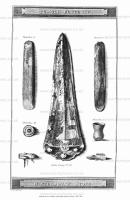
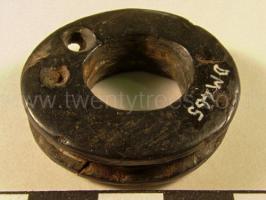
Colt Hoare 1812. No. 5 [Winterbourne Stoke Down Barrow 5 G54 [Map]]. This large circular barrow is situated a few yards west of the road leading from Salisbury to Devizes, is flat at the top, five feet in elevation, and 110 feet in base diameter. When on the top of this tumulus, you perceive several depressions on the surface, from which, and its large dimensions, we conceived it must have been a family sepulchre, and so it proved to be. We opened it by a large square section near the centre, and in digging down to within a foot of the floor, we found the skeleton of a young person, deposited aver the north-west edge of a very large and deep oblong cist; and upon the same level, on the south side, we discovered an interment of burned bones. On clearing the earth to the depth of five feet, we reached the floor of the barrow, in which a cist of the depth of four feet was cut in the native chalk, and at the depth of two Feet on the southern side of the cist, was deposited the skeleton of an infant, apparently but a few months old. From the positions in which these interments were placed, it is evident they had been deposited at different times, and were subsequent to the primary one, in search of which we next proceeded. On clearing away the earth from the large cist, we found the head of a skeleton lying on the north side, but to our surprise, no vertebræ or ribs; further on were the thigh bones, legs, &c. At the feet was a little rude drinking cup, nearly perfect, and two pieces of a dark coloured slacy kind of stone, lying parallel with each other, which are engraved in Tumuli Plate XIV. We also found a large black cone, and an article like a pully, both of jet, and a piece of flint rudely chipped, as if intended for a dagger or spear. This tumulus, if more minutely examined, might very probably produce other interments, but from its great width, the operation would be attended with a very heavy expense.
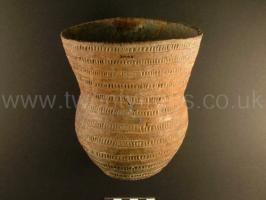
Wiltshire Museum. DZSWS:STHEAD.39 1 long necked beaker with 11 bands of parallel impressed marks between comb impressed lines covering its abdominally convex body and high brim with diagonal impressions along the rim found with a primary inhumation in bowl barrow Winterbourne Stoke G54 [Map], excavated by William Cunnington.
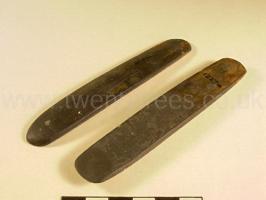
Wiltshire Museum. DZSWS:STHEAD.72. 2 double ended slate whetstones with round ends, flat one side and convex on the other, found with a primary inhumation in bowl barrow Winterbourne Stoke G54 [Map], excavated by William Cunnington.
Wiltshire Museum. DZSWS:STHEAD.76. 1 curved flint knife with finely worked edges, possibly found with a primary inhumation in bowl barrow Winterbourne Stoke G54 [Map], excavated by William Cunnington.
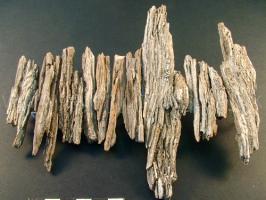
Wiltshire Museum. DZSWS:STHEAD.78. 11 pieces of fossilised wood found above a primary inhumation (in an elm trunk coffin) in bell barrow Winterbourne Stoke G5 [Map], excavated by William Cunnington.
Wiltshire Museum. DZSWS:STHEAD.178. 1 shale belt ring with a single groove around edge and a perforation through side (+ another attempted hole), found with a primary inhumation in bowl barrow Winterbourne Stoke G54 [Map], excavated by William Cunnington.
Wiltshire Museum. DZSWS:STHEAD.210. 1 conical v-perforated shale button, found with a primary inhumation in bowl barrow Winterbourne Stoke G54 [Map], excavated by William Cunnington.