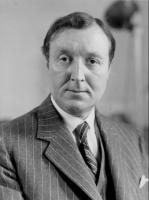

Fellow of the Royal Academy is in Royal Academy.
In 1785 Thomas Banks [aged 49] was elected Fellow of the Royal Academy.

In 1794 Thomas Stothard [aged 38] was elected Fellow of the Royal Academy.
In 1800 Martin Archer Shee [aged 30] was elected Fellow of the Royal Academy.
In 1811 Richard Westmacott [aged 35] was elected Fellow of the Royal Academy; his diploma work being a "Ganymede" in high relief.
In 1816 Alfred Edward Chalon [aged 35] was elected Fellow of the Royal Academy.
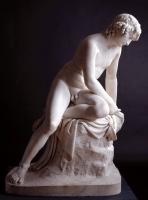
On 10th February 1836 John Gibson [aged 45] was elected Fellow of the Royal Academy. He submitted a statue of Narcissus as his Diploma Work. The subject is one from classical mythology but the figure was initially inspired by a scene Gibson observed in Rome. While out walking on the Pincian Hill, the artist caught sight of a boy looking at his reflection in water, reminding him of the story of Narcissus.
In 1849 Richard "The Younger" Westmacott [aged 50] was elected Fellow of the Royal Academy.
In 1877 William Quiller Orchardson [aged 44] was elected Fellow of the Royal Academy.
On 18th December 1879 Henry Hugh Armstead [aged 51] was elected Fellow of the Royal Academy.

Chronicle of a Bourgeois of Valenciennes
Récits d’un bourgeois de Valenciennes aka The Chronicle of a Bourgeois of Valenciennes is a vivid 14th-century vernacular chronicle written by an anonymous urban chronicler from Valenciennes in the County of Hainaut. It survives in a manuscript that describes local and regional history from about 1253 to 1366, blending chronology, narrative episodes, and eyewitness-style accounts of political, military, and social events in medieval France, Flanders, and the Low Countries. The work begins with a chronological framework of events affecting Valenciennes and its region under rulers such as King Philip VI of France and the shifting allegiances of local nobility. It includes accounts of conflicts, sieges, diplomatic manoeuvres, and the impact of broader struggles like the Hundred Years’ War on urban life in Hainaut. Written from the perspective of a burgher (bourgeois) rather than a monastery or royal court, the chronicle offers a rare lay viewpoint on high politics and warfare, reflecting how merchants, townspeople, and civic institutions experienced the turbulence of the 13th and 14th centuries. Its narrative style combines straightforward reporting of events with moral and civic observations, making it a valuable source for readers interested in medieval urban society, regional politics, and the lived experience of war and governance in pre-modern Europe.
Available at Amazon in eBook and Paperback format.

In 1913 Alfred East [aged 68] was elected Fellow of the Royal Academy.
In 1919 Adrian Scott Stokes [aged 64] was elected Fellow of the Royal Academy.
In 1934 Frank Cowper was elected Fellow of the Royal Academy.
In 1937 Gerald Leslie Brockhurst [aged 46] was elected Fellow of the Royal Academy.