

Robert Needham 2nd Viscount Kilmorey succeeded 2nd Viscount Kilmorey.
Around 1588 Robert Needham 2nd Viscount Kilmorey was born to Robert Needham of Shavington Hall in Shropshire.
On or after 4th June 1606, the date of the settlement, Robert Needham 2nd Viscount Kilmorey [aged 18] and Frances Anderson were married.
In 1608 [his son] Robert Needham 3rd Viscount Kilmorley was born to Robert Needham 2nd Viscount Kilmorey [aged 20] and [his wife] Frances Anderson.
On 16th September 1609 Gilbert Gerard 2nd Baron Gerard and [his future wife] Eleanor Dutton [aged 12] were married at St Mary and All Saints' Church, Great Budworth.
After 11th May 1623, the date her first husband Gilbert Gerard 2nd Baron Gerard died, Robert Needham 2nd Viscount Kilmorey [aged 35] and Eleanor Dutton [aged 26] were married.

After 18th May 1625 [his step-son] Dutton Gerard 3rd Baron Gerard [aged 12] and Mary Fane Baroness Gerard [aged 19] were married. She by marriage Baroness Gerard of Gerard's Bromley. She the daughter of Francis Fane 1st Earl of Westmoreland [aged 45] and Mary Mildmay Countess of Westmoreland [aged 43].
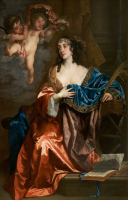
Around 1627 [his daughter] Eleanor Needham Baroness Byron was born to Robert Needham 2nd Viscount Kilmorey [aged 39] and [his wife] Eleanor Dutton [aged 30]. She married 1644 John Byron 1st Baron Byron.
On 21st August 1636 [his step-son] Dutton Gerard 3rd Baron Gerard [aged 23] and Elisabeth O'Brien Baroness Gerard were married. She by marriage Baroness Gerard of Gerard's Bromley. She the daughter of Henry O'Brien 5th Earl Thomond [aged 48] and Mary Brereton Countess Thomond [aged 56].
On 24th April 1640 [his step-son] Dutton Gerard 3rd Baron Gerard [aged 27] died. His son Charles [aged 6] succeeded 4th Baron Gerard of Gerard's Bromley.

Adam Murimuth's Continuation and Robert of Avesbury’s 'The Wonderful Deeds of King Edward III'
This volume brings together two of the most important contemporary chronicles for the reign of Edward III and the opening phases of the Hundred Years’ War. Written in Latin by English clerical observers, these texts provide a vivid and authoritative window into the political, diplomatic, and military history of fourteenth-century England and its continental ambitions. Adam Murimuth Continuatio's Chronicarum continues an earlier chronicle into the mid-fourteenth century, offering concise but valuable notices on royal policy, foreign relations, and ecclesiastical affairs. Its annalistic structure makes it especially useful for establishing chronology and tracing the development of events year by year. Complementing it, Robert of Avesbury’s De gestis mirabilibus regis Edwardi tertii is a rich documentary chronicle preserving letters, treaties, and official records alongside narrative passages. It is an indispensable source for understanding Edward III’s claim to the French crown, the conduct of war, and the mechanisms of medieval diplomacy. Together, these works offer scholars, students, and enthusiasts a reliable and unembellished account of a transformative period in English and European history. Essential for anyone interested in medieval chronicles, the Hundred Years’ War, or the reign of Edward III.
Available at Amazon in eBook and Paperback format.

In 1644 [his son-in-law] John Byron 1st Baron Byron [aged 45] and [his daughter] Eleanor Needham Baroness Byron [aged 17] were married. She by marriage Baroness Byron of Rochdale in Lancashire. The difference in their ages was 28 years.
In September 1653 Robert Needham 2nd Viscount Kilmorey [aged 65] died.
On 12th March 1666 [his former wife] Eleanor Dutton [aged 69] died.
Samuel Pepys' Diary. 26th April 1667. Thence to Westminster Hall [Map] to hear our cause, but [it] did not come before them to-day, so went down and walked below in the Hall, and there met with Ned Pickering [aged 49], who tells me the ill newes of his nephew Gilbert [aged 15], who is turned a very rogue, and then I took a turn with Mr. Evelyn [aged 46], with whom I walked two hours, till almost one of the clock: talking of the badness of the Government, where nothing but wickedness, and wicked men and women command the King [aged 36]: that it is not in his nature to gainsay any thing that relates to his pleasures; that much of it arises from the sickliness of our Ministers of State, who cannot be about him as the idle companions are, and therefore he gives way to the young rogues; and then, from the negligence of the Clergy, that a Bishop shall never be seen about him, as the King of France [aged 28] hath always: that the King would fain have some of the same gang to be Lord Treasurer [aged 60], which would be yet worse, for now some delays are put to the getting gifts of the King, as that whore my Baroness Byron1, who had been, as he called it, the King's seventeenth whore abroad, did not leave him till she had got him to give her an order for £4000 worth of plate to be made for her; but by delays, thanks be to God! she died before she had it. He tells me mighty stories of the King of France, how great a Prince he is. He hath made a code to shorten the law; he hath put out all the ancient commanders of castles that were become hereditary; he hath made all the Fryers subject to the bishops, which before were only subject to Rome, and so were hardly the King's subjects, and that none shall become 'religieux' but at such an age, which he thinks will in a few, years ruin the Pope, and bring France into a patriarchate. He confirmed to me the business of the want of paper at the Council-table the other day, which I have observed; Wooly being to have found it, and did, being called, tell the King to his face the reason of it; and Mr. Evelyn tells me several of the menial servants of the Court lacking bread, that have not received a farthing wages since the King's coming in. He tells me the King of France hath his mistresses, but laughs at the foolery of our King, that makes his bastards Princes2, and loses his revenue upon them, and makes his mistresses his masters and the King of France did never grant Lavalliere [aged 22]3 any thing to bestow on others, and gives a little subsistence, but no more, to his bastards.
Note 1. Eleanor, daughter of Robert Needham, Viscount Kilmurrey, and widow of Peter Warburton, became in 1644 the second wife of John Byron, first Lord Byron. Died 1663. B.
Note 2. Louis made his own bastards dukes and Princes, and legitimatized them as much as he could, connecting them also by marriage with the real blood-royal. B.
Note 3. Louise Francoise de la Baume le Blanc de la Valliere had four children by Louis XIV., of whom only two survived - Marie Anne Bourbon, called Mademoiselle de Blois, born in 1666, afterwards married to the Prince de Conti [aged 6], and the Comte de Vermandois, born in 1667. In that year (the very year in which Evelyn was giving this account to Pepys), the Duchy of Vaujour and two baronies were created in favour of La Valliere, and her daughter, who, in the deed of creation, was legitimatized, and styled Princess. B.


