

Parliament Ireland is in Ireland.
In 1590 Thomas Molyneux [aged 59] was appointed Chancellor of the Exchequer of Ireland.
In 1593 Robert Napier [aged 51] was appointed Chief Baron of the Irish Exchequer.
On 4th February 1206 Theobald Walter [aged 41] died at County Wicklow. His son Theobald [aged 6] succeeded 2nd Chief Butler Ireland.
On 19th July 1230 Theobald Butler [aged 30] died at Poitou. He was buried at Arklow Abbey, Arklow, County Wicklow. His son Theobald [aged 6] succeeded 3rd Chief Butler Ireland.
On 26th December 1248 Theobald Butler [aged 24] died. His son Theobald [aged 6] succeeded 4th Chief Butler Ireland.
On 26th September 1285 Theobald Butler [aged 43] died. His son Theobald [aged 16] succeeded 5th Chief Butler Ireland.
Theobald Walter was was appointed the first Chief Butler Ireland.
In 1533 Thomas Luttrell [aged 43] was appointed Chief Justice of the Irish Common Pleas which positin he held for twenty years.
In July 1601 Charles Wilmot 1st Viscount Wilmot [aged 29] was appointed Governor of County Cork.
In September 1602 Charles Wilmot 1st Viscount Wilmot [aged 30] was appointed Governor of County Kerry.

The True Chronicles of Jean le Bel Volume 1 Chapters 1-60 1307-1342
The True Chronicles of Jean le Bel offer one of the most vivid and immediate accounts of 14th-century Europe, written by a knight who lived through the events he describes, and experienced some of them first hand. Covering the early decades of the Hundred Years’ War, this remarkable chronicle follows the campaigns of Edward III of England, the politics of France and the Low Countries, and the shifting alliances that shaped medieval warfare. Unlike later historians, Jean le Bel writes with a strong sense of eyewitness authenticity, drawing on personal experience and the testimony of fellow soldiers. His narrative captures not only battles and sieges, but also the realities of military life, diplomacy, and the ideals of chivalry that governed noble society. A key source for Jean Froissart, Le Bel’s chronicle stands on its own as a compelling and insightful work, at once historical record and literary achievement. This translation builds on the 1905 edition published in French by Jules Viard, adding extensive translations from other sources Rymer's Fœdera, the Chronicles of Adam Murimuth, William Nangis, Walter of Guisborough, a Bourgeois of Valenciennes, Geoffrey le Baker of Swinbroke and Richard Lescot to enrich the original text and Viard's notes.
Available at Amazon in eBook and Paperback format.
In 1644 Isaac Penington [aged 60] was appointed Governor of the Levant Company which position he held until 1654.
Before 3rd February 1644 John Marlay [aged 54] was appointed Governor of Newcastle upon Tyne, Northumberland [Map]. He defended the city during seven months of siege by the Scots army.
In 1678 John Reresby 2nd Baronet [aged 43] was appointed Governor of Bridlington.
In 1814 Charles Henry Somerset [aged 46] was appointed Governor.
Before 1597 John Chichester was appointed Governor of Antrim.
After 19th February 1625 Edward Chichester 1st Viscount Chichester [aged 57] was appointed Governor of Carrickfergus.
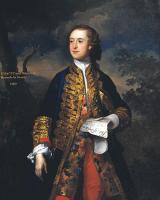
In 1744 Capel Molyneux 3rd Baronet [aged 27] was appointed High Sheriff of Armagh.
In 1733 John Cole 1st Baron Mountflorence [aged 23] was appointed High Sheriff of County Fermanagh.
In 1756 Charles Bingham 1st Earl Lucan [aged 20] was appointed High Sheriff of Mayo.
In 1727 John Stratford 1st Earl Aldborough [aged 28] was appointed High Sheriff of Wexford.
In 1739 John Stratford 1st Earl Aldborough [aged 40] was appointed High Sheriff of Wexford.
In 1736 John Stratford 1st Earl Aldborough [aged 37] was appointed High Sheriff of Wicklow.

On 2nd October 1831 John Cole 2nd Earl Enniskillen [aged 63] was appointed Lord Lieutenant of County Fermanagh.
In 1726 Francis Bernard [aged 63] was appointed Judge of the Irish Court of Common Pleas.

The True Chronicles of Jean le Bel Volume 2 Chapters 61-109 1342-1361
The Chronicle of Jean le Bel, Volume 2 continues one of the most important fourteenth-century accounts of the early Hundred Years’ War. Written by the Liège chronicler Jean le Bel, this vivid narrative follows the fortunes of Edward III, Jean II of France, the Black Prince, the great nobles of France and England, and the soldiers, captains and companies who shaped the conflict. This volume covers some of the most dramatic events of the period, including the battles of Crécy and Poitiers, the siege and capture of Calais, the captivity of King John, the rise of the Jacquerie, the turmoil in Paris under Étienne Marcel and Charles of Navarre, the devastation caused by the free companies, Edward III’s great campaign of 1359–1360, and the negotiations leading to the Treaty of Brétigny. Jean le Bel’s chronicle is especially valuable for its lively detail, its interest in chivalry, warfare, politics and reputation, and its influence on later chroniclers, most famously Froissart. This English translation presents the text in clear, readable British English while preserving the force and character of the original narrative. The translation includes extensive notes to help the reader better understand Jean le Bel's text. Volume 2 also includes translated appendices drawn from royal and administrative records, many from the English Record Office, which illuminate Edward III’s campaigns in Brittany, the siege and occupation of Calais, naval preparations, military finance, appointments, safe conducts and related affairs.
Available at Amazon in eBook and Paperback format.
In 1245 John Fitzgeoffrey [aged 40] was appointed Justicar of Ireland.
In or before 1558 Richard St Lawrence 7th Baron Howth [aged 47] and Catherine Fitzgerald Viscountess Gormanston were married. She by marriage Knight of the Order of St Patrick. She the daughter of Gerald Fitzgerald 9th Earl of Kildare and Elizabeth Grey Countess Kildare. They were sixth cousins. She a great x 5 granddaughter of King Edward III of England.
On 27th April 1810 John Cole 2nd Earl Enniskillen [aged 42] was appointed Knight of the Order of St Patrick.
In 1370 William Skipwith [aged 56] was appointed Lord Chief Justice of Ireland.
In 1372 Robert Assheton was appointed Lord Chief Justice of Ireland.
On 22nd August 1654 Richard Pepys [aged 65] was appointed Lord Chief Justice of Ireland which post he held until 3rd November 1654.
In 1680 William Davys [aged 47] was appointed Lord Chief Justice of Ireland.
After 19th February 1625 Edward Chichester 1st Viscount Chichester [aged 57] was appointed Lord High Admiral Lough Neagh.
In 1st June 1569 Edward Fitton [aged 42] was appointed the first Lord President of Connaught and Thomond arriving in Ireland in Jul 1569.
In 1603 Henry Brouncker Lord President Munster [aged 53] was appointed Lord President of Munster.
In June 1492 James Ormond was appointed Lord Treasurer of Ireland.
Henrici Quinti, Angliæ Regis, Gesta, is a first-hand account of the Agincourt Campaign, and subsequent events to his death in 1422. The author of the first part was a Chaplain in King Henry's retinue who was present from King Henry's departure at Southampton in 1415, at the siege of Harfleur, the battle of Agincourt, and the celebrations on King Henry's return to London. The second part, by another writer, relates the events that took place including the negotiations at Troye, Henry's marriage and his death in 1422.
Available at Amazon in eBook and Paperback format.
In 1547 James Fitzgerald 13th Earl Desmond was appointed Lord Treasurer of Ireland.
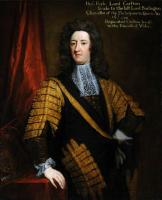
In 1704 Henry Boyle 1st Baron Carleton [aged 34] was appointed Lord Lieutenant of the West Riding of Yorkshire and Lord Treasurer of Ireland.
In 1592 William Cecil 1st Baron Burghley [aged 71] was appointed Master Dublin University.


After 1534 Parliament enacted the Treason Act made it treason, punishable by death, to not swear an oath recognising the King Henry VIII [aged 42] as the "... Only Head of the Church of England...".


After 1690 John Temple [aged 57] was appointed Attorney General for Ireland.
In 1771 Edmund Pery 1st Viscount Pery [aged 51] was appointed Speaker of the Irish House of Commons.
In 1776 Capel Molyneux 3rd Baronet [aged 59] was appointed to the Privy Council Ireland.
In 1579 Edward Fitton [aged 31] was appointed Receiver General for Ireland.
In 1724 Francis Bernard [aged 61] was appointed Serjeant-at-law.
In July 1660 John Temple [aged 28] was appointed Solicitor General for Ireland.
In 1711 Francis Bernard [aged 48] was appointed Solicitor General for Ireland which position he held until 1714.