All About History Books on Amazon

Chronicles of the Reigns of Edward I and II Volume 2

The Chronicles of the Reigns of Edward I and Edward II, Volume 2, comprising A Sorrowful Commendation on King Edward, the Life of Edward II by a Monk of Bridlington, Life of Edward II by a Monk of Malmesbury and Life of Edward by Thomas de la More, presents a rich collection of medieval English chronicles illuminating the political, military, ecclesiastical and social upheavals of the late thirteenth and early fourteenth centuries. The volume offers contemporary and near-contemporary accounts of the reigns of Edward I and Edward II, a period marked by war with Scotland, conflict between Crown and nobility, disputes over royal government, ecclesiastical tensions, rebellion, deposition and civil violence. Particular attention is given to the struggle surrounding Piers Gaveston, Thomas of Lancaster and the Despensers, as well as the turbulent final years of Edward II and the political circumstances that shaped the early reign of Edward III. These chronicles are especially valuable for their vivid narrative detail. They preserve speeches, political arguments, descriptions of battles and executions, accounts of parliaments and royal councils, reports of diplomatic missions, ecclesiastical controversies, prodigies and natural events, and contemporary judgements on the conduct of kings, magnates and churchmen. Written from differing institutional and regional perspectives, the texts reveal not only what happened but how medieval observers interpreted events, often through ideas of divine judgement, legitimate kingship, loyalty, treason and moral retribution. An important primary-source collection for readers interested in Edward I, Edward II, medieval politics, the Scottish wars, the baronial opposition, the fall of Edward II, church history and fourteenth-century England, Volume 2 provides an indispensable window into one of the most turbulent periods of the English Middle Ages.

Available at Amazon in eBook and Paperback format.

Kinnersley, Herefordshire, Welsh March, England, British Isles

Kinnersley, Herefordshire is in Herefordshire.

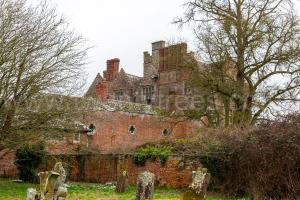
Kinnersley Castle, Herefordshire, Welsh March, England, British Isles [Map]

Kinnersley Castle, Herefordshire [Map] was probably first constructed between 1100 and 1135 during the reign of King Henry I. It was subsequently rebuilt as an Elizabethan house. That house has been subject to many restorations.

In or before 1617 Francis Smallman [aged 51] purchased Kinnersley Castle, Herefordshire [Map] from the son of Roger Vaughan.

On 7th September 1633 Francis Smallman [aged 68] died. He was buried at St James' Church, Kinnersley [Map] on 9th September 1633. He had made his will on 20th July 1633 leaving his only daughter a portion of £1,000. His son William Smallman of Kinnersley Castle [aged 18] inherited Kinnersley Castle, Herefordshire [Map].

In 1643 William Smallman of Kinnersley Castle [aged 28] died. Lucy Smallman and her husband James Pytts [aged 16] inherited Kinnersley Castle, Herefordshire [Map].

Around 1801 Leonard Parkinson [aged 57] purchased Kinnersley Castle, Herefordshire [Map].

On 11th July 1817 Leonard Parkinson [aged 73] died at Kinnersley Castle, Herefordshire [Map]. His will, proved 10th February 1818, rehearsed the marriage settlement of his son Richard [aged 35] with Lucy Lechmere under which he [the testator] had settled an annuity of £750 p.a. on the couple secured on his estates in Herefordshire, and changed the underlying package of security by pledging the lands, including tenanted farms, in Herefordshire: he entailed the underlying lands to Richard and his heirs and then to his [the testator's] children starting with his son Leonard junior. He left Kinnersley Castle in trust for the benefit of his daughter Mary Elizabeth Clarke; and the rest of his British lands to his son Leonard.

In 1872 George Frederick Bodley [aged 44] and Minna Reavely were married at Kinnersley Castle, Herefordshire [Map].

In 1954 Kinnersley Castle, Herefordshire [Map] purchased Kinnersley Castle, Herefordshire [Map]. Around 1960, Garratt-Adams, apparently having spent most of his money on philately, was forced to let Kinnersley Castle to an old people's home while he moved into the castle's tower rooms.