

Paternal Family Tree: Fitzmaldred aka Neville
Maternal Family Tree: Clemence Roches Countess Blois
Before 14th July 1323 Ralph Greystoke 1st Baron Greystoke [aged 23] and [his mother] Alice Audley Baroness Greystoke and Neville [aged 19] were married. She by marriage Baroness Greystoke.
On 14th January 1326 Ralph Neville 2nd Baron Neville of Raby [aged 35] and [his mother] Alice Audley Baroness Greystoke and Neville [aged 22] were married. She by marriage Baroness Neville Raby. They were sixth cousins. She a great x 3 granddaughter of King Henry "Curtmantle" II of England.
Around 1341 Archbishop Alexander Neville was born to Ralph Neville 2nd Baron Neville of Raby [aged 50] and Alice Audley Baroness Greystoke and Neville [aged 37]. He a great x 4 grandson of King Henry "Curtmantle" II of England.
On 3rd February 1343 William Ros 2nd Baron Ros Helmsley [aged 58] died. He was buried at Kirkham Priory North Yorkshire [Map]. His son William [aged 13] succeeded 3rd Baron Ros Helmsley and inherited Belvoir Castle [Map]. Margaret Neville [aged 13] by marriage Baroness Ros Helmsley.
Before 18th October 1353 William Greystoke 2nd Baron Greystoke [aged 32] and [his sister-in-law] Joan Fitzhenry Baroness Greystoke [aged 20] were married. She by marriage Baroness Greystoke.
In 1358 Henry Percy 1st Earl of Northumberland [aged 16] and Margaret Neville [aged 28] were married. They were third cousin twice removed. He a great x 2 grandson of King Henry III of England. She a great x 4 granddaughter of King Henry "Curtmantle" II of England.
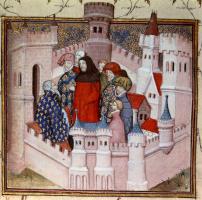
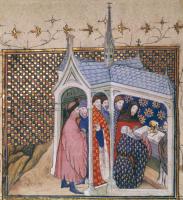
On 10th July 1359 William Greystoke 2nd Baron Greystoke [aged 38] died at Brancepeth Castle, County Durham [Map]. His son Ralph [aged 5] succeeded 3rd Baron Greystoke.
Before 1361 [his brother-in-law] William Dacre 2nd Baron Dacre Gilsland [aged 41] and [his sister] Catherine Neville Baroness Dacre of Gilsland [aged 30] were married. She by marriage Baroness Dacre Gilsland.
On 1st September 1361 [his sister] Catherine Neville Baroness Dacre of Gilsland [aged 31] died.
Before 1362 John Neville 3rd Baron Neville of Raby [aged 24] and [his sister-in-law] Maud Percy Baroness Neville Raby were married. They were third cousin once removed. He a great x 4 grandson of King Henry "Curtmantle" II of England. She a great x 5 granddaughter of King Henry "Curtmantle" II of England.
On 5th August 1367 Ralph Neville 2nd Baron Neville of Raby [aged 76] died. His son John [aged 30] succeeded 3rd Baron Neville Raby. [his sister-in-law] Maud Percy Baroness Neville Raby by marriage Baroness Neville Raby.
On 18th May 1368 Henry Percy 11th and 3rd Baron Percy [aged 47] died at Alnwick Castle, Northumberland [Map]. He was buried at Alnwick Abbey, Northumberland [Map]. His son Henry [aged 26] succeeded 4th Baron Percy of Alnwick, 12th Baron Percy of Topcliffe. Margaret Neville [aged 39] by marriage Baroness Percy of Alnwick.
Around 1371 Archbishop Alexander Neville [aged 30] was appointed Archdeacon of Durham.
On 12th May 1372 Margaret Neville [aged 43] died.
In 1373 Nicholas Harrington of Hornby [aged 27] was excommunicated by Archbishop Alexander Neville [aged 32] probably for the murder of Ralph Dacre 3rd Baron Dacre Gilsland [aged 52].
In November 1373 Archbishop Alexander Neville [aged 32] was elected Archbishop of York.
On 11th January 1374 [his mother] Alice Audley Baroness Greystoke and Neville [aged 70] died at Greystoke, Cumberland. She was buried at Durham Cathedral [Map].
On 14th April 1374 Archbishop Alexander Neville [aged 33] was appointed Archbishop of York.
On 18th December 1374 Archbishop Alexander Neville [aged 33] was consecrated as Archbishop of York at York Minster [Map].
Before 9th October 1381 John Neville 3rd Baron Neville of Raby [aged 44] and Elizabeth Latimer 5th Baroness Latimer, Baroness Neville and Willoughby [aged 24] were married. She by marriage Baroness Neville Raby. The difference in their ages was 20 years. They were third cousin once removed. He a great x 4 grandson of King Henry "Curtmantle" II of England. She a great x 5 granddaughter of King Henry "Curtmantle" II of England.
Chronicle of Adam of Usk [~1352-1430]. September 1386. Owing to the many ill-starred crises of king Richard's [aged 19] reign, which were caused by his youth, a solemn parliament was holden at Westminster, wherein twelve of the chief men of the land were advanced, by full provision of parliament, to the government of the king and the kingdom, in order to bridle the wantonness and extravagance of his servants and flatterers, and, in short, to reform the business of the realm; but alas! only to lead to the weary deeds which are hereinafter written1.
Note 1. The actual number of the commissioners appointed by the Wonderful Parliament of 1386 was eleven, or fourteen if the three principal officers of state be included. The eleven were: the archbishops of Canterbury [aged 44] and York [aged 45], the dukes of York [aged 45] and Gloucester [aged 31], the bishops of Winchester [aged 66] and Exeter, the abbot of Waltham, the earl of Arundel, John de Cobham, Richard le Scrope, and John Devereux. Thomas Arundel [aged 33], bishop of Ely, had replaced Michael de la Pole [aged 25], earl of Suffolk, as chancellor; John Gilbert, bishop of Hereford, was treasurer; and John de Waltham, keeper of the privy seal. It will be remembered that John of Gaunt [aged 46] was at this time in Spain, as a reason for his name not appearing on the commission.
 Westminster Chronicle. Also, they were asked whether the judgement rendered against the earl of Suffolk [aged 57] in the last Parliament held at Westminster was erroneous and revocable, or not. To this question they unanimously answered that, if that judgement were now to be rendered, the aforesaid justices and serjeant would not wish to render it, because it seemed to them that that judgement was revocable, and erroneous in every part of it. In testimony of all these things, the aforesaid justices and serjeant set their seals to the present document, with these witnesses: the reverend fathers Alexander [aged 46], archbishop of York, Robert [aged 67], archbishop of Dublin, John, bishop of Durham, Thomas, bishop of Chichester, John, bishop of Bangor, Robert [aged 25], duke of Ireland, Michael, earl of Suffolk, John Ripon, clerk, and John Blake, esquire. Given at the place, day, month, and year aforesaid [25th August 1387].
Ilem quæsitum erat ab eis an judicium in ultimo Parliamento apud Westmonasterium celebrato redditum contra comitem Suffolkiæ fuit erroneum et revocabile, an non. Ad quam quidem quæstionem unanimiter responderunt quod si illud judicium esset modo reddendum illi justiciarii et serviens prædicti illud reddere nollent quia videtur illis quod judicium illud revocabile est et tanquam erroneum in omni sui parte. In quorum omnium testimonium justiciarii et serviens prædicti sigilla sua præsentibus apposuerunt, his testibus reverendis patribus Alexandro archiepiscopo Eboracensi, Roberto archiepiscopo Dublinensi, Johanne episcopo Dunelmensi, Thomas Cicestrensi episcopo, Johanne Bangorensi episcopo, Roberto duce Hiberniæ et Michaele comite Suffolkiæ et Johanne Ripon clerico et Johanne Blake seutifero. Datum loco die mense et anno prædictis.
Patent Rolls. 11th October 1387. Inspeximus and confirmation to John de Beauchamp of Holt [aged 68] of a writing of even date, of Robert de Veer [aged 25], duke of Ireland, granting, with the king's consent and licence, to the said John, for life, a yearly rent of £100 from the manors of Bovytracy and Holdesworthy, co. Devon, and Blakedon and Ludeford, co. Somerset, and all other his lands in the last named county. Witnessed by Alexander [aged 46], archbishop of York, Michael de la Pole [aged 57], Earl of Suffolk, Nicholas Slake, Richard Clifford, and Richard Felde. And further grant that in case the said Robert die in the lifetìme of the said John, the latter shall receive the said yearly rent for the term of his life, and if the said manors and lands are recovered out of the king's hand, he shall receive it at the Exchequer. By p.s.
Westminster Chronicle. Also, on the twenty-eighth day of October, the king sent the archbishop of York [aged 46] and Michael de la Pole [aged 57], earl of Suffolk, to the mayor and citizens of London, to ask them whether they were of one mind among themselves in the city of London, and whether they wished to stand with the king, if need required it, or not. To these things answer was made to them that they were unanimous, and that they wished to obey their king in all things, as his royal majesty demands and requires, and to hold with him, setting aside all others whatsoever. Having received this answer, they returned to the king with joy. The king, gladdened by this answer, entered the city of London on the tenth day of November. The mayor and the other citizens of the said city honourably came out to meet him, dressed in one livery, namely white and red, and rode in procession before him through the middle of the city as far as the Mews at Charing. There the king took off his shoes, and the archbishop of York, Robert de Vere [aged 25], duke of Ireland, and Michael de la Pole, earl of Suffolk, with him, likewise barefoot, proceeded to the church of Saint Peter at Westminster. The abbot and convent of the said monastery also came solemnly to meet him in copes as far as the royal gate, and led him from that place into the church over carpets laid out for him. When he had performed his devotions according to custom, he returned to his palace.
Item xxviii die Octobris misit rex archiepiscopum Eboracensem et Michaelum de la Pole comitem Suffolkiæ ad majorem et cives Londoniarum ad inquirendum ab eis, an essent inter se unanimes in civitate Londoniarum, et an ipsi vellent stare cum rege, si opus exposceret, aut non. Ad ista fuit eis responsum, quod illi forent unanimes et suo regi vellent obedire in omnibus prout sua regia majestas exigit et requirit ac secum tenere aliis postpositis quibuseunque. Accepto vero responso ad regem cum gaudio redierunt. Rex autem super hujusmodi responso exhilaratus x die Novembris civitatem Londoniarum intravit contra quem major et cæteri cives dictæ civitatis in una secta alba scilicet et rubea honorifice exierunt et ante eum per medium civitatis usque Le Muwes apud Charryngg processionaliter equitarunt. Ubi rex discalciavit se et ‘archiepiscopus Eboracensis, Robertus de Veer Dux Hiberniæ et Michael de la Pole, comes Suffolkiæ, cum eo pariter nudipedes ad ecclesiam sancti Petri Westmonasterii processerunt contra quem etiam abbas et conventus dicti monasterii in capis usque portam regiam ei obviam modo solemni venerunt et illum super tapetis ab illo loco stratis usque in ecclesiam deduxerunt. Factisque suis devotionibus ex more ad suum palatium remeavit.
Westminster Chronicle. Thereupon they steadfastly requested that Alexander [aged 47], Archbishop of York; Robert de Vere [aged 26], Duke of Ireland; Michael de la Pole [aged 58], Earl of Suffolk; Robert Tresilian, Justice; and Nicholas Brembre, knight of London, should be brought before the whole parliament and should answer vigorously to the articles set out in their appeal. But because the time of Shrovetide was now approaching, the king prorogued the business until the Thursday [12th February] immediately after Ash Wednesday.
Unde illi constanter petierunt Alexandrum archiepiscopum Eboracensem, Robertum de Veer ducem Hiberniæ, Michaelem de la Poole comitem Suffolchiæ, Robertum Tresilyan justiciarium et Nicholaum Brembre militem Londoniensem coram toto parliamento adduci et ad articulos in eorum appellatione positos vivaciter respondere. Verum quia tempus Carniprivii jam instabat rex negotium prorogabat usque diem Jovis proximum post diem cinerum.
On 3rd February 1388 the Merciless Parliament commenced. It ended on 4th June 1388. Its primary function was to prosecute members of the Court of King Richard II of England [aged 21]. The term "Merciless" is contemporary having been coined by the chronicler Henry Knighton.
Michael de la Pole 1st Earl Suffolk [aged 58] was sentenced to be hanged, drawn and quartered in his absence. He had escaped to France. Earl Suffolk and Baron Pole forfeit.
Archbishop Alexander Neville [aged 47] was found guilty of treason and it was determined to imprison him for life in Rochester Castle, Kent [Map]. He fled to Louvain [Map] where he became a parish priest for the remainder of his life.
On 19th February 1388 Robert Tresilian was hanged naked and his throat cut. See Chronicle of Adam of Usk.
On 25th March 1388 Nicholas Brembre was hanged. He was buried at Christ Church, Greyfriars [Map].
On 5th May 1388 Simon Burley [aged 48] was executed despite the protestations of his friend Edmund of Langley 1st Duke of York [aged 46]. See Chronicle of Adam of Usk.
On 12th May 1388 John Beauchamp 1st Baron Beauchamp [aged 69] was beheaded at Tower Hill [Map]. He was buried at Worcester Cathedral [Map]. Baron Beauchamp of Kidderminster forfeit.
Robert de Vere 1st Duke Ireland [aged 26] was attainted.

On 30th April 1388 Archbishop Alexander Neville [aged 47] was translated to Bishop of St Andrews. He never took possession of the see because the Scots acknowledged the Avignon papacy with their own candidate, Bishop Walter Trail.
Westminster Chronicle. The king thereafter gave himself over to hunting throughout the whole autumn. Around the middle of June, Master Alexander Neville [aged 47], formerly Archbishop of York, was captured in a small boat near Newcastle upon Tyne. There he was kept in the custody of the mayor of the said town until 28 November, on which day he escaped with only one priest and a valet. Where he went is not known. And soon afterwards, in that same month of June, near Tutbury, John Ripon, clerk, was captured. On 19 June, dressed in the vestments just as he had been when captured, with his feet tied beneath the belly of a horse, he was brought to London and committed to prison custody in the Tower of London.
Rex vero deinceps per totum autumnum venationi indulsit. Circa medium vero mensis Junii magister Alexander Nevyll, quondam archiepiscopus Eboracensis, erat captus in navicula juxta Novum castrum super Tyne ubi erat in custodia majoris dictæ ville usque xxviii, diem Novembris, quo die cum uno solo presbytero et valetto aufugit; quo divertit nescitur. Et cito post in isto mense Junii juxta Tuttebury captus est Johannes Ripoun clericus qui xix, die mensis Junii, indutus vestibus stragulatis sicuti erat captus, ligatis pedibus sub ventre equi, Londoniam adducitur et in turri Londoniæ carcerali custodiæ demandatur.
On 17th October 1388 John Neville 3rd Baron Neville of Raby [aged 51] died. His son Ralph [aged 24] succeeded 4th Baron Neville Raby. Margaret Stafford Baroness Neville Raby [aged 24] by marriage Baroness Neville Raby.
Westminster Chronicle. Also, around the end of May, Master Alexander Neville [aged 51], formerly Archbishop of York, died in Brabant at Louvain. Also, in this year it was decreed that all those having goods or revenues to the value of forty pounds in England should be made knights. At that time the lord King, by the counsel of his Chancellor and Treasurer, removed all his courts from London to York. These officers thought that by this they would do no small harm to the city of London. Instead, however, they inflicted far greater losses on the King and on the people of the realm than on the said noble city. For poor people lost their pleas because of the removal of those courts, both because they did not have the expenses needed to go to so distant a place, and because, owing to so sudden a removal of the courts, they did not know how to take counsel for themselves concerning their causes. They were so consternated and bewildered in mind that they became, in a manner, almost senseless. These officers also stirred up our lord the King against the Londoners because of certain disturbances recently committed between them and some of his servants. The Duke of Lancaster and the Earl of Huntingdon strongly favoured the side of these officers. Therefore, wishing, like sons of iniquity, namely these officers with others joined to them, to show the Londoners all the malice they could devise, they conceived a royal writ against the aforesaid Londoners, sufficiently terrible and very dreadful, so that it would make the ears of the hearer tingle. For it contained very many serious articles, and especially concerning people in the city who were very harmful, further commanding and ordering that on the next day after the feast of the Nativity of Saint John the Baptist, and so forth, as follows.
Item circa finem Maii obiit in Brabantia apud Lovayn magister Alexander Nevyll quondam archiepiscopus Eboracensis. Item isto anno fuit statutum quod omnes habentes bona sive redditus ad valorem xl librarum in Anglia milites efficerentur. Quo in tempore dominus rex, consilio sui cancellarii et thesaurarii, omnes suas curias de Londoniis ad Eboracum removit; putabant isti officiarii per hoc non modicum damnificare civitatem Londoniæ, sed potius propter hoc multa majora damna intulerunt regi et hominibus regni quam jam dictæ nobili civitati Nam pauperes propter earundem curiarum remotionem sua placita perdiderunt, tum quia non habebant expensas eundi ad tam locum remotum, tum quia propter earum tam subitam amotionem, nescientes consulere seipsos de causis eorum, ita fuerunt animo consternati et attoniti quod quodammodo facti sunt pœne insensati. Incitabant quoque isti officiarii dominum nostrum regem contra Londonienses propter quasdam seditiones inter illos et quosdam suorum famulorum nuperius prepetratas. Favebant instanter parti istorum officiariorum dux Lancastriæ et comes Huntyngdon. Volentes igitur tanquam iniquitatis filii, isti scilicet officiarii cum aliis sibi adjunctis, omnem malitiam quam poterant excogitare Londoniensibus ostendere conceperunt unum breve regium contra Londonienses præfatos satis terribile et valde horribile sic quod aures audientis faceret pertinnire. Continebat namque articulos graves quamplures et præcipue de gentibus in civitate valde nocivos insuper præcipiendo mandantes quatinus proximo die post festum nativitatis sancti Johannis Baptistæ et cætera, prout sequitur.
In May 1392 Archbishop Alexander Neville [aged 51] died at Louvain [Map]. He was buried at Church of the Carmelites, Louvain.
Westminster Chronicle. When the aforesaid parliament had ended, the king, with the queen and his household, spent the greater part of the summer in various places in the southern regions. Meanwhile, in the month of June, the Scots entered England with a large force, and, in their usual manner, began to act with greater insolence. They laid waste the land of Northumberland with plunder and fires, and continually gave themselves over to rapacious spoil and deadly slaughter. Indeed, they would have done much greater damage there had not the archbishop of York1, the bishop of Durham2, the bishop of Carlisle3, and other lords in the country met them more swiftly. These men entered into negotiations with them, and obtained peace from the feast of the Nativity of Saint John the Baptist [24th June] until the feast of Saint Michael [29th September], a truce having been confirmed.
Finito vero parliamento prædicto rex pro majori tempore æstatis cum regina et sua familia per loca diversa in australibus partibus moram traxit. Interim mense Junii Scoti cum multitudine gravi Angliam intraverunt, et more solito cœperunt insolentius agere. Terram namque Northymbranam rapinis et incendiis vastaverunt prædæ etiam rapaci et cædi pestiferæ continue vacaverunt. Et profecto multo majora damna ibi fecissent nisi archiepiscopus Eboracensis, episcopus Dunelmensis, et episcopus Carliensis, cum aliis dominis in patria eis celerius occurrissent. Qui cum eis inierunt tractatum et pacem a festo Nativitatis sancti Johannis Baptistæ usque festum sancti Michaelis ... obtinuerunt treuga firmata.
Note 1. Alexander Neville, around 1341-1392, son of Ralph, 2nd Baron Neville of Raby. Appointed Archbishop of York in 1374. In 1386 Neville was accused of treason as part of the Lords Appellant. He fled to France where he served as parish priest of Leuven where he died, and was buried, in 1392.
Note 2. Bishop John Fordham, died 1425. Appointed Bishop of Durham in 1381, translated to Ely in 1388.
Note 3. Thomas Appleby, died 1395. Consecrated Bishop of Carlisle in 1363.
Kings Wessex: Great x 9 Grand Son of King Edmund "Ironside" I of England
Kings Gwynedd: Great x 6 Grand Son of Owain "Great" King Gwynedd
Kings Seisyllwg: Great x 12 Grand Son of Hywel "Dda aka Good" King Seisyllwg King Deheubarth
Kings Powys: Great x 7 Grand Son of Maredudd ap Bleddyn King Powys
Kings England: Great x 4 Grand Son of King Henry "Curtmantle" II of England
Kings Scotland: Great x 7 Grand Son of King Malcolm III of Scotland
Kings France: Great x 10 Grand Son of Hugh I King of the Franks
Kings Duke Aquitaine: Great x 14 Grand Son of Ranulf I Duke Aquitaine
Kings Spain: Great x 7 Grand Son of Alfonso VII King Castile VII King Leon
Great x 4 Grandfather: Robert Fitzmaldred 
Great x 3 Grandfather: Geoffrey Fitzrobert aka Neville
Great x 4 Grandmother: Isabel Neville of Raby
Great x 2 Grandfather: Geoffrey Neville
Great x 4 Grandfather: John Monmouth
Great x 3 Grandmother: Joan Monmouth
Great x 4 Grandmother: Cecilia Waleran
Great x 1 Grandfather: Robert Neville
Grandfather: Ralph Neville 1st Baron Neville of Raby
Father: Ralph Neville 2nd Baron Neville of Raby 6 x Great Grandson of King David I of Scotland
Great x 4 Grandfather: Robert Fitzroger 2nd Baron Warkworth  9 x Great Grandson of King Edward "Elder" of the Anglo Saxons
Great x 3 Grandfather: John Fitzrobert 3rd Baron Warkworth 10 x Great Grandson of King Edward "Elder" of the Anglo Saxons
Great x 4 Grandmother: Margaret Chesney Baroness Warkworth
Great x 2 Grandfather: Roger Fitzjohn 4th Baron Warkworth 11 x Great Grandson of King Edward "Elder" of the Anglo Saxons
Great x 3 Grandmother: Ada Balliol Baroness Warkworth
Great x 1 Grandfather: Robert Fitzroger 5th Baron Warkworth 12 x Great Grandson of King Edward "Elder" of the Anglo Saxons
Grandmother: Euphemia Clavering Baroness Neville Raby  5 x Great Granddaughter of King David I of Scotland
Great x 4 Grandfather: Alain Zouche 
Great x 3 Grandfather: Roger Zouche
Great x 4 Grandmother: Adelicia Belmeis
Great x 2 Grandfather: Alan Zouche
Great x 3 Grandmother: Margaret Bisset
Great x 1 Grandmother: Margaret Zouche Baroness Warkworth 4 x Great Granddaughter of King David I of Scotland
Great x 4 Grandfather: Saer Quincy 1st Earl Winchester 9 x Great Grandson of King Edward "Elder" of the Anglo Saxons
Great x 3 Grandfather: Roger de Quincy 2nd Earl Winchester 6 x Great Grandson of Hugh I King of the Franks
Great x 4 Grandmother: Margaret Beaumont Countess Winchester  5 x Great Granddaughter of Hugh I King of the Franks
Great x 2 Grandmother: Helen or Ela Quincy 3 x Great Granddaughter of King David I of Scotland
Great x 4 Grandfather: Alan Lord of Galloway
Great x 3 Grandmother: Helen Galloway Countess Winchester 2 x Great Granddaughter of King David I of Scotland
Great x 4 Grandmother: Margaret Dunkeld  Great Granddaughter of King David I of Scotland
Archbishop Alexander Neville 4 x Great Grandson of King Henry "Curtmantle" II of England
Great x 4 Grandfather: Liulf Audley 
Great x 3 Grandfather: Adam Audley
Great x 4 Grandmother: Mabella Stanley 
Great x 2 Grandfather: Henry Audley
Great x 3 Grandmother: Emma Fitzorm
Great x 1 Grandfather: James Audley
Great x 3 Grandfather: Ralph Mainwaring
Great x 2 Grandmother: Bertrade Mainwaring
Grandfather: Hugh Audley 1st Baron Audley of Stratton Audley 2 x Great Grandson of King Henry "Curtmantle" II of England
Great x 4 Grandfather: King Henry "Curtmantle" II of England  Grandson of King Henry I "Beauclerc" England
Great x 3 Grandfather: William Longespée Earl Salisbury son of King Henry "Curtmantle" II of England
Great x 4 Grandmother: Ida Tosny Countess Norfolk  5 x Great Granddaughter of Hugh I King of the Franks
Great x 2 Grandfather: William Longespée Grandson of King Henry "Curtmantle" II of England
Great x 4 Grandfather: William of Salisbury 2nd Earl Salisbury 5 x Great Grandson of Hugh I King of the Franks
Great x 3 Grandmother: Ela of Salisbury 3rd Countess of Salisbury 6 x Great Granddaughter of Hugh I King of the Franks
Great x 4 Grandmother: Eleanor Vitre Countess of Salisbury
Great x 1 Grandmother: Ela Longespée Great Granddaughter of King Henry "Curtmantle" II of England
Great x 4 Grandfather: Gerard Canville
Great x 3 Grandfather: Richard Camville
Great x 4 Grandmother: Nichola de la Haie
Great x 2 Grandmother: Idoine Camville 8 x Great Granddaughter of Hugh I King of the Franks
Great x 4 Grandfather: Gilbert Basset 
Great x 3 Grandmother: Eustachia Basset 7 x Great Granddaughter of Hugh I King of the Franks
Great x 4 Grandmother: Egelina Courtenay  6 x Great Granddaughter of Hugh I King of the Franks
Mother: Alice Audley Baroness Greystoke and Neville 3 x Great Granddaughter of King Henry "Curtmantle" II of England
Great x 4 Grandfather: Roger Mortimer 
Great x 3 Grandfather: Ralph Mortimer
Great x 4 Grandmother: Isabel Ferrers 
Great x 2 Grandfather: Roger Mortimer 1st Baron Mortimer of Wigmore Great Grandson of King John of England
Great x 4 Grandfather: Llewellyn "The Great" Aberffraw Grandson of Owain "Great" King Gwynedd
Great x 3 Grandmother: Gwladus verch Llewelyn "Dark Eyed" Aberffraw Granddaughter of King John of England
Great x 4 Grandmother: Joan Plantagenet daughter of King John of England
Great x 1 Grandfather: Edmund Mortimer 2nd Baron Mortimer of Wigmore 2 x Great Grandson of King John of England
Great x 4 Grandfather: Reginald de Braose 8th Baron Abergavenny 6th Baron Bramber  6 x Great Grandson of Maredudd ab Owain King Deheubarth King Powys King Gwynedd
Great x 3 Grandfather: William de Braose 9th Baron Abergavenny 7th Baron Bramber 7 x Great Grandson of Maredudd ab Owain King Deheubarth King Powys King Gwynedd
Great x 4 Grandmother: Graecia Briwere
Great x 2 Grandmother: Maud de Braose 7 x Great Granddaughter of Hugh I King of the Franks
Great x 4 Grandfather: William Marshal 1st Earl Pembroke 
Great x 3 Grandmother: Eva Marshal 6 x Great Granddaughter of Hugh I King of the Franks
Great x 4 Grandmother: Isabel Clare Countess Pembroke  5 x Great Granddaughter of Hugh I King of the Franks
Grandmother: Iseult Mortimer 3 x Great Granddaughter of King John of England
Great x 4 Grandfather: William Fiennes  8 x Great Grandson of King Edward "Elder" of the Anglo Saxons
Great x 3 Grandfather: Enguerrand Ingleram Fiennes 9 x Great Grandson of King Edward "Elder" of the Anglo Saxons
Great x 4 Grandmother: Agnes Dammartin 10 x Great Granddaughter of Charles "Charlemagne aka Great" King of the Franks King Lombardy Holy Roman Emperor
Great x 2 Grandfather: William Fiennes 10 x Great Grandson of King Edward "Elder" of the Anglo Saxons
Great x 3 Grandmother: Isabel Provence 
Great x 1 Grandmother: Margaret Fiennes 4 x Great Granddaughter of King Henry "Curtmantle" II of England
Great x 4 Grandfather: John de Brienne I King Jerusalem
Great x 3 Grandfather: John Beaumont 2 x Great Grandson of King Henry "Curtmantle" II of England
Great x 4 Grandmother: Beregaria Ivrea  Great Granddaughter of Alfonso VII King Castile VII King Leon
Great x 2 Grandmother: Blanche Beaumont 3 x Great Granddaughter of King Henry "Curtmantle" II of England
Great x 4 Grandfather: Geoffrey Chateaudun VI Viscount Châteaudun
Great x 3 Grandmother: Jeanne Chateaudun
Great x 4 Grandmother: Clemence Roches Countess Blois