

 Auchorthie Stone Circle, Aberdeenshire
 Balgorkar Stone Circle, Aberdeenshire
 Balquain Stone Circle, Aberdeenshire
 Blairdaff and Chapel of Garioch Church
 Cullerlie Stone Circle
 Seanhinny aka Sunhoney Stone Circle, Aberdeenshire
 Dundarg Castle, Aberdeenshire
 Old Keig Stone Circle, Aberdeenshire
 Tyrebagger Stone Circle
Aberdeenshire is in Scotland.
Around 1692 Alexander Gordon was born at Aberdeen.
On 19th September 1806 William Dyce was born to William Dyce of Fonthill and Cuttlehill [aged 36] and Margaret Chambers of Westburn [aged 30] at 48 Marischal Street, Aberdeen. He married 1850 Jane Bickerton Brand.
On 12th June 1841 William Brodie [aged 26] and Helen Chisholm [aged 24] were married at Old Machar, Aberdeen.
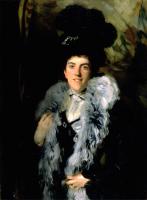
On 22nd March 1908 John William Crombie [aged 50] died at his home in Onslow Square, Kensington. His funeral was held at St Machar's Cathedral, Aberdeen where he was buried.
See Prehistoric Scotland.
Archaeologia Volume 22 Section XV. The remains at Auchorthie [Map] are also very entire, and exhibit a curious arrangement. Most part of the exterior line of stones has been filled up, to constitute a fence; it is consequently difficult to determine whether there has been originally any intervening stones in this part, but the inner circles and a part near the Altar are evidently of the original plan. The two stones placed between the exterior and second line are nearly level with the ground. The largest stones are towards the south, but the whole are of rather moderate dimensions. The Altar is 8 feet 6 inches in length. The name may be from the Gaëlic, auch, field, and ortha, prayer.
See Prehistoric Scotland.
Archaeologia Volume 22 Section XV. The Circle at Balgorkar [Map] seems to have consisted of eleven stones, nine only of which remain. The Altar measures 6 feet 9 inches in length, and is 4 feet 6 inches in height outside. The stone at its east end is 6 feet 7 inches high, and 4 feet 6 inches wide at base. About two hundred paces eastward are two stones, a few paces distant from each other, and about seven feet high. These are not seen in the plan.
See Prehistoric Scotland.
Archaeologia Volume 22 Section XV. Eight stones remain of the Circle at Balquhain [Map]. The altar is 13 feet long, 2 feet wide, and 4 feet high, and rests on another block, level with the ground. The obelisk is thirty feet distant eastward, of a triangular form, each face 3 feet and a half in width, and is about 10 feet high. The Circle is about sixty or seventy feet diameter, but its area having been ploughed over, no vallum or interior work is perceptible. One of the lateral stones of the altar is prostrate, and another was lately overturned in consequence of some persons digging too near it.
These stones are not in general very deeply planted in the ground. This has been observed in Stonehenge, the Monument at Carnac in Brittany, &c. After the incredible labour which must have been bestowed in procuring such large blocks, it is scarcely to be believed that their height would have been needlessly lessened. The stability of these erections evinces the skill with which they were poised. The ridge or vallum, so often observable, has perhaps been useful in supporting their position.
On 9th May 1917 Ernest William Beckett 2nd Baron Grimthorpe [aged 60] died at a sanatorium in Banchory, Aberdeenshire. His son Ralph [aged 26] succeeded 3rd Baron Grimthorpe, 7th Baronet Beckett of Leeds. Mary Alice Archdale Baroness Beckett by marriage Baroness Grimthorpe. His ashes are interred in the gardens of Villa Cimbrone, Ravello.

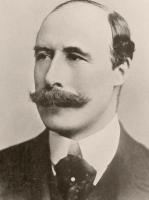
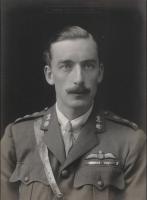
In 1233 William Comyn Earl Buchan [aged 70] died at Buchan. He was buried at Deer Abbey, Buchan.
In 1320 Joanna Latimer [aged 51] died at Buchan.
On 10th March 1340 Henry Beaumont Earl Buchan [aged 61] died at Buchan. His son John [aged 22] succeeded 2nd Baron Beaumont. Eleanor Plantagenet Countess Arundel and Surrey [aged 21] by marriage Baroness Beaumont.
John was born illegitimately to George Gordon 3rd Earl Aberdeen at Cairnbulg Castle. His mother being the Earl's London housekeeper Mrs Forest.
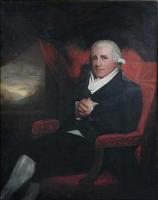
In October 1738 Walter Farquhar 1st Baronet was born to Robert Farquhar [aged 39] and Katherine Turing [aged 27] at Chapel of Garioch, Aberdeenshire. He married before 27th June 1755 Anne Stevenson and had issue.
On 18th October 1738 Robert Farquhar [aged 39] was inducted to Blairdaff and Chapel of Garioch Church [Map].
On 4th February 1787 Robert Farquhar [aged 88] died. He was buried at Blairdaff and Chapel of Garioch Church [Map] on 9th February 1787.
Caledonian Mercury Thursday 15 February 1787, p 3: Extract of a letter from Aberdeen, Feb 13. "On Sunday, the 4th instant, died at Manse of chapel of Garioch, the Rev. Mr Robert Farquhar, minister of that parish, in the 88th year of his age and 51st of his ministry."
On 7th November 1798 Katherine Turing [aged 87] died. She was buried at Blairdaff and Chapel of Garioch Church [Map].
Aberdeen Press and Journal Monday 19 November 1798, p 4: On the 7th current, died here, in the 88th year of her age, Mrs Katherine Turing, widow of the Rev. Mr Robert Farquhar, late minister at Chapel of Garioch.
See Prehistoric Scotland.

Archaeologia Volume 22 Appendix. "Another use to which circles were appropriated was for Trial by Combat; but it seems probable that they were chiefly devoted to religious purposes. Great veneration was undoubtedly attached to them, and the ponderous masses inspired awe when their original destination became unknown. Many churches have been built in or near the site of Druidical Temples; several instances of which I have remarked in Scotland: and in the Highlands, to this day, the word Clachan signifies both a circle of stones and a place of worship.
"The First of the accompanying Drawings presents a South View of a singular Monument at Leuchar [Cullerlie Stone Circle [Map]], in the parish of Skene, in Aberdeenshire.b It is situated upon an extensive moor from which turf is cut. From this circumstance it is denominated a Moss, and the appellation Leuchar, seems to be the Gaelic Leu - chra, reedy or abounding in rushes. The Circle is of small dimensions, and the largest stone does not exceed six feet in height. The diameter of the Circle is thirty-four feet. The small Circles contained in the larger present a curious singularity; and it is also remarkable that, at a short distance to the southwest, are nine others of similar dimensions. About a hundred feet south-east is a Cairn; and on a hill in the back-ground is seen another.
Note b. Plate XXXIV.
See Prehistoric Scotland.
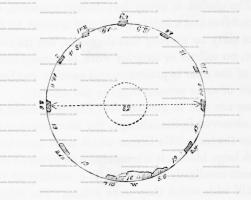
Archaeologia Volume 22 Section XV. The Temple at Seanhinny [Map], in the parish of Midmar, seems to remain as it originally stood, at least in the number and position of its stones; and has been, from a proper feeling, surrounded with trees by the proprietor. There is a central small ridge of stones, but it is not clear whether it has been a circle, or a cairn subsequently opened. The whole area seems full of loose stones, which have been probably thrown into it in clearing the neighbouring fields. The altar is 16 feet 4 inches long, 4 feet 6 inches where broadest, and 2 feet 9 inches high. The lateral stones are 7 feet 6 inches, and 6 feet 7 inches in height, by 5 feet 6 inches, and 4 feet 10 inches in breadth at bottom. As I have taken the measurements of this Circle carefully, I think it will be satisfactory to give a plan of it with these inserted.
In 1873 Alexander Gorden Cavalry [aged 92] died at Ellon.
In 1781 Alexander Gorden Cavalry was born illegitimately to George Gordon 3rd Earl Aberdeen [aged 58] at Ellon Castle. His mother being Penelope Dering, a lady from Sussex.
On 12th February 1868 James Henry Hamilton-Gordon [aged 22] died in a shooting accident. Some sources state he committed suicide. He was buried at Methlick Church, Aberdeenshire.
On 2nd October 1791 George Gordon Lord Haddo [aged 27] died from a fall from a horse at Gight aka Formartine Castle.
On 20th December 2000 Alexander Ramsay [aged 80] died at Fraserburgh.
In 1513 Archibald Douglas was born to William Douglas [aged 42] and Elizabeth Auchinleck at Glenbervie. He married 1. Mary Irvine 2. before 1533 Agnes Keith and had issue.
On 1st July 1591 William Douglas 9th Earl Angus [aged 58] died at Glenbervie. His son William [aged 39] succeeded 10th Earl Angus.
John of Fordun's Annals of the Scottish Nation. 120. Conflict at Dalry, in the borders of Argyll
The same year [1306], while this king was fleeing from his foes, and lurking, with his men, in the borders of Athol and Argyll, he was again beaten and put to flight, on the 11th of August, at a place called Dalry. But there, also, he did not lose many of his men. Nevertheless, they were all filled with fear, and were dispersed and scattered throughout various places. But the queen fled to Saint Duthac in Ross, where she was taken by William Earl of Ross, and brought to the king of England; and she was kept a prisoner in close custody, until the battle of Bannockburn. Nigel of Bruce, however, one of the king's brothers, fled, with many ladies and damsels, to Kyndrumie Castle, and was there welcomed, with his companions. But, the same year, that castle was made over to the English through treachery, and Nigel, and other nobles of both sexes, were taken prisoners, brought to Berwick, and suffered capital punishment. The same year, Thomas and Alexander of Bruce, brothers of the aforesaid king, while hastening towards Carrick by another road, were taken at Loch Ryan, and beheaded at Carlisle and, thus, all who had gone away and left the king, were, in that same year, either bereft of life, or taken and thrown into prison.
The Bruce. Lines 4.39-58:
| The Queyn, and als dame Marjory, | The Queen1, and also Lady Marjory, |
| Hyr dochtyr that syne worthily | Her daughter who later worthily |
| Wes coupillyt in-to Goddis band | Was joined into God's bond |
| With Walter, Stewart off Scotland; | With Walter, Stewart of Scotland; |
| That wald on na wys langar ly | Who would not in any way longer stay |
| In the castell off Kyldromy, | In the castle of Kildrummy, |
| To byd a sege, ar ridin raith | To await a siege, but riding quickly |
| With knychtis and with squyeris bath, | With knights and with squires both, |
| Throw Ros, rycht to the gyrth off Tayne. | Through Ross, right to the girth of Tayne2. |
| Bot that travaill thai maid in vayne; | But their efforts were in vain; |
| For thai off Ros, that wald nocht ber | For the men of Ross3, who would not bear |
| For thaim na blayme, na yheit danger, | Any blame or even danger for them, |
| Owt off the gyrth thame all has tayne; | Out of the girth, they all have been taken; |
| And syne has send thaim evirilkane | And then they have sent them all |
| Rycht in-till Ingland, to the King, | Right into England, to the King, |
| That gert draw all the men, and hing; | Who ordered all the men to be drawn and hanged; |
| And put the ladyis in presoune, | And put the ladies in prison4, |
| Sum in-till castell, sum in dongeoun. | Some in a castle, some in a dungeon. |
| It wes gret pite for till heir | It was a great pity to hear |
| Folk till be troublyt on this maneir. | People being troubled in this manner. |
Note 1. dame Marjory. Bruce's daughter by his first wife, Isabel, daughter of Donald Earl of Mar. She afterwards married Walter, the High Steward (see Bk. XIII. 689).
Note 2. the gyrth of Tayne. The enclosure or "sanctuary" attached to the chapel of St. Duthac, at Tain, Ross-shire, a favourite place of pilgrimage with the Scottish kings, especially James IV. There was, however, no privilege of sanctuary for treason. William Earl of Ross was in the English interest, and on May 20, 1308, is the recipient of thanks from Edward II. "for faithful service to his father and himself" (Bain, iii., No. 43). Hemingburgh says "the new Queen" was taken in Kildrummy (ii. 249); Gray that Cristina Bruce was captured there, and the Queen and Nigel Bruce in Dunaverty (Scala., p. 131); Trivet agrees with the second statement, but obviously confuses (p. 410); according to Fordun the Queen was taken at Tain, and many ladies at "Kyndrumy" (Gesta Ann., cxx.).
Note 3. thai of Ros. Fordun says the Queen was seized at St. Duthac's by the Earl of Ross (Gesta Ann., cxx.).
Note 4. put the ladyis in presoune. On November 7, 1306, there are "further orders for the custody of the Countesses of Carrick (the Queen) and Buchan, Marie, and Christine, the sisters, and Margerie the daughter, of Robert de Bruce ... three of the ladies to be in 'kages.'" (Bain, ii., No. 1851). The Countess of Buchan, who had crowned Bruce, was to be placed in a cage of wooden bars and lattice in one of the turrets of Berwick Castle (Palgrave, p. 358; Scala., p. 131); Marie Bruce in a "kage" in Roxburgh (Palgrave, 359); Marjory in a "kage" in the Tower of London (359); Cristina in ward in England (Palgrave, 359). The Queen was to be in custody at "Brustewik" (Palgrave p. 357); was removed thence by an order of June 22, 1308 (Bain, iii., No. 48). Marjory was in ward at Wattone in March, 1307 (Bain, ii., 1910). By 1311-1312 Maria de Brus is a prisoner in Newcastle (Bain, iii., 227, 340).
On 10th December 1767 John Leslie 10th Earl Rothes [aged 69] died at Leslie Castle. His son John [aged 23] succeeded 11th Earl Rothes.
Life of Edward II of Carnarvan by a Monk of Bridlington. Likewise, in the same year, on the eighteenth day of February, horsemen and archers were left at Roxburgh and Berwick, and the King of Scotland was stationed at Carlisle for their defence and support. The King of England then summoned the Archbishop of York, the Bishop of Durham, the Earl of Cornwall, and certain other magnates of the realm, and held a conference and negotiations at Newcastle upon Tyne with the envoys of the King of France. The substance of the entire proposal then made on behalf of the King of France was that the King of England should abandon what he had begun and should no longer wage war against Scotland. The King of England determined to answer this through envoys of his own. There it became known to the lord King of England that Henry de Beaumont, Earl of Buchan, had surrendered to the Scots the castle of Dundarg [Map], in which he had been besieged, under an indenture providing that the aforesaid Earl of Buchan and his wife, the countess, together with a suitable household of knights, clerks, gentlewomen, and other necessary officers, should remain in the custody of Sir Andrew de Moray, Alexander de Mowbray, and Robert de Lawder, until the aforesaid Sir Henry sent special envoys to the King of England concerning the establishment of perpetual peace between the kingdoms of England and Scotland. The said lords were to provide safe conduct towards England, as far as the borders of their kingdom, for the remainder of the household, both men and women, who wished to return home. Should the King of England refuse to consent to such a perpetual peace, the aforesaid Andrew, Alexander, and Robert were to cause the earl and all his companions to be conducted safely and securely, under trustworthy guard, to Berwick or elsewhere as he wished, as is contained more fully in the indentures written elsewhere among the "Incidents". Likewise, in the same year, before Shrovetide, around the feast of Saint Matthias the Apostle, considerable numbers of men-at-arms and archers were assigned to guard the town of Saint John, Roxburgh, Edinburgh, Berwick, and Carlisle. The lord King of England, together with the earls of Warwick and Lincoln and other magnates, then departed hastily and suddenly from the northern regions towards London, for a most urgent reason, namely to protect and safeguard his children, concerning whose welfare he was greatly uncertain because of a report made to him.
Item eodem anno, mensis Februarii die xviii, equitibus et sagittariis in Rokesburghe et Berewyk dimissis, regeque Scotiæ ad eorum munimen et præsidium in Karliolo commorante deputato, rex Angliæ accersitis archiepiscopo Eboracensi, episcopo Dunelmensi, comite Cornubiæ et quibusdam aliis regni proceribus, apud Novum Castrum super Tynam cum legatis regis Franciæ colloquium habuit et tractatum; et fuit summa totius negotii ex parte regis Franciæ tuncprolati, quod rex Angliæ cœptis desisteret, nec amodo Scotiam expugnaret. Et ad hoc statuitrex Angliæ per legatos proprios respondere. Ibique innotuit domino regi Angliæ qualiter Henricus de Beaumont comes de Boghan reddit Scotis castrum de Dondarge, in quo fuerat obsessus, facta super hoc indentura, videlicet quod præfatus comes de Boghan et comitissa conjux sua cum familia competenti militum, clericorum, mulierum gencrosarum, et aliorum officiariorum, sibi nocessariorumm, moram facient in custodia domini Andreæ de Murref, Alexandri de Moubray et Roberti de Lowther, donec prædictus dominus comes Henricus mittat nuntios speciales domino regi Angliæ pro pace perpetua inter regna Angliæ reformanda; reliquam vero familiam utriusque sexus, repatriare cupientem, in salvo conductu deducere facient dicti domini versus Angliam, usque ad limites regni sui; et si forte nolucrit rex Angliæ hujusmodi paci perpetuæ consentire, prædicti domini Andreas, Alexander et Robertus prædictum comitem cum suis omnibus usque Berewycum vel alibi quo voluerit sub fida custodia sanum conducere facient atque salvum, sieut plenius continetur in indenturis in alio loco inter incidentia. Item eodem anno ante carnisprivium, circa festum Sancti Mathiæ apostoli, in villa Saneti Johannis, Rokesburghe, Edenburghe, Berewyk et Karlioli, armatorum et sagittariorum copia non modica ad corum custodiam deputata, dominus rex Angliæ cum comitibus de Warwyk, Lincolniæ, et aliis proceribus festinanter et subito de partibus borealibus versus Londonias est profectus, ex causa valde necessaria pro suis liberis protegendis et tuendis; de quorum prosperitate juxta relationem sibi factam plurimum hæsitabat.
 Chronicle of Geoffrey le Baker of Swinbroke. In the same year, the king moved toward the Scottish March, and spent the winter in those parts. But when he heard that the Earl of Atholl had treacherously gone over to the Scots, and that Lord Henry de Beaumont had been besieged by the Scots, he entered Scotland and had the siege lifted;1 and he kept Christmas at Roxburgh.
Eodem anno rex se transtulit versus marchiam Scocie, et in illis finibus hiemavit. Set, audito quod comes Dasceles fuit prodiciose ad Scotos conversus et quod dominus Henricus de Bello monte fuit a Scotis obsessus, Scociam intravit, et obsidionem fecit amoveri; et tenuit Natale apud Rokesborowh.
Note 1. This is incorrect. Beaumont was besieged in the castle of Dundarg [Map] on the Moray Firth, and was at length compelled to surrender. See Gesta Edwardi III, 121.
Life of Edward II of Carnarvan by a Monk of Bridlington. Likewise, in the same year, on the feast of Saint Bartholomew the Apostle, Henry de Beaumont, Earl of Buchan, and the Earl of Atholl, wishing to visit their lands in the earldom of Buchan, departed from the aforesaid King of Scotland, who was staying at Stirling and opposed their departure. Immediately afterwards, the Scots gathered together and resolved to pursue the aforesaid King of Scotland. Sir Alexander Mowbray, a man of the same nation, betrayed him, and they seized his horses, treasure, and all the royal equipment. The king himself, seeking to escape the aforesaid treachery, directed his journey towards Berwick. On the way he encountered the Scots, defeated them, and afterwards reached Berwick safely. Meanwhile, Sir Richard Talbot, Sir John de Stirling, and Sir John de Felton, who had advanced into the interior of Scotland with the aforesaid earls of Buchan and Atholl, perceived that the people were gathering from every side to attack them and therefore returned towards England. Near Linlithgow, however, they were captured by William de Keith and Godfrey de Ros and committed to custody in Dumbarton Castle, while their household and archers were killed. The Earl of Atholl was likewise captured with a very small number of Englishmen. The earl was detained, but the English were permitted to return to their own country. When the magnates of Scotland perceived that fortune was smiling upon them in this manner, they assembled their forces and besieged the aforesaid Henry de Beaumont, Earl of Buchan, together with almost three hundred men and women of his company, in his castle of Dundarg [Map]. It may be presumed that, had the King of Scotland and the other aforesaid lords not been dispersed, they would not have fallen into the hands of the enemy in this way, because, according to the philosopher, every strength is more powerful when united than when dispersed. When the King of Scotland heard this, being troubled on every side by the evils in Scotland, he sent Sir Thomas Ughtred to inform his lord, the King of England, how the Scots, having broken the oath of fealty and homage which they had sworn to him, had attacked him as enemies. He humbly petitioned the king to be pleased to provide a remedy. The King of England, wishing to resist the perjured Scots and their malice, waited for several days at Newcastle upon Tyne around the feast of All Saints. When an army had assembled, he advanced as far as Roxburgh, caused the town and castle to be rebuilt and fortified, and wintered there with his forces.
Item codem anno, die Sancti Bartholomæi apostoli, Henrieus de Bcamount comes de Boghan et comes de Astecle, terras suas in comitatu de Boghan visitare volentes, a rege Scotiæ prædicto, apud Strivelyn perhendinante et dissentiente, recesserunt; et statim conglobati Scoti regem Scotiæ præfatum persequi statuerunt. Quem prodidit Alexander Moubray miles ejusdem nationis; cujus et cquos, thesaurum et omne supellectile regium rapiebant. Ipse vero rex proditionem prædictam satagens declinare, versus Berewycum iter suum dirigebat, et cum Scotis in itinerando conflixit, et fugavit, ac postea prospere adiit Berewycum. Dum itaque Ricardus Thalbot, Johannes de Strivelyn, et Johannes de Feltone milites, qui cum comitibus de Boghan et Astecle prædictis in interiores partes Scotiæ processerunt, perpendentes populum ad ipsos expugnandum undique convolare, versus Angliam sunt reversi. Sed juxta Lynliscou per Willelmum de Kethe et Godefridum de Ros capiebantur et in castro de Donbretaggne custodiæ deputantur, familia sua et sagittariis interfectis. Comes vero de Ascetle cum paucis admodum Anglicis capiebatur, ipsoque retento Anglici repatriare permittuntur. Et perpendentes proceres Scotiæ fortunam sibi taliter arridere, Henrieum de Beaumont comitem de Boghan prædictum cum suis utriusque sexus numero quasi CCC, in castro suo de Dondarg adunatis viribus obsederunt; unde præsumitur quod, si rex Scotiæ et ceteri domini prænotati dispersi non fuissent, non in manus hostium taliter incidissent; quia juxta philosphum omnis virtus unita fortior est se ipsa dispersa. Quo audito, rex Scotiæ malis Scotix undique perturbatus, misit Thomam Ughtrede militem domino suo regi Angliæ nuntiaturum qualiter, fracto fidelitatis homagii juramento sibi præstito, Scoti in ipsum hostiliter irruerunt, humiliter supplicando quatinus remedium apponere dignaretur. Igitur rex Angliæ, perjuris Scotis et corum malitiæ volens obviare, contra festum Omnium Sanctorum apud Novum Castrum super Tynam per dies aliquot expectabat, donec adunato excreitu usque Rokesburghe est profectus; villam et castrum reædificari et muniri fecit, et ibidem cum suis copiis hyemavit.
See Prehistoric Scotland.

Archaeologia Volume 22 Section XV. Of the Circle at Old Keig [Map], four only of the stones remain.b Of these, the altar measures about 14 feet in length, 5 feet 4 inches in breadth, and is 4 feet 8 inches in height outside. Its two lateral stones are in height 6 feet, and 5 feet 4 inches, and 3 feet 6 inches, and 2 feet 4 inches in width at base, respectively. The Circle is traced by a vallum of loose stones, and in the centre is a tumulus or cairn.
Note b. pl. XXIII.
In 1889 John Foster Forbes was born at Rothiemay Castle, Aberdeenshire.
On 8th October 1847 Robert Gordon [aged 56] died by choking on a fish bone. Prince Albert Saxe Coburg Gotha [aged 28] bought Balmoral estate from his trustees a year later as a gift for his wife Queen Victoria of the United Kingdom [aged 28].
In 1297 Isabel Comyn was born to John Comyn 3rd Earl Buchan and Isabella Countess Buchan at Straloch. She a great x 4 granddaughter of King John of England. She married Freskin Cheney and had issue.
In 1335 Isabel Comyn [aged 38] died at Straloch.
In 1327 David IV Strathbogie 12th Earl Atholl was born to David III Strathbogie 11th Earl Atholl [aged 18] and Katherine Beaumont Countess Atholl at Strathbogie. He married before 1353 his fourth cousin Elizabeth Ferrers Countess Atholl, daughter of Henry Ferrers 2nd Baron Ferrers of Groby and Isabel Verdun Baroness Ferrers Groby, and had issue.
Around 1353 Elizabeth Strathbogie was born to David IV Strathbogie 12th Earl Atholl [aged 26] and Elizabeth Ferrers Countess Atholl [aged 17] at Strathbogie. She a great x 3 granddaughter of King Edward I of England. She married 1. her fourth cousin once removed Thomas Percy, son of Henry Percy 1st Earl of Northumberland and Margaret Neville, and had issue 2. before September 1391 John Scrope, son of Henry Scrope 1st Baron Scrope of Masham and Joan Unknown, and had issue.
On 10th October 1369 David IV Strathbogie 12th Earl Atholl [aged 42] died at Strathbogie. His 3 x great grandson Edward succeeded 4th Baron Strabolgi
See Prehistoric Scotland.
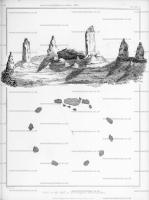
Archaeologia Volume 22 Appendix. "The Second Drawing presents a View from the interior of a Circle on the hill of Tyrbagger [Tyrebagger Stone Circle [Map]] in the same County.c The name is compounded of the Gaelic words Tyr, land, and Bachar, an acorn; an appellation which may possibly have arisen from the abundance of Oak-trees, which were always attendant on sacred Circles.
"This second Circle consists of ten upright stones, the largest of which is on the south side. It is between ten and eleven feet in height, and is eleven feet in circumference at the base. Beside it is another, eleven feet in length, which, although now prostrate, has originally been elevated on several smaller stones. The diameter of this Circle, from north to south, is fifty-seven feet; and the area has been at one time appropriated for the reception of cattle belonging to the inhabitants of an adjacent cottage, now in ruins; for this purpose it has been hollowed beneath the level of the surrounding soil. The View presents a distant prospect of the hill of Drum min, on the summit of which is seen a Stone of Memorial, and, still more distant, on the same ridge, a sepulchral Cairn."
Note c. Plate XXXV.