

Vintry is in City of London.
On 22nd September 1653 John Frederick [aged 51] was elected Alderman of Vintry.
On 19th June 1716 John Eyles 2nd Baronet [aged 33] was appointed Master of the Worshipful Company of Haberdashers and Alderman of Vintry.
Archaeologia Volume 22 Section XVI. The convocation at London agaynst the Duke [aged 36] and Henry Percy, and of there flyght.
[March 1377] The morrow after the Londoners collyng the cytezyns together, tooke counsell uppon such demande as the day before the Lord Thomas Woodstoke and the Lord Henry Percye affyrmed did procede ofthe kyngs will and pleasure concernyng the creation of a captayn in the cyty, & of the use of the Marshalls offyce in the same, as is before declared. Besydes, of the injury that was offered to his byshop and other matters, and whilst there was longe and great ado and talke about these thyngs, there entered in the Lord Ffyzwalter,z and the Lord Wydo de Bryon,a whether to know there mynde, or for what other cause it is uncertayne. The commons at there fyrst comyng scarcely held there hands from beatyng them that came, and were not called for; but at last, after they had sworne that there comyng to there counsell was not for any hurt unto them or the cytye, they were suffered of the cytezyns, as well for that they themselves were cytezyns, as also had many possessions in the cytye. The Lords tooke an othe of fydelyty to be observed to the cyty & cytezyns, or els sel or let there goods to others, because now it was agreed that none of there enemyes should enjoye any tenement or rent in the cytye, therfore these lords put there hands to the booke in a hye place of the hall, the cytezyns & commons requestyng that so it myght be. The Lord Fyzwalter having gotten favor thus at the cytezyns hands, began his oration on this wyse :-Worthy Cytezyns, synce by the othe that I have presently taken, I am bound to love and obeye you, & that by my auncyent inherytance, as may appere, I ought to be your standard bearer, & one of your specyall favorers, there is none that doubt but that your losse redoundeth to myne, & the injuryes that be offered to you are in lyke sort to mee, I thought good, for that it concerns mee as well as you, to forewarn you that your lybertyes are in great daunger, & it were good that you looked more watchfully unto your selves, and whether it be with your knowledg or not, yt is for your discredyt that one should be kept in the inn of the Marshall, namely, of the Lord Henry Percye, where it is well known that the pryson ought not to be any such custodye, which if you neglygently at this tyme suffer, it may come to passe that when you wold you shall not be able to repulse or withstand the lyke chaunce with all your forces. Now therefore you ought to take counsell what is to be done in it, and see whether the remyssyon of this dede be not hereafter a thorne in your eyes, & this present presumption unpunyshed bring over you new customs to your manyfest losse & hynderance. The cytezyns, whome the comon people for the auncyent nobility of London call proceres, state they all with a shout consent, and every man cryes out that by manyfest judgement they wold condemme such injurye; nether made they any delay, but presently tooke armor, & ran with great rage to the marshall his inn; they break up the doores, brought out the prysoner, & cary away the gyves wherein his feete were bounde, entendyng to burne them in the mydst of the cytye. The Lord Percy is sought for doubtles to receyve punyshment for the injury, if he could have been founde. The armed men wander up & downe the chambers, thrustyng thorowe the bedds with there launces. The privy houses are searched, but all in vayne; ffor that daye he and the duke were to dyne with one John de Ipres, who before had bydden them; but the Londoners knew it not, for they thought that he & the duke had bene at the Savoye, & therfore with all hast, they posted thyther, but whylst these thyngs were doynge, one of the duke's soldyers seeing this, in great hast came to the place where the duke was,b & after he had knocked rudelye, and could not get in as he wold, with great feare he sayed to Haverland, the porter, if thou love, sayth he, my lord & hys lyfe, open me the gate quycklye, with which words he gat entrye, and with great feare, scarce able to speake, he tells the duke, that without the doores were infynyte numbers of armed men, & unles he tooke heede, this day should be his last; and with his words he made the Lord Percy no less afrayd, for he opened unto hym how for his cause this comotion was made, and what they had done at his inn. They were, when [this man] he came in, standyng about there oysters, & some had eaten some of them, and others none at all. The duke, when he hard this message, thought it nothyng safe to tary any longer there, lept so hastely from his oysters, that he hurt both his leggs aganst the forme, whereby being greved, his offycers offered hym wyne, but he wold not drynke, and sayinge as it were it is fynyshed, the ungodly man fled with his felow the Lord Percy, no man following them, and, entryng the Thames, never stynted rowynge untyll they came to a house nere the maner of Kenygton, where at that tyme the prynces with the young prynce aboade, before whome (with great feare, as appeared by hys sweatynge and tremblynge) he made his complaynt of all those thyngs that had happened. The prynces hearyng there talke comforted them with such wordes as she thought best for the tyme, promysyng that she wold make a fynall end of all those matters which should be profytable to them, as they should well perceyve.
Note z. Of Walter Lord Fitzwalter [aged 31] a particular account will be found in Dugdale's Baronage, vol. i. p. 220. As hereditary Constable of Castle Baynard, and Banner Bearer of London, he enjoyed very important rights and privileges in the City, which are set forth in Stow's Survey of London, Strype's edition, vol. i. p. 60.
Note . a Guy de Bryan [aged 58] was, as Dugdale observes, a person of very great note in his time. He had been Standard Bearer to the King at Calais, and was afterwards employed in many important military and civil services. Baronage, vol. ii. p. 151.
Note b. This was at Ipres Inn, in St. Thomas Apostle, west of the church. William of Ipres, a Fleming, who came over to the aid of King Stephen against the Empress Maud in 1138, built this "great messuage" (as Stow calls it) near the Tower Royal, where the king "was then lodged, as in the heart of the city, for his more safety." Stow's London by Strype, b. iii. p. 8. William was created Earl of Kent by Stephen, but in the subsequent reign was forced to leave England, and died a Monk at Laon, according to Dugd. Bar. i. p. 612. But Stow says he was recalled and restored to his possessions, which remained to his descendants. John of Ipres, named in the text, was a person of sufficient importance to be appointed one of King Edward's executors. See Nichols's Royal Wills, p. 63.
Patent Rolls. 12th February 1460. Westminster. Grant to Jasper, earl of Pembroke [aged 28], in tail male, of a messuago with houses, gardens and other appurtenances called "le Garlike" in Stepenhith, co. Middlesex. By ps. etc.
In 1471 Eleanor Neville Baroness Stanley [aged 24] died. She was buried at St James Garlickhythe, Vintry.
Henry Machyn's Diary. 10th February 1561. The x day of Feybruary [was buried?] in Garlykeheyffe master Gybes, on [one] of the mar[shal men?] of London.
Henry Machyn's Diary. 4th March 1563. The iiij day (of) Marche ther was a man's dowther dwellyng in sant James in Garlyke heyff, in the plase that w[as the] yerle of Wosetur('s) plase, she was delevered with a chyld, and after caste yt owt of a wyndow in-to Temes, and after Daker co ...
Chronicle of Gregory. 4th July 1450. Ande in the morne he come yn a-gayne, that sory and sympylle and rebellyus captayne why the his mayny; that was Satyrday, and it was also a Synt Martyn is day1, the dedycacyon of Synt Martynys in the Vyntry [Map], the iiij day of Juylle. And thenne dyvers questys were i-sompnyd at the Gylhalle [Map]; and ther Robert Home beynge alderman was a-restyde and brought in to Newegate. And that same day Wylliam Crowemere [aged 34], squyer, and Scheryffe of Kentt, was be-heddyde in the fylde whythe out Algate at the mylys ende be-syde Clopton is Place. And a nothyr man that was namyde John Bayle was be-heddyd at the Whytte Chapylle. And the same day aftyr-non was be-heddyd in Cheppe a-fore the Standard [Map], Syr Jamys Fynes [aged 55], beyng that tyme the lord Saye and Grrette Treserer of Ingelonde, the whyche was brought oute of the Toure of London [Map] unto the Gylde Halle [Map], and there of dyvers tresons he was exampnyd, of whyche he knowlachyd of the dethe of that notabylle and famos prynce the Duke of Glouceter. And thenne they brought him unto the Standard in Cheppe [Map], and there he ressayvyd his jewys [dues] and his dethe. And so forthe alle the iij [3] heddys that day smetyn of were sette uppon the Brygge of London [Map], and the ij othyr heddys takyn downe that stode a-pon the London Brygge by-fore. And at the comyng of the camptayne yn to Sowtheworke, he lete smyte of the hedde of a strong theff that was namyd Haywardyn.
Note 1. The Translation of St. Martin of Tours.
Henry Machyn's Diary. 22nd March 1561. The xxij day of Marche ther was a wyff dwellyng in sant Martens in the vyntre [Map], within the clostur dwellyng, of the age of lii. toke a woman into her howse at the done-lyhyng, and the sam nyght she was delevered with chyld, and the sam woman of the howse led her-seyff in bed, and mad pepull beleyff that yt was her owne chyld.
2nd September 1666. St Martin Vintry [Map] was one of the eight-six parish churches destroyed in the Great Fire of London.
Henry Machyn's Diary. 30th September 1552. The xxx day of September the mayre and the aldermen, and the new shreyffes, took barges at iij Cranes in the Vyntre [Map], and so to Westmynster hall, and ther they toke [their] hoyth in the escheker, and then thay came to de[ner]. Ther was a grett dener as youe have sene; for ther wher mony gentyll men and women.
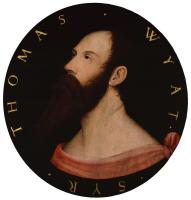
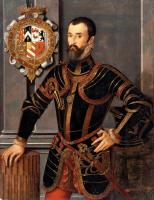
Henry Machyn's Diary. 1st February 1554. The sam day at after-non was a proclamasyon in Chepesyde, Ledyn-hall, and at sant Magnus [Map] corner, with harold of armes and on of the quen['s] trumpeters blohyng, and my lord mare, and my lord admerall [aged 44] Haward, and the ij shreyffs, that ser Thomas Wyatt [aged 33] was proclamyd traytur and rebellyous, and all ys fellowes, agaynst the Quen('s) mageste and her consell, and that he wold have the Quen in costody, and the Towre of London in kepyng; and thay convayd unto evere gatt gonnes and the bryge; and so evere gatt with men in harnes nyght and days. And a-bowt iij of the cloke at after-non the Quen('s) [aged 37] grace cam rydyng from Westmynster unto yeld-hall with mony lordes, knyghts and lades, and bysshopes and haroldes of armes, and trompeturs blohynge and all the gard in harnes. [Then she declared, in an oration to the mayor and the city, and to her council, her mind concerning her marriage, that she never intended to marry out of her realm but by her council's consent and advice; and that she would never marry but all her true] sogettes [subjects] shall be content, [or else she would live] as her grace has don hederto. [But that her gr]ace wyll call a parlement [as] shortely as [may be, and] as thay shall fynd, and that [the earl of] Penbroke [aged 53] shall be cheyffe capten and generall agaynst ser Thomas Wyatt and ys felous in the [field,] that my lord admerall for to be sosyatt with the [lord mayor] to kepe the cete from all commars therto. [After this] the Quen('s) grace came from yeld-hall [Map] and rod to the iij cranes [Map] in the vyntre, and toke her barge [to] Westmynster to her own place the sam day.
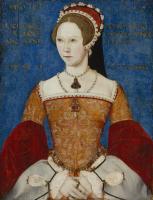
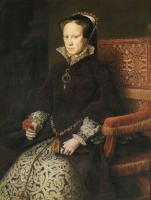

Chronicle of Greyfriars. 1st February 1554. Item the furst day of February the qwenes grace came (in) hare owne persone un-to the yelde-halle of Londone, and showyd hare mynde1 un-to the mayer, aldermen, and the hole crafttes of London (in) are owne persone, with hare cepter in hare honde in tokyn of love and pes, and wente home agayne by watter at the Crane in the ventre [Map].
Note 1. Her address to the citizens is given by Foxe.
Henry Machyn's Diary. 25th March 1557. [The xxv of March] the duke of Muskovea whent to [court, with] a x althermen and a grett compene of [merchants, which] be fre of Muskovea; and the lord toke ys ba[rge at the] iij Cranes in the Vyntre [Map]; and ys garment was of cloth of tyssuw, and ys hatt and ys nyght-cape was sett with grett perlles and ryche stones, as evere I say, and ys men in cloth of gold and red damaske in syd gownes; and so he dy. (unfinished).
The London Gazette 85. 2nd September 1666. On the second instant, at one of the clock in the Morning, there hapned to break out, a sad in deplorable Fire in Pudding-lane, neer New Fishstreet, which falling out at that hour of the night, and in a quarter of the Town so close built with wooden pitched houses spread itself so far before day, and with such distraction to the inhabitants and Neighbours, that care was not taken for the timely preventing the further diffusion of it, by pulling down houses, as ought to have been; so that this lamentable Fire in a short time became too big to be mastred by any Engines or worKing neer it, It fell out most unhappily too, That a violent Easterly wind fomented it, and kept it burning all that day, and the night following spreading itself up to Grace-church-street and downwards from Cannon-street to the Water-side, as far as the Three Cranes in the Vintrey [Map].