

Corfe Castle, Dorset is in Corfe, Dorset [Map], Castles in Dorset.
On 18th March 978 King Edward I of England [aged 16] was murdered at Corfe Castle, Dorset [Map] when visiting his younger half-brother Æthelred [aged 12] and his [Æthelred's] mother Aelfthryth [aged 33]. He was buried in Wareham, Dorset [Map] without ceremony. His half brother Æthelred succeeded II King of England.
Anglo-Saxon Chronicle. 978. This year was King Edward [aged 16] slain, at eventide, at Corfe-gate [Map], on the fifteenth day before the calends of April. And he was buried at Wareham, Dorset [Map] without any royal honour. No worse deed than this was ever done by the English nation since they first sought the land of Britain. Men murdered him but God has magnified him. He was in life an earthly king-he is now after death a heavenly saint. Him would not his earthly relatives avenge-but his heavenly father has avenged him amply. The earthly homicides would wipe out his memory from the earth-but the avenger above has spread his memory abroad in heaven and in earth. Those, Who would not before bow to his living body, now bow on their knees to His dead bones. Now we may conclude, that the wisdom of men, and their meditations, and their counsels, are as nought against the appointment of God. In this same year succeeded Ethelred Etheling [aged 12], his brother, to the government; and he was afterwards very readily, and with great joy to the counsellors of England, consecrated king at Kingston [Map]. In the same year also died Alfwold, who was Bishop of Dorsetshire, and whose body lieth in the minster at Sherborn [Map].
Chronicon ex Chronicis by Florence and John of Worcester. 18th March 978. Edward, king of England [aged 16], was foully murdered at Corvesireate [Map], at the instigations of his step-mother, queen Elfthritha [aged 33], and was buried at Wareham [Map] without royal pomp.
In 1197 Gruffydd ap Rhys Dinefwr Prince Deheubarth was imprisoned at Corfe Castle, Dorset [Map].
 Annals of Margam. 1st August 1202. King John [aged 35] took his nephew Arthur [aged 15] in chains at the castle of Mirabel on the feast of Saint Peter, and with Geoffrey de Lusignan1, Hugo the Brown2 and Andream de Chavenny, and Hugh III, viscount of Chastelleraud3, and Reymundnm de Troarde, and Savaricum de Maulyon, and Hugonem de Banchai, and all his other enemies of Poitou, who were around 200 soldiers and more. Of which 22 he killed the noblest and bravest men in arms by starvation in the castle of Corfe [Map]; so that not one of them escaped.
Rex Johannes apud castrum Mirabel cepit Arthurum nepotem suum in festum Sancti Petri ad vincula, et cum eo Galfridum de Lizanan1 et Hugonem de Brun2, et Andream de Chavenny, et vice-comitem de castro Haraldi3, et Reymundnm de Troarde, et Savaricum de Maulyon, et Hugonem de Banchai, et omnes alios inimicos suos Pictaviæ, qui ibi erant circiter cc. milites et plures. Ex quibus xxii. nobilissimos et strenuissimos in armis fame interfecit in castello de Corf [Map]; ita quod nec unus ex illis evasit.
Note 1. Geoffrey de Lusignan [aged 52].
Note 2. Hugh de Lusignan [aged 19], surnamed le Brun, count de la Marche.
Note 3. Hugh III, viscount of Chastelleraud.
In 1206 Eleanor Fair Maid of Brittany [aged 22] was imprisoned at Brough Castle [Map], under the guard of Robert de Vipont Baron of Westmoreland, then at Bowes Castle, County Durham [Map], then Corfe Castle, Dorset [Map]. At Corfe Castle, Dorset [Map] she was accompanied by twenty-five French knights loyal to her. Following an attempt to escape twenty-two of the knights were starved to death.
1209. Chronicles mention of Chapel of St John the Evangelist, Bolton [Map] [Boyeltun] as the meeting place of King John of England [aged 42] and King William I of Scotland [aged 66]. King William I of Scotland sent his two daughters Margaret Dunkeld Countess Kent [aged 16] and Isabella Dunkeld Countess Norfolk [aged 14] as hostages to keep the peace. They, Margaret and Isabella, were imprisoned with Eleanor Fair Maid of Brittany [aged 25] at Corfe Castle, Dorset [Map].
In 1209 Margaret Dunkeld Countess Kent [aged 16] was imprisoned at Corfe Castle, Dorset [Map].
In 1210 Maud "Lady of Hay" St Valery Baroness Bramber [aged 55] was imprisoned at Corfe Castle, Dorset [Map].
In 1210 Maud "Lady of Hay" St Valery Baroness Bramber [aged 55] starved to death at Corfe Castle, Dorset [Map].
In 1210 William de Braose was starved to death at Corfe Castle, Dorset [Map].
In 1210 William de Braose was imprisoned at Corfe Castle, Dorset [Map].
In 1247 Nicholas Moels [aged 52] was appointed Constable of Corfe Castle, Dorset.
In 1299 Simon Montagu 1st Baron Montagu [aged 49] was appointed Governor of Corfe Castle.
On 24th September 1329 John Maltravers 1st Baron Maltravers [aged 39] was appointed Constable of Corfe Castle, Dorset.
In 1340 Richard Willoughby [aged 50] was imprisoned at Corfe Castle, Dorset [Map].
 Westminster Chronicle. On the seventh day of February, while the earl of Nottingham [aged 15]1 was dining with the aforesaid John Northampton, the aforesaid earl asked him to come after dinner with his men to the Carmelite friars, to show him honour, because the anniversary day of his brother, lately buried there, was close at hand. Northampton agreed, and came with about seven hundred men gathered from various crafts. The mayor of London, however, had no more than forty men in his company. On his return, the mayor met Northampton and asked him why he was surrounded at that time by so great a crowd. Northampton told him the reason, saying that he had by no means invited all those who were then with him, but that they had flowed to him freely and without his knowledge. Others, however, said indignantly that this was the reason why he had then summoned so many and such men to himself, namely, so that he might stir up tumult and sedition among the people. Therefore, when dissension had arisen through seditious men, Northampton would have been killed there, notwithstanding his multitude, if the mayor had not arrested him more quickly. Afterwards, when a report had been made about him to the lord king, namely how he was striving in various ways to disturb the city of London, the king’s chamber, and that, unless for a time he was somewhere other than in the aforesaid city, there was reason to fear that he would be the cause of the destruction of that city, the king, because of this suggestion, ordered him to be sent to Corfe Castle [Map], to be held there in custody for a time, until he could clear himself of certain things charged against him.
Septimo die Februarii prandente comite de Notyngham cum prædicto Johanne Northampton rogavit eum comes præfatus ut post prandium veniret cum suis ad fratres Carmelitas exhibendo sibi honorem eo quod dies anniversarii fratris sui nuper ibidem sepulti in proximo imminebat. Annuit ipse et venit cum cecctis circiter viris de diversis artibus congregatis. Major vero Londoniæ non habuit secum in sua comitiva ultra xl. viros. In redeundo quoque major obviavit Northampton quærens ab eo ad quid tanta turba eo tempore erat vallätus. At ille retulit sibi causam dicens quod omnes qui erant cum illo pro tunc minime invitavit immo gratis absque sui notitia ad eum confluebant. Alii namque indignati dixerunt illam fuisse causam quare tot et tales sibi protunc ascivit, scilicet, ut tumultum et seditionem in populo suscitaret; unde per seditiosos orta dissensione non obstante ejus multitudine Northampton interfectus ibidem fuisset, nisi major eum citius arrestasset. Demum postea facta de illo relatione domino regi, scilicet quomodo nitebatur civitatem Londoniæ, cameram suam, diversimode perturbare et nisi alibi sit pro tempore quam in civitate præfata timendum est quod ipse erit causa destructionis civitatis prædictæ. Quare super ista suggestione rex jussit eum mitti in castrum de Corf ut ibi in custodia teneretur ad tempus quousque ipse super quibusdam sibi impositis etiam potuit se purgare.
Note 1. Thomas Mowbray, 1368-1399, younger brother of John Mowbray, Earl of Nottingham, who died in 1383. Created Duke of Norfolk in 1397. Married 1. 1383 Elizabeth Strange, and 2. Elizabeth Fitzalan, daughter of the Richard Fitzalan, Earl of Arundel. Thomas Mowbray died of plague in 1399.
Westminster Chronicle. And so John Northampton, because of the three aforesaid matters and because of his disorderly conduct, would finally have ended his life by a shameful death, had not the lady queen [aged 18] happened to be present there, and, falling humbly before the lord king, begged for his life, that he should not die. Through her intervention the king granted him his life, but nevertheless ordered him to be committed to perpetual imprisonment. At last John Northampton, thus nobly rescued from destruction by death, was quickly taken to Corfe Castle [Map], where he had previously been assigned to prison custody. When the council had ended, each man returned to his own affairs. Not long afterwards, among the Londoners, which is to be lamented, serious discord arose, because it had been reported among them that John Northampton, John More, then sheriff of London, Richard Northbury, and William Essex, formerly men of great standing in the aforesaid city, together with their accomplices, had treacherously desired, and, so far as in them lay, wickedly procured, the death of great men both inside and outside the city, I shall not say of the king or of other illustrious men. For this reason John More and Richard Northbury were arrested and sent into custody. It was also reported that these men had worked in many ways to stir up sedition in the city of London, and therefore they were arrested. But William Essex, long before, had cautiously gone to Westminster for refuge.
Sicque J. Northampton propter tria præmissa ac propter incompositos mores vitam suam turpi morte finaliter terminasset nisi domina regina ibi casu aliter extitisset, ac pro ejus vita ne moreretur domino regi provoluta humiliter supplicasset. Cujus interventu rex concessit sibi vitam sed jussit eum tamen perpetuo carceri mancipari. Demum J. Northampton sic a mortis interitu generose ereptus ad castrum de Corfe celeriter est adductus ubi prius erat carcerali custodiæ deputatus. Finito consilio unusquisque remeavit ad propria. Non multum post inter Londonienses, quod dolendum est, gravis discordia est exorta, quia divulgçatum erat apud eos quod J. Northampton, J. More vicecomes tunc Londoniæ, Ricardus Northbury et Willelmus Estsex, quondam magni in civitate prædicta, cum suis complicibus mortem magnorum tam in civitate quam extra non dicam regis seu aliorum illustrium proditorie affectarunt et quantum in eis fuit nequiter procurarunt propter quod capti sunt J. More et R. Northbury et missi in custodiam. Relatum est etiam quod isti ad excitandam seditionem in civitate Londoniæ multipliciter laborabant et ideo erant capti sed Willelmus Estsex longe ante causa refugii ad Westmonasterium caute transivit.
Westminster Chronicle. Around the beginning of the month of September, John Northampton was brought out from Corfe Castle and sent to the Tower of London. At that time the king sent for his justices and legal experts, ordering them, without further delay, to present themselves before him at Westminster on the seventh day of September, in order to proceed judicially against the aforesaid men, who had been publicly appealed on such notorious crimes and offences, and were also notoriously defamed. The king’s chief justice, named Robert Tresilian, was afraid to give sentence in a case of this kind. For he said that judgement upon them belonged only to the mayor of London. But since the aforesaid men, namely John Northampton and his associates, had been appealed, and also indicted, for treason, their goods, both movable and immovable, would necessarily be confiscated if it should happen that they were condemned to death in judgement for such crimes. Therefore, on the tenth day of September, in the Tower of London, before Lord John Montagu [aged 34], steward of the lord king, and with two justices also present, namely Robert Tresilian and Robert Belknap, three of them were brought forward and examined concerning the things laid against them. They confessed that the charges brought against them were true, yet they placed themselves wholly in the king’s grace. They did this because, owing to the suborning of men of the country, they did not dare trust in a jury. Therefore Lord John Montagu, steward of the lord king, as is reported, pronounced sentence upon them and adjudged them to be drawn and hanged. Immediately Lord Michael de la Pole [aged 54], the lord king’s chancellor, entered the council. Each of the things that had been done concerning them was made known to him, and how they had confessed the things laid against them. Therefore they had duly been adjudged to be drawn and hanged. Then the chancellor said, in the hearing of all: "Although these men, because of the crimes they have committed, ought swiftly to have undergone death, nevertheless, because they have of their own accord surrendered themselves to the king’s grace, the king grants them life only, by his special grace. Nevertheless, he wills that in the meantime they be kept in secure places until his good pleasure, until, should it seem expedient, he may decide to show them fuller grace." At once, lest those three men should rejoice together in any comforts, they were sent to three parts of England, sufficiently remote from one another, namely Thomas Northbury to Corfe Castle [Map], situated in the southern part of England, John More to Nottingham Castle [Map], situated in the northern part, and John Northampton to Tintagel Castle in Cornwall, so that they might remain there in custody. All these things, as was said, their rivals the fishmongers had procured to be done to them, because it was through those men that their craft and court had been destroyed.
Circa principium mensis Semptembris J. Northampton de castro Corfe eductus transmissus est in turrim Londoniæ. Quo in tempore misit rex pro justiciariis suis et juris peritis ut sine dilatione ulteriori septimo die Septembris se apud Westmonasterium ejus conspectui præsentarent ad procedendum juridice contra prædictos super tam notoriis criminibus et excessibus publice appellatos ac etiam notorie diffamatos. Principalis vero judex regis nomine Robertus Tresilian timuit in hujusmodi causa sententiare. Dicebat enim illorum judicium majori Londoniæ tummodo pertinere; at quia isti prædicti scilicet J. Northampton et ejus socii fuerunt super proditione appellati, ac etiam indictati, necessario eorum bona tam mobilia quam immobilia confiscarentur si contigerit eos propter hujusmodi crimina ad mortem in judicio condemnari. Igitur decimo die Septembris in turrim Londoniæ coram domino Johanne de Monteacuto senescallo domini regis, præsentibus etiam duobus justiciaribus, scilicet Roberto Tresylian et Roberto Beleknap, tres illorum fuerunt producti ac super sibi impositis examinati. Ea illis illata fatebantur esse vera, se tamen totaliter in regis gratiam posuerunt, et hoc ideo fecerunt quia propter subornationem in hominibus patriæ confidere non audebant. Unde dominus Johannes de Monteacuto senescallus domini regis, ut profertur, tulit sententiam super eos et adjudicavit eos trahi et suspendi. Mox dominus Michael de la Pole cancellarius domini regis concionem intravit. Et patefacta sunt ei singula quæ circa eos erant acta et quo modo erant confessi ea quæ sibi imponebantur. Unde rite fuerant adjudicati trahi et suspendi. Tunc cancellarius cunctis audientibus dixit "Licet isti propter scelera commissa mortem subire celeriter debuissent, tamen quia regiæ gratiæ se ultro dederunt rex concedit eis vitam tantum de sua gratia speciali. Nihilominus tamen vult quod usque ad beneplacitum suum in locis securis interim custodiantur, donec si videatur expedire eis gratiam facere duxerit ampliorem. Confestim ne isti tres insimul aliquibus solatiis congauderent, missi sunt ad tres partes Angliæ adinvicem satis remote distantes, scilicet T. Northbury ad castrum Corfe in australi parte Angliæ situatum ; J. More ad castrum Nottyngham in boreali parte situatum ; et J. Northampton ad castrum de Tyntagel in Cornubia situatum ut ibi in custodia morarentur." Hæc autem omnia sibi fieri procurarunt eorum æmuli piscarii, ut dicebatur, quia per illos stetit quod ars et curia eorum erant destructæ.
Chronicle of Gregory. Then the Quene [aged 30] havynge knowelechynge of this praty whyle sche sende unto the Duke of Somersett [aged 24], at that tyme beynge in Dorset schyre at the Castelle of Corffe [Map], and for the Erle of Devyschyre [aged 28], and for Elysaundyr Hody, and prayde them to com to her as hastely as they might, with her tenantys as strong in her harnys as men of warre, for the Lord Rosse [aged 33], the Lord Clyfforde [aged 25], the Baron of Grestocke [aged 46], the Lord Nevyle [aged 50], the Lord Latymer [aged 53], were waytyng a-pon the Duke of Excete[r] [aged 30] to mete with her at Hulle [Map]. And this mater was not taryd but full prevely i-wrought; and she sende letters unto alle her ehyffe offycers that they wold doo the same, and that they shulde warne alle the servantys that lovyd her or purposyd to kepe and rejoyse her of Yysce, to wayte a-pon her at Hulle by that day as hit a-poyntyd by hyr. Alle thes pepylle were gaderyd and conveyde so prevely that they wer hole in nombyr of xvM [Note. 15000] or any man wolde be-leve it; in so moche yf any man said, or tolde, or talkyd of suche gaderyng, he shulde be schende, and some were in grete donger, for the common pepylle said by thoo that told the, troughthe, "Ye talke ryght ye wolde hit were," and gave noo credens of her sayynge. But the laste the lordys purposyd to knowe the troughthe. And the ix day of December [1460] nexte folowyng the Duke of Yorke [aged 49], the Erle of Salysbury [aged 60], the Erle Rutlond [aged 17] (he was the Duke of Yorke is secunde sone, one the beste dysposyd lord in this londe), and Syr Thomas Haryngdon [aged 60], whythe many mo knyghtys and quyers and grete pepylle with hem, and soo departyd out of London towarde Yorke, &c.
Patent Rolls. 2nd March 1478. Grant for life to the king's counsellor John Audeley, lord Audeley [aged 52], of the office of steward of all lordships, manors and lands in the county of Dorset late of George, late duke of Clarence [deceased], and in the king's hands by his forfeiture, with 20 marks yearly from the issues of the lordship of Halisbere, co. Dorset; grant to him, during minority, of the office of steward of all lordships, manors and lands in the said county in the king's hands by reason of the minority of Edward [aged 3], son of the said George, with 10 marks yearly from the issues of the premises; and grant to him for life of the office of constable and the custody of the castle of Warden and the office of constable and the custody of the castle of Corffe, with the accustomed fees from the issues of the king's lordships there and all other profits. By p.s.
In 1635 John Bankes [aged 46] purchased Corfe Castle, Dorset [Map] from Elizabeth Cecil Lady Hatton [aged 57].
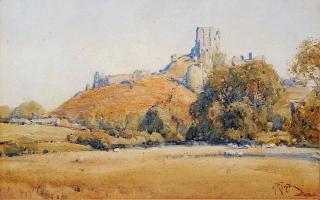
Before 1934. Reginald Arthur Smith [aged 62]. "Corfe Castle [Map]".
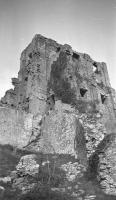
1935-1936. Paul Nash [aged 45]. Black and white negative, Corfe Castle, Dorset [Map].

1935-1936. Paul Nash [aged 45]. Black and white negative, Corfe Castle, Dorset [Map].
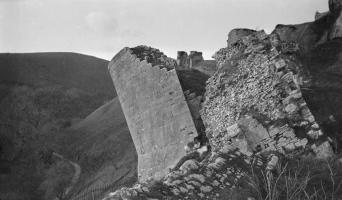
1935-1936. Paul Nash [aged 45]. Black and white negative, Martyr's Gate, Corfe Castle, Dorset [Map].
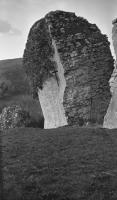
1935-1936. Paul Nash [aged 45]. Black and white negative, Martyr's Gate, Corfe Castle, Dorset [Map].
Roger Damory 1st Baron Damory was appointed Constable of Corfe Castle, Dorset.