

Beverley is in East Yorkshire.
See: Beverley Minster [Map], Meaux aka Mesla Abbey [Map], St Mary and St Nicholas Church, Beverley, Weel, East Yorkshire [Map].
On 14th October 1153 Archbishop Henry Murdac died at Beverley [Map]. He was buried at York Minster [Map].
Around 1430 Bishop John Alcock was born in Beverley [Map].
After 23rd May 1441 Robert Constable [deceased] died at Beverley [Map].
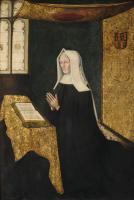
Around 19th October 1469 Bishop John Fisher was born to Robert Fisher in Beverley [Map].
In 1500 John Fisher was born to Robert Fisher in Beverley [Map].
Henry Machyn's Diary. 5th July 1557. At Beverley [Map], Hary Gardener and John Thomas suffered.
In 1563 Nicholas Bacon 1st Baronet [aged 23] was elected MP Beverley.
In 1597 Edward Fraunceys [aged 31] was elected MP Beverley. He was re-elected in 1601.
In 1722 Michael Newton 4th Baronet [aged 27] was elected MP Beverley in the 1722 General Election.
In 1774 James Pennyman 6th Baronet [aged 37] was elected MP Beverley which seat he held until 1796.
In 1820 George Lane-Fox [aged 26] was elected MP Beverley.
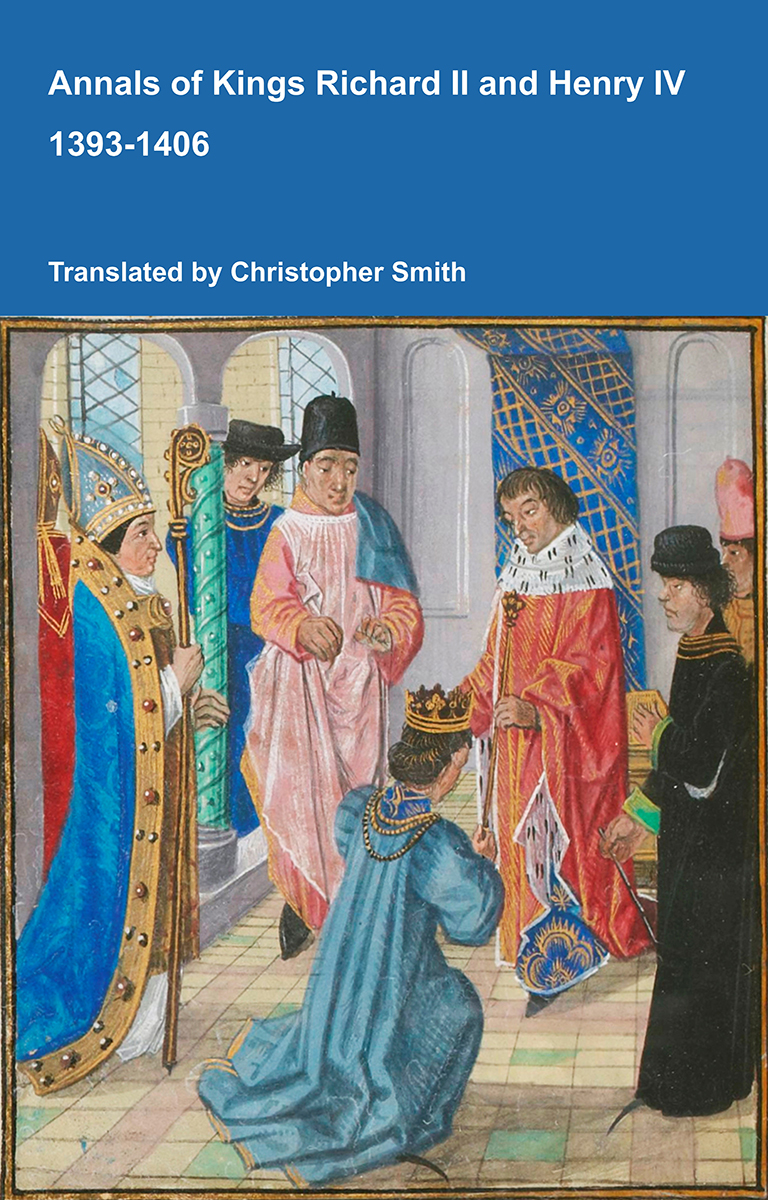
Annals of Kings Richard II and Henry IV 1393-1406
The Annals of Kings Richard II and Henry IV offers a vivid contemporary account of one of the most turbulent periods in late medieval England. Covering the reigns of Richard II and Henry IV, the chronicle records royal ceremonies, political conflict, rebellion, war, taxation, religious controversy, executions, popular unrest and remarkable portents. Its pages include a detailed description of Richard II’s coronation, the fall and deposition of the king, Henry IV’s seizure of the throne, the Percy rebellion, the execution of Archbishop Richard Scrope, the campaigns of Owain Glyndŵr, and England’s relations with Scotland, France, Portugal and Scandinavia. Alongside affairs of state, the annalist preserves reports of miracles, eclipses, prophecies, supernatural events and the experiences of ordinary townspeople, clergy, soldiers and travellers. Written from a monastic perspective, the work combines political observation with moral judgement, presenting victories and disasters as evidence of divine favour or punishment. At once a historical record and a reflection of medieval belief, the Annals provides an invaluable window into the challenges, ceremonies and conflicts of England at the turn of the fifteenth century.
Available at Amazon in eBook and Paperback format.
In 1837 George Lane-Fox [aged 43] was elected MP Beverley.
In 1852 Henry Edwards 1st Baronet [aged 39] was elected MP Beverley.
In 1860 James Walker 2nd Baronet [aged 30] was elected MP Beverley which seat he held until 1865.
See Abbeys in England.
In 1151 William of Blois 1st Earl Albemarle 1st Earl York [aged 50] founded Meaux aka Mesla Abbey [Map] as Cistercian house.
On 3rd September 1292 King Edward I of England [aged 53] stayed for two days at Burstwick Castle [Map] on his return from Scotland. During his stay visited Wyke, a small settlement on the River Hull. Edward ordered a survey of the site and within a few years purchased it from Meaux Abbey [Map]. By 1299, Wyke had been granted a royal charter and renamed King's Town upon Hull [Map] – the origins of the city we know today.
On or before 31st January 1764 William Henry Pennyman was born to James Pennyman 6th Baronet [aged 27] and Elizabeth Grey Lady Pennyman. He was baptised on 31st January 1764 at St Mary and St Nicholas Church, Beverley. Dugdale's visitation however gives the baptismal date as the 21st of January 1764. He married before 3rd May 1848 Charlotte Robinson.
The River Hull rises near Driffield [Map] being formed from a number of streams and becks after which it flows past Wansford, East Yorkshire [Map], Brigham, East Yorkshire [Map], under Bethell's Bridge [Map] then Weel, East Yorkshire [Map] on the outskirts of Beverley [Map] after which it flows to Kingston upon Hull [Map] where it joins the Humber Estuary.