

England is in Culture.
1189 Coronation of King Richard I
1236 Marriage of Henry III and Eleanor of Provence
1308 Coronation of Edward II and Isabella
1344 Creation of the Order of the Garter
1376 Death of the Black Prince
1470 Marriage of Edward of Westminster and Anne Neville
Around 1532 Bishop Edward Fox [aged 36] was appointed Almoner to the King.
In 1558 William Bill [aged 53] was appointed Almoner to Queen Elizabeth I of England and Ireland [aged 24].
John Evelyn's Diary. 11th January 1662. I dined at Arundel House [Map], where I heard excellent music performed by the ablest masters, both French and English, on theorbos, viols, organs, and voices, as an exercise against the coming of the Queen [aged 23], purposely composed for her chapel. Afterward, my Lord Aubigny [aged 42] her Majesty's Almoner to be) showed us his elegant lodging, and his wheel-chair for ease and motion, with divers other curiosities; especially a kind of artificial glass, or porcelain, adorned with relievos of paste, hard and beautiful. Lord Aubigny (brother to the Duke of Lennox) was a person of good sense, but wholly abandoned to ease and effeminacy.
In 1519 Bishop John Longland [aged 46] was appointed Lord High Almoner.

In 1675 Archbishop John Dolben [aged 50] was appointed Lord High Almoner.
John Evelyn's Diary. 5th November 1689. The Bishop of St. Asaph [aged 62], Lord Almoner, preached before the King [aged 39] and Queen [aged 27], the whole discourse being an historical narrative of the Church of England's several deliverances, especially that of this anniversary, signalized by being also the birthday of the Prince of Orange, his marriage (which was on the 4th), and his landing at Torbay this day. There was a splendid ball and other rejoicings.


In 1723 Bishop Lancelot Blackburne [aged 64] was appointed Lord High Almoner which office he held for life.
In 1882 Bishop Alwyne Compton [aged 57] was appointed Lord High Almoner.
In 1988 Bishop John Bernard Taylor [aged 58] was appointed Lord High Almoner which office he held until 1997.

The Deeds of the Dukes of Normandy
The Gesta Normannorum Ducum [The Deeds of the Dukes of Normandy] is a landmark medieval chronicle tracing the rise and fall of the Norman dynasty from its early roots through the pivotal events surrounding the Norman Conquest of England. Originally penned in Latin by the monk William of Jumièges shortly before 1060 and later expanded at the behest of William the Conqueror, the work chronicles the deeds, politics, battles, and leadership of the Norman dukes, especially William’s own claim to the English throne. The narrative combines earlier historical sources with firsthand information and oral testimony to present an authoritative account of Normandy’s transformation from a Viking settlement into one of medieval Europe’s most powerful realms. William’s history emphasizes the legitimacy, military prowess, and governance of the Norman line, framing their expansion, including the conquest of England, as both divinely sanctioned and noble in purpose. Later chroniclers such as Orderic Vitalis and Robert of Torigni continued the history, extending the coverage into the 12th century, providing broader context on ducal rule and its impact. Today this classic work remains a foundational source for understanding Norman identity, medieval statesmanship, and the historical forces that reshaped England and Western Europe between 800AD and 1100AD.
Available at Amazon in eBook and Paperback format.
In 1581 George Gower [aged 41] was appointed Serjeant to Queen Elizabeth I of England and Ireland [aged 47].


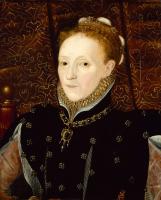
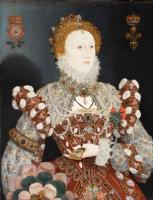


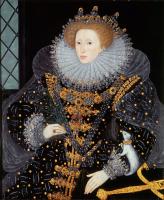

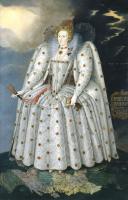
After 1660 Robert Streater [aged 39] was appointed Serjeant to King Charles II of England Scotland and Ireland [aged 29].


In 1627 Philippe Carteret 3rd Seigneur Sark [aged 42] was appointed Bailiff of Jersey.
Patent Rolls. 7th May 1461. Middleham Castle [Map]. The like (Grant for life) to the said earl [aged 32], the office of Master of the King's Mews and Falcons and a messuage called 'le Mewehous' at Charryng by Westminster, co Middlesex, with all houses and other profits pertaining to the same, in the same manner as John, duke of Bedford, deceased; and appointment of him to take the king's right prises of falcons, goshawks, sakers, sakrets, lanners, lannerets and ger-falcons sold within the realm, paying the accustomed price viz 20s for each tercel of goshawk, saker, lanner or lanneret. By other latters patent.
Patent Rolls. 7th May 1461. Middleham Castle [Map]. The like (Grant for life) to the said earl [aged 32], the office of Master of the King's Mews and Falcons and a messuage called 'le Mewehous' at Charryng by Westminster, co Middlesex, with all houses and other profits pertaining to the same, in the same manner as John, duke of Bedford, deceased; and appointment of him to take the king's right prises of falcons, goshawks, sakers, sakrets, lanners, lannerets and ger-falcons sold within the realm, paying the accustomed price viz 20s for each tercel of goshawk, saker, lanner or lanneret. By other latters patent.
Patent Rolls. 7th May 1461. Middleham Castle [Map]. The like (Grant for life) to the said earl [aged 32], the office of Master of the King's Mews and Falcons and a messuage called 'le Mewehous' at Charryng by Westminster, co Middlesex, with all houses and other profits pertaining to the same, in the same manner as John, duke of Bedford, deceased; and appointment of him to take the king's right prises of falcons, goshawks, sakers, sakrets, lanners, lannerets and ger-falcons sold within the realm, paying the accustomed price viz 20s for each tercel of goshawk, saker, lanner or lanneret. By other latters patent.
Patent Rolls. 7th May 1461. Middleham Castle [Map]. The like (Grant for life) to the said earl [aged 32], the office of Master of the King's Mews and Falcons and a messuage called 'le Mewehous' at Charryng by Westminster, co Middlesex, with all houses and other profits pertaining to the same, in the same manner as John, duke of Bedford, deceased; and appointment of him to take the king's right prises of falcons, goshawks, sakers, sakrets, lanners, lannerets and ger-falcons sold within the realm, paying the accustomed price viz 20s for each tercel of goshawk, saker, lanner or lanneret. By other latters patent.
Patent Rolls. 7th May 1461. Middleham Castle [Map]. The like (Grant for life) to the said earl [aged 32], the office of Master of the King's Mews and Falcons and a messuage called 'le Mewehous' at Charryng by Westminster, co Middlesex, with all houses and other profits pertaining to the same, in the same manner as John, duke of Bedford, deceased; and appointment of him to take the king's right prises of falcons, goshawks, sakers, sakrets, lanners, lannerets and ger-falcons sold within the realm, paying the accustomed price viz 20s for each tercel of goshawk, saker, lanner or lanneret. By other latters patent.
Gresley Canal. 13 George III. Cap. 16, Royal Assent 13th April, 1775.
This canal, which pursues a north-west direction, and is level throughout, was made at the expense of Sir Nigel Gresley [aged 48], Bart and Nigel Bowyer Gresley [aged 22], Esq. his son and heir-apparent, for the purpose of conveying the produce of their extensive coal mines in Apedale, in Staffordshire, to the town of Newcastle-under-Lyne, in the same county, and of facilitating their transit to other parts of the country by means of the Newcastle-under-Lyne Junction, and other navigations.
The act obtained as above, is entitled, 'An Act to enable Sir Nigel Greeley, Bart and Nigel Bowyer Gresley, Esq. his Son, to make and maintain a navigable Cut or Canal from certain Coal Mines in Apedale, to Newcastle-under-Lyne, in the county of Stafford." This act, after making the usual provisions, binds the proprietors for twenty-one years from and after the date thereof, to furnish the inhabitants of Newcastle with coals at 5s. per ton of twenty hundred weight, weighing one hundred and twenty pounds each hundred weight, and in like proportion for a single hundred weight. At the expiration of the first twenty-one years the proprietors, or their heirs, are to furnish coals at 5s. 6d. per ton for an additional term of twenty-one years; which last quoted price may, under certain conditions, be raised to 6s. per ton; the proprietors, in either case, binding themselves, under the penalty of £40 for each offence, to keep a supply of coals sufficient for the consumption of the town, at a wharf in or near the same.
There are few private works of more real utility to the public than Sir Nigel Gresley's Canal, which has added considerably to die interests of the inhabitants of Newcastle, by the regularity wherewith they are supplied with coal at a moderate charge.
In 1827 Roger Gresley 8th Baronet [aged 27] sold the Gresley Canal to pay off his gambling debts.
Before 10th May 1509, the date of King Henry VII's funeral, Thomas Darcy 1st Baron Darcy Templehurst [aged 42] was appointed Captain of the Yeoman of the Guard.
In 1510 Henry Marney 1st Baron Marney [aged 63] was appointed 269th Knight of the Garter, Chancellor of the Duchy of Lancaster, Lord Privy Seal, Vice-Chamberlain of the Household, Warden of the Stannaries and Captain of the Yeoman of the Guard by King Henry VIII of England and Ireland [aged 18].

Adam Murimuth's Continuation and Robert of Avesbury’s 'The Wonderful Deeds of King Edward III'
This volume brings together two of the most important contemporary chronicles for the reign of Edward III and the opening phases of the Hundred Years’ War. Written in Latin by English clerical observers, these texts provide a vivid and authoritative window into the political, diplomatic, and military history of fourteenth-century England and its continental ambitions. Adam Murimuth Continuatio's Chronicarum continues an earlier chronicle into the mid-fourteenth century, offering concise but valuable notices on royal policy, foreign relations, and ecclesiastical affairs. Its annalistic structure makes it especially useful for establishing chronology and tracing the development of events year by year. Complementing it, Robert of Avesbury’s De gestis mirabilibus regis Edwardi tertii is a rich documentary chronicle preserving letters, treaties, and official records alongside narrative passages. It is an indispensable source for understanding Edward III’s claim to the French crown, the conduct of war, and the mechanisms of medieval diplomacy. Together, these works offer scholars, students, and enthusiasts a reliable and unembellished account of a transformative period in English and European history. Essential for anyone interested in medieval chronicles, the Hundred Years’ War, or the reign of Edward III.
Available at Amazon in eBook and Paperback format.
On 25th December 1557 Henry Bedingfield [aged 48] was appointed Vice-Chamberlain of the Household and Captain of the Yeoman of the Guard.
Henry Machyn's Diary. 25th December 1557. The xxv day of Desember wher dyvers [courtiers] was removyd unto he-her [higher] rommys; as ser Edward Hastynges [aged 36], master of the quen's hors, was mad lord chamburlayn; and ser Thomas Cornwalles comptroller; ser Hare Jarnyngham [aged 45] the master of the hors; and ser Hare Benefeld [aged 48] fee-chamburlayn and captayn of the gard.
In 1558 Edward Rogers [aged 60] was appointed Vice-Chamberlain of the Household, Captain of the Yeoman of the Guard and Privy Council.
In 1617 Henry Rich 1st Earl Holland [aged 26] was appointed Captain of the Yeoman of the Guard.


The London Gazette 21397. St. James's-Palace, December 30, 1852. The Queen has been pleased to appoint John Robert [aged 47] Viscount Sydney to be Captain of Her Majesty's Guard of Yeomen of the Guard, in the room of William-Lennox-Lascelles Lord de Ros [aged 55], resigned

The London Gazette 25486. St. James's Palace, June 27, 1885.
The Queen [aged 66] has been pleased to appoint George William [aged 61], Viscount Barrington, to be Captain of Her Majesty's Body Guard of Yeomen of the Guard, in the room of!William John [aged 56], Lord Monson, resigned.
W6GBhi0WThe Queen has been pleased to appoint the following to be Lords in Waiting in Ordinary to Her Majesty, viz.:—
Dudley Charles, Lord de Ros, in the room of Frederick Henry Paul, Lord Methuen, resigned.
Algernon Hawkins Thomoud, Earl of Kintore, in the room of John William, Earl of Dalhousie, resigned.
Cornwallis, Viscount Hawarden, in the room of William, Lord Sandhurst, resigned.
John Major, Lord Henniker, in the room of Thomas, Lord Ribblesdale, resigned.
John Adrian Louis [aged 24], Earl of Hopetoun, in the room of Thomas John, Lord Thurlow, resigned.
William, Lord Elphinstone [aged 56], in the room of Arthur, Lord Wrottesley, resigned.
The London Gazette 25558. St. James's Palace, February 10, 1886. THE Queen has been pleased to make the following appointments in Her Majesty's Household:— .
Valentine Augustus [aged 60], Earl of Kenmare, K.P., to be Lord Chamberlain of Her Majesty's Household, in the room of Edward [aged 48], Earl of Lathom, resigned.
Charles Douglas Richard [aged 45], Lord Sudeley to be Captain of the Corps of Gentlemen at Arms, in the room of George William [aged 47], Earl of Coventry, resigned.
William John, Lord Monson to be Captain of Her Majesty's Guard of Yeomen of the Guard, in the room of George William [aged 61], Viscount Barrington, resigned.
The Honourable Charles Robert Spencer [aged 28], M.P., to be one of the Grooms in Waiting in Ordinary to Her Majesty, in the room of Sir Henry Fletcher [aged 50], Bart., M.P., resigned.
In 1534 Richard Bulkeley of Beaumaris [aged 33] was appointed Chamberlain of North Wales.
Patent Rolls. 8th May 1461. York [Map]. Grant for life to William Herbert [aged 38], knight, of the offices of office of chief justice and chamberlain of South Wales, steward of the commontes in the counties of Caermarthen and Cardigan, and chief forester in those counties (Carmarthenshire,Cardiganshire).
In 1500 Bishop Richard Foxe [aged 52] was elected Chancellor Cambridge University.

The True Chronicles of Jean le Bel Volume 1 Chapters 1-60 1307-1342
The True Chronicles of Jean le Bel offer one of the most vivid and immediate accounts of 14th-century Europe, written by a knight who lived through the events he describes, and experienced some of them first hand. Covering the early decades of the Hundred Years’ War, this remarkable chronicle follows the campaigns of Edward III of England, the politics of France and the Low Countries, and the shifting alliances that shaped medieval warfare. Unlike later historians, Jean le Bel writes with a strong sense of eyewitness authenticity, drawing on personal experience and the testimony of fellow soldiers. His narrative captures not only battles and sieges, but also the realities of military life, diplomacy, and the ideals of chivalry that governed noble society. A key source for Jean Froissart, Le Bel’s chronicle stands on its own as a compelling and insightful work, at once historical record and literary achievement. This translation builds on the 1905 edition published in French by Jules Viard, adding extensive translations from other sources Rymer's Fœdera, the Chronicles of Adam Murimuth, William Nangis, Walter of Guisborough, a Bourgeois of Valenciennes, Geoffrey le Baker of Swinbroke and Richard Lescot to enrich the original text and Viard's notes.
Available at Amazon in eBook and Paperback format.
In February 1559 William Cecil 1st Baron Burghley [aged 38] was elected Chancellor Cambridge University.


In 1628 Henry Rich 1st Earl Holland [aged 37] was appointed Chancellor Cambridge University.
In 1280 Bishop John of Pontoise was appointed Chancellor University of Oxford.
In 1322 John Monmouth Bishop of Llandaff was appointed Chancellor University of Oxford.
In 1434 Cardinal Thomas Bourchier [aged 16] was appointed Chancellor University of Oxford.
In 1440 Bishop William Grey was appointed Chancellor University of Oxford.
In 1483 Bishop John Russell was appointed Chancellor University of Oxford.
In November 1552 John Mason [aged 49] was appointed Chancellor University of Oxford which position he held until Oct 1556.
In June 1559 John Mason [aged 56] was appointed Chancellor University of Oxford which position he held until Dec 1564.
In 1154 Richard "The Loyal" Lucy [aged 65] was appointed Chief Justicar.
In 1232 Stephen Segrave [aged 61] was appointed Chief Justicar.
On 30th January 1511 Thomas Benolt was appointed Clarenceux King of Arms.
Chronicle of Walter of Guisborough
A canon regular of the Augustinian Guisborough Priory, Yorkshire, formerly known as The Chronicle of Walter of Hemingburgh, describes the period from 1066 to 1346. Before 1274 the Chronicle is based on other works. Thereafter, the Chronicle is original, and a remarkable source for the events of the time. This book provides a translation of the Chronicle from that date. The Latin source for our translation is the 1849 work edited by Hans Claude Hamilton. Hamilton, in his preface, says: 'In the present work we behold perhaps one of the finest samples of our early chronicles, both as regards the value of the events recorded, and the correctness with which they are detailed; Nor will the pleasing style of composition be lightly passed over by those capable of seeing reflected from it the tokens of a vigorous and cultivated mind, and a favourable specimen of the learning and taste of the age in which it was framed.'
Available at Amazon in eBook and Paperback format.
On 19th May 1536 Thomas Hawley was appointed Clarenceux King of Arms.
In 1557 William Harvey [aged 47] was appointed Clarenceux King of Arms.
Henry Machyn's Diary. 21st November 1557. The Sonday, the xxj day at November, the quen('s) [aged 41] grase [did] sett a crowne of master Norrey('s) [aged 47] hed kyng at armes, [and] created hym Clarenshus, with a cup of [wine], at Sant James, her grace('s) place.
Note. P. 158. Coronation of Norroy king of arms. The instrument of the creation and coronation of Laurence Dalton to be Norroy king of arms, by letters patent dated 6 Sept. 1557, is printed in Rymer's Fœdera, vol. xv. p. 477; and that for William Harvey to be Clarenceux, dated the next day, in the following page.


On 21st May 1567 Robert Cooke [aged 32] was appointed Clarenceux King of Arms.
In 1831 William Woods Howard [aged 45] was appointed Clarenceux King of Arms.
The London Gazette 32781. Whitehall, December 28, 1922. The King has been pleased, by Letters Patent under the Great Seal of the United Kingdom of Great Britain and Ireland, bearing date the 12th December, 1922, to grant unto William Alexander Lindsay [aged 76], Esquire, K.C., Norroy King of Arms, the Office of Clarenceux King of Arms, and Principal Herald of the South, East and West parts of England, vacant by the death of Charles Harold Athill, Esquire.
On 23rd April 1344. The date somewhat unclear; it may have been before. King Edward III of England [aged 31] formed the Order of the Garter. The first reliable record occurs in autumn of 1348 when the King's wardrobe account shows Garter habits being issued. The Order may have been formed before then with some traditions such as the mantle, and the garter and motto, possibly being introduced later. The Garter refers to an event at Wark Castle, Northumberland [Map] at which King Edward III of England picked up the Countess of Salisbury's fallen garter and saying to the crowd "Honi soit qui mal y pense" ie Shame on him who thinks badly of it, or possibly, he brings shame on himself who thinks badly of it. The Countess of Salisbury could refer to his future daughter-in-law Joan "Fair Maid of Kent" Princess Wales [aged 15] or her former mother-in-law Catherine Grandison Countess of Salisbury [aged 40]. The event has also been described as taking place at Calais [Map].


In 1617 Sir David Foulis sold Henry Vane "The Elder" [aged 27] the post of cofferer to the Prince of Wales [aged 16], and he continued to hold this office after Charles had become king.

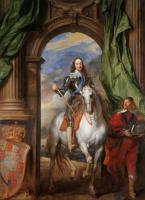

John of Fordun's Chronicle. 24th February 1303. 108. When the aforesaid king [aged 63] had got news of this, he sent off a certain nobleman, Ralph Confrere, his treasurer (Ralph de Manton, the Cofferer), a man stout in battle, and of tried judgment and wisdom, with a certain body of chosen knights, thoroughly well-armed, to seek out, in every hole and corner, those who troubled and disturbed the king's peace, and not to forbear punishing them with the penalty of death. So they entered Scotland, and went about ranging through the land, until they, at Roslyn, pitched their tents, split up into three lines apart, for want of free camping room. But the aforesaid John Comyn [aged 34] and Simon, with their abettors, hearing of their arrival, and wishing to steal a march rather than have one stolen upon them, came briskly through from Biggar to Roslyn, in one night, with some chosen men, who chose rather death before unworthy subjection to the English nation; and, all of a sudden, they fearlessly fell upon the enemy. But having been, a little before, roused by the sentries, all those of the first line seized their weapons, and manfully withstood the attacking foe.
In 1327 Bishop Richard de Bury [aged 39] was appointed Cofferer of the Household.
After 1505 Edward Cheeseman was appointed Cofferer of the Household.
In 1524 Edmund Peckham [aged 29] was appointed Cofferer of the Household to King Henry VIII of England and Ireland [aged 32].
On 9th December 1679 Henry Brouncker 3rd Viscount Brounckner [aged 52] was appointed Cofferer of the Household to King Charles II of England Scotland and Ireland [aged 49].
Jean de Waurin's Chronicle of England Volume 6 Books 3-6: The Wars of the Roses
Jean de Waurin was a French Chronicler, from the Artois region, who was born around 1400, and died around 1474. Waurin’s Chronicle of England, Volume 6, covering the period 1450 to 1471, from which we have selected and translated Chapters relating to the Wars of the Roses, provides a vivid, original, contemporary description of key events some of which he witnessed first-hand, some of which he was told by the key people involved with whom Waurin had a personal relationship.
Available at Amazon in eBook and Paperback format.
John Evelyn's Diary. 12th February 1683. He gave to the Trinity Corporation that land in Deptford [Map] on which are built those almshouses for twenty-four widows of emerited seamen. He was born the famous year of the Gunpowder Treason, in 1605, and being the last [male] of his family, left my wife [aged 48], his only daughter, heir. His grandfather, Sir Richard Browne, was the great instrument under the great Earl of Leicester (favorite to Queen Elizabeth) in his government of the Netherland. He was Master of the Household to King James, and Cofferer; I think was the first who regulated the compositions through England for the King's [aged 52] household, provisions, progresses,49 etc., which was so high a service, and so grateful to the whole nation, that he had acknowledgments and public thanks sent him from all the counties; he died by the rupture of a vein in a vehement speech he made about the compositions in a Parliament of King James. By his mother's side he was a Gunson, Treasurer of the Navy in the reigns of Henry VIII., Queen Mary, and Queen Elizabeth, and, as by his large pedigree appears, related to divers of the English nobility. Thus ended this honorable person, after so many changes and tossings to and fro, in the same house where he was born. "Lord teach us so to number our days, that we may apply our hearts unto wisdom!".


In 1711 Samuel Masham 1st Baron Masham [aged 32] was appointed Cofferer of the Household.
Ralph de Manton was appointed Cofferer of the Household.
In February 1504 Roger Lupton [aged 48] was appointed Provost of Eton College by King Henry VIII [aged 12] which position he held until 1535.
On 24th February 1680 Zachary Crodock [aged 17] was appointed Provost of Eton College.
In 1730 Thomas Marlay [aged 50] was appointed Lord Chief Baron.
In March 1610 Bishop John Bancroft [aged 36] was elected Master of University College unanimously.
In 1870 Haydn Keeton [aged 22] was appointed Organist at Peterborough Cathedral [Map].
In 1542 William Eure 1st Baron Eure [aged 59] was appointed Commander in the North.
In 1645 Bulstrode Whitelocke [aged 39] was appointed Commissioner at Uxbridge during the Treaty of Uxbridge.


Samuel Pepys' Diary. 20th April 1664. Up and by coach to Westminster, and there solicited W. Joyce's business all the morning, and meeting in the Hall with Mr. Coventry [aged 36], he told me how the Committee for Trade have received now all the complaints of the merchants against the Dutch, and were resolved to report very highly the wrongs they have done us (when, God knows! it is only our owne negligence and laziness that hath done us the wrong) and this to be made to the House to-morrow. I went also out of the Hall with Mrs. Lane to the Swan [Map] at Mrs. Herbert's in the Palace Yard to try a couple of bands, and did (though I had a mind to be playing the fool with her) purposely stay but a little while, and kept the door open, and called the master and mistress of the house one after another to drink and talk with me, and showed them both my old and new bands. So that as I did nothing so they are able to bear witness that I had no opportunity there to do anything.
The True Chronicles of Jean le Bel Volume 1 Chapters 1-60 1307-1342
The True Chronicles of Jean le Bel offer one of the most vivid and immediate accounts of 14th-century Europe, written by a knight who lived through the events he describes, and experienced some of them first hand. Covering the early decades of the Hundred Years’ War, this remarkable chronicle follows the campaigns of Edward III of England, the politics of France and the Low Countries, and the shifting alliances that shaped medieval warfare. Unlike later historians, Jean le Bel writes with a strong sense of eyewitness authenticity, drawing on personal experience and the testimony of fellow soldiers. His narrative captures not only battles and sieges, but also the realities of military life, diplomacy, and the ideals of chivalry that governed noble society. A key source for Jean Froissart, Le Bel’s chronicle stands on its own as a compelling and insightful work, at once historical record and literary achievement. This translation builds on the 1905 edition published in French by Jules Viard, adding extensive translations from other sources Rymer's Fœdera, the Chronicles of Adam Murimuth, William Nangis, Walter of Guisborough, a Bourgeois of Valenciennes, Geoffrey le Baker of Swinbroke and Richard Lescot to enrich the original text and Viard's notes.
Available at Amazon in eBook and Paperback format.

Samuel Pepys' Diary. 27th July 1664. Up, and after some discourse with Mr. Duke, who is to be Secretary to the Fishery, and is now Secretary to the Committee for Trade, who I find a very ingenious man, I went to Mr. Povy's [aged 50], and there heard a little of his empty discourse, and fain he would have Mr. Gauden been the victualler for Tangier [Map], which none but a fool would say to me when he knows he hath made it his request to me to get him something of these men that now do it.
Samuel Pepys' Diary. 17th April 1664. I afterwards did without the House fall in company with my Lady Peters, and endeavoured to mollify her; but she told me she would not, to redeem her from hell, do any thing to release him; but would be revenged while she lived, if she lived the age of Methusalem. I made many friends, and so did others. At last it was ordered by the Lords that it should be referred to the Committee of Privileges to consider.
On 8th July 1624 Thomas Vyner 1st Baronet [aged 35] was appointed Comptroller of the Mint by King James I of England and Ireland and VI of Scotland [aged 58].


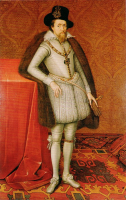

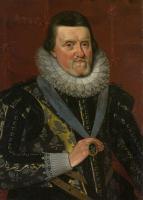

On 28th August 1552 Edward Grimston [aged 44] was appointed Comptroller of Calais.
In June 1668 Hugh May [aged 46] was appointed Comptroller of the King's Works and Clerk to the Recognizances.
In 1754 John Buller [aged 32] was elected MP East Looe and appointed Comptroller of the Mint.

On 15th April 1671 Thomas Allin 1st Baronet [aged 59] was appointed Comptroller of the Navy.
On 28th January 1680 Thomas Hayter Comptroller was appointed Comptroller of the Navy which position he held until 2nd February 1682.
In November 1673 Hugh May [aged 52] was appointed Comptroller of the Works at Windsor Castle.
On 18th February 1516 Queen Mary I of England and Ireland was born to Henry VIII [aged 24] and Catherine of Aragon [aged 30] at Palace of Placentia, Greenwich [Map]. Margaret Bourchier 1st Baroness Bryan [aged 48] was created 1st Baroness Bryan and appointed the child's governess. Catherine York Countess Devon [aged 36] was her godmother. She married 25th July 1554 her first cousin once removed Philip "The Prudent" II King Spain, son of Charles V Holy Roman Emperor and Isabel Aviz Queen Consort Spain.


In 1762 Charlotte Finch nee Fermor [aged 37] was appointed Governess to the Royal Children by King George III of Great Britain and Ireland [aged 23].


Chronicle of Geoffrey le Baker of Swinbroke
Baker was a secular clerk from Swinbroke, now Swinbrook, an Oxfordshire village two miles east of Burford. His Chronicle describes the events of the period 1303-1356: Gaveston, Bannockburn, Boroughbridge, the murder of King Edward II, the Scottish Wars, Sluys, Crécy, the Black Death, Winchelsea and Poitiers. To quote Herbert Bruce 'it possesses a vigorous and characteristic style, and its value for particular events between 1303 and 1356 has been recognised by its editor and by subsequent writers'. The book provides remarkable detail about the events it describes. Baker's text has been augmented with hundreds of notes, including extracts from other contemporary chronicles, such as the Annales Londonienses, Annales Paulini, Murimuth, Lanercost, Avesbury, Guisborough and Froissart to enrich the reader's understanding. The translation takes as its source the 'Chronicon Galfridi le Baker de Swynebroke' published in 1889, edited by Edward Maunde Thompson.
Available at Amazon in eBook and Paperback format.
In 1813 Catherine Anguish Duchess Leeds [aged 48] was appointed Governess to Princess Charlotte Augusta Hanover [aged 16].
In 1551 John Griffith was awarded Bachelor of Civil Law at All Souls College, Oxford University.
On 20th July 1624 Dean Thomas Turner [aged 33] was awarded Bachelor of Divinity.
In 1677 Richard Annesley 3rd Baron Altham [aged 22] graduated Bachelor of Divinity.
On 11th July 1685 Henry Godolphin [aged 36] was awarded Bachelor of Divinity and Doctor of Divinity at All Souls College, Oxford University.
In 1643 John Paulett 2nd Baron Paulett [aged 28] was awarded Doctor of Medicine at Exeter College, Oxford University.
In 1648 Alexander Burnett was awarded Doctor of Medicine at Cambridge University.
In 1502 Margaret Beaufort Countess Richmond [aged 58] founded the Lady Margaret's Professor of Divinity; the oldest professorship at the University of Cambridge.
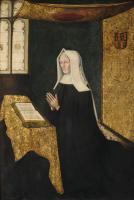

In 1561 Archbishop Matthew Hutton [aged 32] was elected Lady Margaret's Professor of Divinity.
After 21st April 1566 Walter Mildmay [aged 45] was appointed Chancellor of the Exchequer and Auditor of the Duchy of Lancaster.
In 1486 George Stanley 9th Baron Strange Knockin 5th Baron Mohun Dunster [aged 26] was appointed Constable of Wicklow Castle and Chief Justice for the Duchy of Lancaster.
In 1398 John Cockayne [aged 38] was appointed Chief Steward for the Northern Duchy of Lancaster.
On 25th March 1465 John Neville 1st Marquess Montagu [aged 34] was appointed Chief Steward for the Northern Duchy of Lancaster.
On 26th November 1460 John Sharpe of Coggleshall in Essex was appointed Receiver of the Duchy of Lancaster for Norfolk, Suffolk and Cambridgeshire.
In 1716 Thomas Wyndham [aged 30] was appointed Secretary to the Chancellor of the Duchy of Lancaster.
On 16th October 1518 John Sharpe of Coggleshall in Essex was appointed Steward of the Duchy of Lancaster for Norfolk, Suffolk and Cambridgeshire.
In 1727 John Lumley [aged 24] was appointed Equerry to King George III of Great Britain and Ireland.
In 1874 Henry Byng 4th Earl Strafford [aged 42] was appointed Equerry.
In 1893 Derek William George Keppel [aged 29] was appointed Equerry to the Duke of York [aged 27].


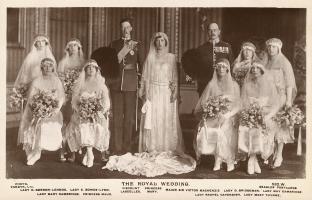

In 1901 Derek William George Keppel [aged 37] was appointed Equerry to the Prince of Wales [aged 35].
The History of William Marshal was commissioned by his son shortly after William’s death in 1219 to celebrate the Marshal’s remarkable life; it is an authentic, contemporary voice. The manuscript was discovered in 1861 by French historian Paul Meyer. Meyer published the manuscript in its original Anglo-French in 1891 in two books. This book is a line by line translation of the first of Meyer’s books; lines 1-10152. Book 1 of the History begins in 1139 and ends in 1194. It describes the events of the Anarchy, the role of William’s father John, John’s marriages, William’s childhood, his role as a hostage at the siege of Newbury, his injury and imprisonment in Poitou where he met Eleanor of Aquitaine and his life as a knight errant. It continues with the accusation against him of an improper relationship with Margaret, wife of Henry the Young King, his exile, and return, the death of Henry the Young King, the rebellion of Richard, the future King Richard I, war with France, the death of King Henry II, and the capture of King Richard, and the rebellion of John, the future King John. It ends with the release of King Richard and the death of John Marshal.
Available at Amazon in eBook and Paperback format.
In 1935 Sidney Herbert 16th Earl of Pembroke, 13th Earl of Montgomery [aged 28] was appointed Equerry to Prince George Windsor 1st Duke Kent [aged 32] which office he held until 1942.
In July 1902 Edmund Byng 6th Earl Strafford [aged 40] was elected Fellow of the Zoological Society of London.
In 1880 George Byng 3rd Earl Strafford [aged 49] was appointed First Civil Service Commissioner.
In 1849 Edward Adolphus Seymour 12th Duke of Somerset [aged 44] was appointed First Commissioner of Woods and Forests.
In August 1851 Edward Adolphus Seymour 12th Duke of Somerset [aged 46] was appointed First Commissioner of Works.
In 1735 Benjamin Mildmay 1st Earl Fitzwalter [aged 62] was appointed to the Privy Council and as First Lord of Trade.
Patent Rolls. 12th December 1461. Westminster Palace [Map]. Grant for life to Richard Wydevill [aged 56], lord of Ryvers, of the office of chief rider of the king's forest of Saucy. co Northampton, with all trees and profits, viz dry trees, dead trees, blown down, old hedges or copice-hedges, boughs fallen without date, cahettels, waifs, strays, pannage of swine, 'derefall wode', 'draenes' brushwood and brambles, prerquisites of courts, swainmote and other issues within the forest, from the time when he had he same by letters patent of Henry VI.
In August 1265 Roger Clifford [aged 50] was appointed Justice of the Forest South of Trent.
Patent Rolls. 7th May 1461. Middleham Castle [Map]. The like (Grant for life) to the said earl [aged 32] of the offices of steward of the manor or lordship of Fekenham, co Worcester, and master forester and rider of the kings forst of Fekenham with the custody of the king's park of Fekenham and the stank there, with the accustomed fees. By other latters patent.

In 1791 John Hoppner [aged 32]. Portrait of Dorothea Bland aka "Mrs Jordan" [aged 29] as Hypolita.
From 1486 Matthew Baker was appointed Governor of Jersey.
In 1665 Thomas Morgan 1st Baronet [aged 34] was made Governor of Jersey, where he repaired the forts and reorganised the militia. In Falle's "Jersey" is a most laudatory account of his diligent government of that island.
Thomas Leighton was appointed Governor of Jersey.
Chronicle of Geoffrey le Baker of Swinbroke
Baker was a secular clerk from Swinbroke, now Swinbrook, an Oxfordshire village two miles east of Burford. His Chronicle describes the events of the period 1303-1356: Gaveston, Bannockburn, Boroughbridge, the murder of King Edward II, the Scottish Wars, Sluys, Crécy, the Black Death, Winchelsea and Poitiers. To quote Herbert Bruce 'it possesses a vigorous and characteristic style, and its value for particular events between 1303 and 1356 has been recognised by its editor and by subsequent writers'. The book provides remarkable detail about the events it describes. Baker's text has been augmented with hundreds of notes, including extracts from other contemporary chronicles, such as the Annales Londonienses, Annales Paulini, Murimuth, Lanercost, Avesbury, Guisborough and Froissart to enrich the reader's understanding. The translation takes as its source the 'Chronicon Galfridi le Baker de Swynebroke' published in 1889, edited by Edward Maunde Thompson.
Available at Amazon in eBook and Paperback format.
John "The Elder" Babington was appointed Grand Master of the Knights of St John.
In 1872 Henry Byng 4th Earl Strafford [aged 40] was appointed Groom in Waiting.
Before 21st March 1751 Baptist Noel 4th Earl Gainsborough [aged 43] was appointed High Steward of Chipping Campden.

In 1743 Thomas Rowney of Dean Farm, Oxfordshire [aged 50] was appointed High Steward of Oxford for life.
In 1781 Thomas Thynne 1st Marquess of Bath [aged 46] was appointed High Steward of Sutton Coldfield.
In 1835 Heneage Finch 5th Earl Aylesford [aged 48] was appointed High Steward of Sutton Coldfield.

In 1670 John Robinson 1st Baronet [aged 54] was appointed Deputy Governor of the Hudson Bay Company.
After May 1672 James Hayes [aged 35] was appointed Deputy Governor of the Hudson Bay Company.
In 1839 Edward Adolphus Seymour 12th Duke of Somerset [aged 34] was appointed Joint Secretary to the Board of Control.
In 1253 Wakelin Arden [aged 33] was appointed Justiciary of Chester.

This is a translation of the 'Memoires of Jacques du Clercq', published in 1823 in two volumes, edited by Frederic, Baron de Reissenberg. In his introduction Reissenberg writes: 'Jacques du Clercq tells us that he was born in 1424, and that he was a licentiate in law and a counsellor to Philip the Good, Duke of Burgundy, in the castellany of Douai, Lille, and Orchies. It appears that he established his residence at Arras. In 1446, he married the daughter of Baldwin de la Lacherie, a gentleman who lived in Lille. We read in the fifth book of his Memoirs that his father, also named Jacques du Clercq, had married a lady of the Le Camelin family, from Compiègne. His ancestors, always attached to the counts of Flanders, had constantly served them, whether in their councils or in their armies.' The Memoires cover a period of nineteen years beginning in in 1448, ending in in 1467. It appears that the author had intended to extend the Memoirs beyond that date; no doubt illness or death prevented him from carrying out this plan. As Reissenberg writes the 'merit of this work lies in the simplicity of its narrative, in its tone of good faith, and in a certain air of frankness which naturally wins the reader’s confidence.' Du Clercq ranges from events of national and international importance, including events of the Wars of the Roses in England, to simple, everyday local events such as marriages, robberies, murders, trials and deaths, including that of his own father in Book 5; one of his last entries.
Available at Amazon in eBook and Paperback format.
On 20th January 1327 Hugh Courtenay 2nd or 10th Earl Devon [aged 23] was appointed Knight Banneret.
In 1337 Thomas Ughtred 1st Baron Ughtred [aged 45] was appointed Knight Banneret.
On 26th August 1346 John Lisle 2nd Baron Lisle [aged 28] was appointed Knight Banneret.
In 1360 John Chandos [aged 40] was created Knight Banneret.
On 17th June 1497 the Cornish rebel army was destroyed at the Battle of Blackheath aka Deptford Bridge.
Richard Guildford [aged 47] was created Knight Banneret.
Edward Stafford 2nd Earl Wiltshire [aged 27], Henry Willoughby [aged 46], Edward Belknapp of Blackfriars in London and Thomas Fiennes 8th Baron Dacre Gilsland [aged 25] fought at Deptford, Kent [Map].
Giles Brugge 6th Baron Chandos [aged 35], John Hussey 1st Baron Hussey of Sleaford [aged 32], Robert Sheffield [aged 36], Edward Stanhope 1462-1487, John Peche [aged 47] and Robert Constable [aged 19] were knighted by King Henry VII of England and Ireland [aged 40].
Thomas West 8th Baron De La Warr 5th Baron West [aged 40] commanded.
James Tuchet 7th Baron Audley, 4th Baron Tuchet [aged 34] was captured by Gruffydd ap Rhys ap Thomas Deheubarth [aged 19].


On 16th August 1513 Henry VIII [aged 22] fought at Thérouanne [Map] during the Battle of the Spurs.
Henry's army included George Talbot 4th Earl of Shrewsbury [aged 45] (commanded), Thomas Grey 2nd Marquess Dorset [aged 36], Thomas Brooke 8th Baron Cobham [aged 43], Henry Bourchier 2nd Earl Essex 3rd Count of Eu, John de Vere 15th Earl of Oxford [aged 42] and Anthony Wingfield [aged 26]. John "Tilbury Jack" Arundell [aged 18], William Compton [aged 31], John Hussey 1st Baron Hussey of Sleaford [aged 48] and William Hussey [aged 41] was knighted by King Henry VII of England and Ireland. Thomas West 8th Baron De La Warr 5th Baron West [aged 56] and Andrew Windsor 1st Baron Windsor [aged 46] was created Knight Banneret.
Louis I d'Orléans Duc de Longueville 1480-1516 was captured.
Arthur Hopton [aged 24] was knighted for his bravery.
In 1514 Thomas Brooke 8th Baron Cobham [aged 44] was appointed Knight Banneret.
In 1662 Thomas Jermyn 2nd Baron Jermyn [aged 28] was appointed Lieutenant Governor of Jersey.
In 1684 Thomas Jermyn 2nd Baron Jermyn [aged 50] was appointed Lieutenant Governor of Jersey.
In 1644 William Jephson [aged 36] was appointed Lieutenant Governor of Portsmouth.
After 17th March 1664 Charles Berkeley 1st Earl Falmouth [aged 34] was appointed Lieutenant Governor of Portsmouth.
In 1682 Henry Slingsby [aged 43] was appointed Lieutenant Governor of Portsmouth.
Tudur ap Gruffudd Mathrafal Lord Gwyddelwern was appointed Lord Gwyddelwern.
In 1290 Owen de la Pole Mathrafal 1st Lord Powis [aged 33] and Joan Corbet Baroness Herbert [aged 27] were married. She by marriage Lord Powis. He the son of Gruffydd ap Gwenwynwyn Mathrafal Prince Powys Wenwynwyn and Hawise Strange Princess Powys Wenwynwyn [aged 48].
Chronicle of Geoffrey le Baker of Swinbroke
Baker was a secular clerk from Swinbroke, now Swinbrook, an Oxfordshire village two miles east of Burford. His Chronicle describes the events of the period 1303-1356: Gaveston, Bannockburn, Boroughbridge, the murder of King Edward II, the Scottish Wars, Sluys, Crécy, the Black Death, Winchelsea and Poitiers. To quote Herbert Bruce 'it possesses a vigorous and characteristic style, and its value for particular events between 1303 and 1356 has been recognised by its editor and by subsequent writers'. The book provides remarkable detail about the events it describes. Baker's text has been augmented with hundreds of notes, including extracts from other contemporary chronicles, such as the Annales Londonienses, Annales Paulini, Murimuth, Lanercost, Avesbury, Guisborough and Froissart to enrich the reader's understanding. The translation takes as its source the 'Chronicon Galfridi le Baker de Swynebroke' published in 1889, edited by Edward Maunde Thompson.
Available at Amazon in eBook and Paperback format.
Around 1293 Owen de la Pole Mathrafal 1st Lord Powis [aged 36] died. His son Griffith succeeded 2nd Lord Powis.
Owen de la Pole Mathrafal 1st Lord Powis was appointed 1st Lord Powis.
In 1500 Richard Bulkeley was appointed Archdeacon Anglesey.
In 1483 Richard Bulkeley was appointed Archdeacon of Merioneth.

In February 1560 Thomas Howard 4th Duke of Norfolk [aged 23] was appointed Lords of the Congregation.
On 24th February 1909 John Spencer Cavendish [aged 33] joined Household Brigade No 2614 EC.
On 5th March 1895 John Spencer Cavendish [aged 19] was initiated to Isaac Newton University No 859 EC.
On 7th August 1909 John Spencer Cavendish [aged 34] joined Northern Nigeria No 3325 EC.
In 1592 Thomas Knyvet 1st Baron Knyvet [aged 47] was appointed Master of Arms.
On 29th September 1917 Tom Cecil Noel [aged 19] was awarded Military Cross.
Chronicle of Walter of Guisborough
A canon regular of the Augustinian Guisborough Priory, Yorkshire, formerly known as The Chronicle of Walter of Hemingburgh, describes the period from 1066 to 1346. Before 1274 the Chronicle is based on other works. Thereafter, the Chronicle is original, and a remarkable source for the events of the time. This book provides a translation of the Chronicle from that date. The Latin source for our translation is the 1849 work edited by Hans Claude Hamilton. Hamilton, in his preface, says: 'In the present work we behold perhaps one of the finest samples of our early chronicles, both as regards the value of the events recorded, and the correctness with which they are detailed; Nor will the pleasing style of composition be lightly passed over by those capable of seeing reflected from it the tokens of a vigorous and cultivated mind, and a favourable specimen of the learning and taste of the age in which it was framed.'
Available at Amazon in eBook and Paperback format.
On 22nd April 1918 Captain William Herbert Gladstone [aged 19] was awarded the Military Cross: For conspicuous gallantry and devotion to duty. When in command of the main attacking party during a raid, he led his party with splendid dash, and on the barrage lifting gauged the right moment to rush the enemy front line. By his prompt action he forestalled the enemy taking the offensive, and rendered possible the unmolested approach of the whole raiding party to hostile lines.
On 26th September 1941 Arthur Valerian Wellesley 8th Duke Wellington [aged 26] was awarded the Military Cross "in recognition of distinguished services in the Middle East (including Egypt, East Africa, The Western Desert, The Sudan, Greece, Crete, Syria and Tobruk) during the period February, 1941, to July, 1941."
On 22nd August 1918 Tom Cecil Noel [aged 20] was killed in action at Westrozebeke, West Flanders. Noel was flying with Latimer when they were shot down by Leutnant Willi Nebgen of Jasta 7. Noel was killed and Latimer was captured. He was awarded a Bar to his Military Cross.
Around November 1762 Augustus Keppel 1st Viscount Keppel [aged 37] was appointed Commander in Chief: Jamaica Station.


On 21st October 1762 Augustus Keppel 1st Viscount Keppel [aged 37] was appointed Rear Admiral.
Richard William Courtenay was appointed Vice Admiral.
In 1691 Henry Hobart 4th Baronet [aged 34] was appointed Vice Admiral: Norfolk.
In 1719 John Hobart 1st Earl Buckinghamshire [aged 25] was appointed Vice Admiral: Norfolk.
In 1555 John Gresham [aged 60] founded as Muscovy Company.
In 1838 William Courtenay 10th Earl Devon [aged 60] was appointed High Steward Oxford University.
This is a translation of the 'Memoires of Jacques du Clercq', published in 1823 in two volumes, edited by Frederic, Baron de Reissenberg. In his introduction Reissenberg writes: 'Jacques du Clercq tells us that he was born in 1424, and that he was a licentiate in law and a counsellor to Philip the Good, Duke of Burgundy, in the castellany of Douai, Lille, and Orchies. It appears that he established his residence at Arras. In 1446, he married the daughter of Baldwin de la Lacherie, a gentleman who lived in Lille. We read in the fifth book of his Memoirs that his father, also named Jacques du Clercq, had married a lady of the Le Camelin family, from Compiègne. His ancestors, always attached to the counts of Flanders, had constantly served them, whether in their councils or in their armies.' The Memoires cover a period of nineteen years beginning in in 1448, ending in in 1467. It appears that the author had intended to extend the Memoirs beyond that date; no doubt illness or death prevented him from carrying out this plan. As Reissenberg writes the 'merit of this work lies in the simplicity of its narrative, in its tone of good faith, and in a certain air of frankness which naturally wins the reader’s confidence.' Du Clercq ranges from events of national and international importance, including events of the Wars of the Roses in England, to simple, everyday local events such as marriages, robberies, murders, trials and deaths, including that of his own father in Book 5; one of his last entries.
Available at Amazon in eBook and Paperback format.
The London Gazette 25183. Whitehall, December 27, 1882. THE Queen has been pleased to grant unto the Reverend Samuel Rolles Driver, M.A., the office and place of Regius Professor of Hebrew in the University of Oxford, together with the place and dignity of a Canon of the Cathedral Church of Christ, in the said University, properly belonging to the Regius Professor of Hebreww in such University, void by the death of Doctor Edward Bouverie Pusey.

In 1747 Humphry Sibtorpe Botanist [aged 34] was appointed Sherardian Professor of Botany which he held until 1783. He is known for having taught one course for thirty-seven years.
Around 1687 Thomas Wentworth 1st Earl Strafford [aged 14] was appointed Page of Honour to Mary of Modena Queen Consort England Scotland and Ireland [aged 28].


In 1739 John Wallop Viscount Lymington [aged 20] was appointed Page of Honour to King George II of Great Britain and Ireland [aged 55].
On 8th November 1739 Bluett Wallop [aged 13] was appoined Page of Honour to King George II of Great Britain and Ireland [aged 56].
In 1840 Henry Byng 4th Earl Strafford [aged 8] was appointed Page of Honour to Queen Victoria of the United Kingdom [aged 20].
In 1668 William Chiffinch [aged 66] was appointed Page of his Majesty's Bedchamber.
In 1865 George Byng 3rd Earl Strafford [aged 34] was appointed Parliamentary Secretary to the Poor Law Board.
In 1682 Charles Fox [aged 21] was appointed Paymaster General to the Forces which office he held solely until 1685.
In 1702 Charles Fox [aged 41] was appointed Paymaster General to the Forces which office he held jointly until 1705.
William of Worcester's Chronicle of England
William of Worcester, born around 1415, and died around 1482 was secretary to John Fastolf, the renowned soldier of the Hundred Years War, during which time he collected documents, letters, and wrote a record of events. Following their return to England in 1440 William was witness to major events. Twice in his chronicle he uses the first person: 1. when writing about the murder of Thomas, 7th Baron Scales, in 1460, he writes '… and I saw him lying naked in the cemetery near the porch of the church of St. Mary Overie in Southwark …' and 2. describing King Edward IV's entry into London in 1461 he writes '… proclaimed that all the people themselves were to recognize and acknowledge Edward as king. I was present and heard this, and immediately went down with them into the city'. William’s Chronicle is rich in detail. It is the source of much information about the Wars of the Roses, including the term 'Diabolical Marriage' to describe the marriage of Queen Elizabeth Woodville’s brother John’s marriage to Katherine, Dowager Duchess of Norfolk, he aged twenty, she sixty-five or more, and the story about a paper crown being placed in mockery on the severed head of Richard, 3rd Duke of York.
Available at Amazon in eBook and Paperback format.
The London Gazette 27865. Privy Council Office, December 18, 1905.
This day, in the presence of the Lord Chancellor, Mr. Richard Knight Causton [aged 62], M.P., was sworn His Majesty's Paymaster-General.
In 1707 Spencer Compton 1st Earl Wilmington [aged 34] was appointed Paymaster of Pensions.
In or after 1743 Thomas Winnington [aged 46] was appointed Paymaster of the Forces which post he held for the remainder of his life.
In 1804 Charles Henry Somerset [aged 36] was appointed Paymaster of the Forces.
In 1807 Charles Henry Somerset [aged 39] was appointed Paymaster of the Forces.

Stephen Fox-Strangways 1st Earl of Ilchester was appointed Paymaster of the Forces.
The Wiltshire Wansdye remains highly visible in the landscape especially when it is crossing chalk downland that has little vegetation to hide it. Its date is somewhat uncertain; most sources consider it to have been constructed around 600AD give or take a hundred years either was. It was definitely constructed before the 9th century when begins to occur in charters.
It appears to start west of Savernake Forest [Map], after which it travels broadly west through Shaw Medieval Village [Map], Furze Hill [Map], Tan Hill, Wiltshire [Map], Shepherd's Shore, Wiltshire [Map], Furze Knoll [Map] after which it disappears, possibly being absorbed into the Roman Road
In 1866 George Byng 3rd Earl Strafford [aged 35] was appointed President of Middlesex County Cricket Club.
In 1877 George Byng 3rd Earl Strafford [aged 46] was appointed President of Middlesex County Cricket Club.
Before 28th March 1898 George Byng 3rd Earl Strafford [aged 68] was appointed President of Middlesex County Cricket Club.
Henrici Quinti, Angliæ Regis, Gesta, is a first-hand account of the Agincourt Campaign, and subsequent events to his death in 1422. The author of the first part was a Chaplain in King Henry's retinue who was present from King Henry's departure at Southampton in 1415, at the siege of Harfleur, the battle of Agincourt, and the celebrations on King Henry's return to London. The second part, by another writer, relates the events that took place including the negotiations at Troye, Henry's marriage and his death in 1422.
Available at Amazon in eBook and Paperback format.
In 1660 Peter Lely [aged 41] was appointed Principal In Ordinary with a stipend of £200 per year.


In 1689 John Riley [aged 43] was appointed Principal In Ordinary jointly with Godfrey Kneller [aged 42].


In 1723 Charles Jervas [aged 48] was appointed Principal In Ordinary.
In 1761 Allan Ramsay [aged 47] was appointed Principal In Ordinary to King George III of Great Britain and Ireland [aged 22]. Due to the workload demanded of him he used numerous assistants including David Martin [aged 23].
Before 1579 Thomas Egerton 1st Viscount Brackley [aged 38] was appointed Queen's Counsel.
Letters of Horace Walpole. 27th July 1752. There are great civil wars in the neighbourhood of Strawberry Hill: Princess Emily [aged 41], who succeeded my brother in the rangership of Richmond Park, has imitated her brother William's [aged 31] unpopularity, and disobliged the whole country, by refusal of tickets and liberties, that had always been allowed. They are at law with her, and have printed in the Evening Post a strong Memorial, which she had refused to receive-.322 The High Sheriff of Surrey, to whom she had denied a ticket, but on better thought had sent one, refused it, and said he had taken his part. Lord Brooke [aged 32]323 who had applied for one, was told he could not have one-and to add to the affront, it was signified. that the Princess had refused one to my Lord Chancellor-your old nobility don't understand such comparisons! But the most remarkable event happened to her about three weeks ago. One Mr. Bird, a rich gentleman near the park, was applied to by the late Queen for a piece of ground that lay convenient for a walk she was making: he replied, it was not proper for him to pretend to make a Queen a present; but if she would do what she pleased with the ground, he would be content with the acknowledgment of a key and two bucks a-year. This was religiously observed till the era of her Royal Highness's reign; the bucks were denied, and he himself once shut out, on pretence it was fence-month (the breeding-time, when tickets used to be excluded, keys never.) The Princess soon after was going through his grounds to town; she found a padlock on his gate; she ordered it to be broke open: Mr. Shaw, her deputy, begged a respite, till he could go for the key. He found Mr. Bird at home-"Lord, Sir! here is a strange mistake; the Princess is at the gate, and it is padlocked!" "Mistake! no mistake at all - I made the road: the ground is my own property: her Royal Highness has thought fit to break the agreement which her Royal Mother made with me: nobody goes through my grounds but those I choose should. Translate this to your Florentinese; try if you can make them conceive how pleasant it is to treat blood royal thus!
There are dissensions of more consequence in the same neighbourhood. The tutorhood at Kew is split into factions: the Bishop of Norwich [aged 50] and Lord Harcourt [aged 38] openly at war with Stone [aged 49] and Scott, who are supported by Cresset [aged 38], and countenanced by the Princess and Murray-so my Lord Bolinbroke dead, will govern, which he never could living! It is believed that the Bishop will be banished into the rich bishopric of Durham, which is just vacant-how pleasant to be punished, after teaching the boys a year, with as much as he could have got if he had taught them twenty! Will they ever expect a peaceable prelate, if untractableness is thus punished?
Note 322. The memorial will be found in the Gentleman's Magazine for this year. In December the park was opened by the King's order.-E.
Note 323. Francis Greville, Earl Brooke.


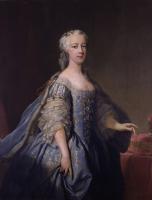


In 1562 Christopher Wray [aged 38] was appointed Reader at Lincoln's Inn at Lincoln's Inn.
Around March 1567 Christopher Wray [aged 43] was appointed Reader at Lincoln's Inn at Lincoln's Inn.
In 1560 Robert Carey [aged 45] served as Recorder Barnstaple.
In 1766 Francis Godolphin 2nd Baron Goldolphin [aged 59] was appointed Recorder Helston.
In 1659 James Hayes [aged 22] was appointed Recorder Marlborough.
In 1532 Thomas Moigne [aged 22] was appointed Recorder of Lincoln.
In September 1742 Owen Brereton aka Salusbury-Brereton [aged 27] was appointed Recorder of Liverpool which office he held for fifty-six years until he died in 1798.
In 1603 Henry Pierrepont [aged 57] was appointed Recorder of Nottingham.
In 1616 Anthony Benn [aged 48] was appointed Recorder of London.

In 1621 Heneage Finch [aged 41] was appointed Recorder of London.
On 18th March 1755 Joseph Yorke 1st Baron Dover [aged 30] was appointed Colonel of the 9th Regiment of Foot Guards.
William of Worcester's Chronicle of England
William of Worcester, born around 1415, and died around 1482 was secretary to John Fastolf, the renowned soldier of the Hundred Years War, during which time he collected documents, letters, and wrote a record of events. Following their return to England in 1440 William was witness to major events. Twice in his chronicle he uses the first person: 1. when writing about the murder of Thomas, 7th Baron Scales, in 1460, he writes '… and I saw him lying naked in the cemetery near the porch of the church of St. Mary Overie in Southwark …' and 2. describing King Edward IV's entry into London in 1461 he writes '… proclaimed that all the people themselves were to recognize and acknowledge Edward as king. I was present and heard this, and immediately went down with them into the city'. William’s Chronicle is rich in detail. It is the source of much information about the Wars of the Roses, including the term 'Diabolical Marriage' to describe the marriage of Queen Elizabeth Woodville’s brother John’s marriage to Katherine, Dowager Duchess of Norfolk, he aged twenty, she sixty-five or more, and the story about a paper crown being placed in mockery on the severed head of Richard, 3rd Duke of York.
Available at Amazon in eBook and Paperback format.
On 17th December 1761 William Keppel [aged 34] was appointed Colonel of the 56th Regiment of Foot.
On 31st May 1765 William Keppel [aged 37] was appointed Colonel of the 14th Regiment of Foot.
On 18th October 1775 William Keppel [aged 47] was appointed Colonel of the 12th Royal Lancers.
In 1661 Edward Hungerford [aged 28] was appointed Lieutenant Colonel.
In 1682 Edward Hungerford [aged 49] was appointed Lieutenant Colonel.
In 1847 Edward Adolphus Seymour 12th Duke of Somerset [aged 42] was appointed Royal Commission on the British Museum.
In 1943 Princess Marina Glücksburg Duchess Kent [aged 36] was appointed Royal National Lifeboat Institution: President.


In 1663 Admiral Arthur Herbert 1st Earl Torrington [aged 15] joined the Royal Navy.
On 15th February 1780 Admiral Joseph Sydney Yorke [aged 11] joined the Royal Navy becoming a midshipman aboard HMS Duke commanded by Sir Charles Douglas. He followed Douglas to his next command HMS Formidable under George Brydges Rodney 1st Baron Rodney [aged 62].
In October 1797 Admiral George Francis Seymour-Conway [aged 10] joined the Royal Navy.
In 1893 Vice Admiral Charles Andrew Fountaine [aged 13] joined the Royal Navy.
Henrici Quinti, Angliæ Regis, Gesta, is a first-hand account of the Agincourt Campaign, and subsequent events to his death in 1422. The author of the first part was a Chaplain in King Henry's retinue who was present from King Henry's departure at Southampton in 1415, at the siege of Harfleur, the battle of Agincourt, and the celebrations on King Henry's return to London. The second part, by another writer, relates the events that took place including the negotiations at Troye, Henry's marriage and his death in 1422.
Available at Amazon in eBook and Paperback format.
Chatham Class were slightly larger and improved versions of the preceding Weymouth Class.
HMS Southampton was a Chatham Class light cruiser laid down on 6th April 1911 and launched on 16th May 1912. It was sold for scrap on 13th July 1926.
On 16th January 1542 Richard Pollard [aged 37] was appointed King's Rememberancer.
Wriothesley's Chronicle [1508-1562]. 16th January 1542. This yeare, the 16th daye of Januarye, 1541 [1542], beganne the Parliament at Westminster, and that daye was masse of the Holy Ghost, the Kinge rydinge from his pallace at Westminster in his Parliament robes, with all his lordes spirituall and temporall in theyr robes, and so rode to the church of St. Petersc; and that daye the Kinge made knightes in the Parliament Chamber, Mr. Robert Southwell, Mr of the Rolles, and Mr. Pollard [aged 37], the King's Rememberancer.
Note c. Westminster Abbey.
In 1711 Samuel Masham 1st Baron Masham [aged 32] was appointed King's Rememberancer.
Gesta Regis Henrici by Benedict of Peterborough. [3rd September 1189] First, the bishops, abbots, and many clerics came, dressed in purple copes, with the cross, candles, and censers preceding them, all the way to the door of the inner chamber. There they received the aforementioned Richard, who was to be crowned, and led him to the church of Westminster up to the altar with a reverent procession and singing in this manner.
At the front, clerics dressed in albs led the procession, carrying holy water, the cross, candles, and censers. Then came the abbots, followed by the bishops. In the midst of them walked four barons [of the Cinque Ports] carrying candlesticks with candles.
After them came John Marshal [aged 44], carrying in his hands two large and heavy spurs from the royal treasury. Next to him walked Geoffrey de Lucy, carrying the royal crown.
After them came two earls, whose names are these: William Marshal [aged 43], Earl of Striguil, and and William, Earl of Salisbury. One of them, namely William Marshal, carried the royal scepter, at the top of which was a golden cross; and the other, namely William, Earl of Salisbury, carried the royal rod, having a dove at its summit.
And after them came six earls and barons carrying a chessboard on which were placed the royal insignia and garments
William [aged 39], Earl of Salisbury. One of them, namely William Marshal, carried the royal sceptre, on the top of which was a golden cross. The other, namely William, Earl of Salisbury, carried the royal rod, which had a dove at its summit.
And after them came three earls, whose names are these: David [aged 37], brother of the King of Scots, Earl of Huntingdon; Robert, Earl of Leicester; and in the midst of them went John [aged 22], Earl of Mortain and Gloucester, carrying three swords with golden scabbards taken from the royal treasury.
And after them went William de Mandeville, Earl of Aumale and Essex, carrying the golden crown in his hands. Then came Richard [aged 31], Duke of Normandy, with Hugh [aged 64], Bishop of Durham, walking on his right, and Reginald, Bishop of Bath, walking on his left, while a silk canopy was carried over them. The entire throng of earls, barons, knights, and others, both clerics and laypeople, followed all the way to the courtyard of the church, and thus into the church up to the altar.
When they arrived at the altar, before the aforementioned archbishops, bishops, abbots, earls, barons, clergy, and people, Duke Richard made these three oaths. Firstly, he swore and vowed before the holy Gospels and the relics of many saints that he would uphold peace, honour, and reverence to God and the Holy Church and its ordained ministers for all the days of his life. Secondly, he swore that he would administer right justice to the people entrusted to him. Thirdly, he swore that he would abolish bad laws and corrupt customs, if any exist in his realm, and would uphold good ones.
Then they stripped him of the garments he had been wearing, except for his shirt and breeches. The shirt was, in fact, torn at the shoulders.
Then they placed upon him sandals adorned with gold.
Then the archbishop handed him the sceptre in his right hand and the royal rod in his left.
In prima fronte præcedebant clerici albis induti, portantes aquam benedictam et crucem et cereos et thuribulos: deinde veniebant abbates; deinde episcopi. In medio autem illorum ibant quatuor barones portantes candelabra cum cereis.
Inprimis venerunt episcopi et abbates et cleric multi induti cappis purpureis, præcedentibus eos cruce, cereis, thuribulis, usque ad ostium thalami interioris. Et ibi receperunt praedictum Ricardum, qui coronandus erat, et duxerunt eum in ecclesiam Westmonasterii usque ad altare cum reverenti processione et cantu in hunc modum.
Post illos veniebat Johannes Marescallus, portans in manibus suis duo calcaria magna et ponderosa de thesauro regis. Juxta illum ibat Godefridus de Luci portans pileum regale.
Post illos veniebant duo comites, quorum hæc sunt nomina; Willelmus Marescallus comes de Striguil, et Willelmus comes de Salesbiria: unus illorum, scilicet Willelmus Marescallus, portans sceptrum regale, in cujus summitate signum crucis aureum erat: et alter, scilicet Willelmus comes de Salesbiria, portans virgam regalem, habentem columbam in summitate.
Et post illos veniebant tres comites, quorum hæc sunt nomina; David frater regis Scotiæ comes de Huntedona, et Robertus comes Leicestriæ, et in medio illorum ibat Johannes comes Meretoni et Gloucestriæ, portantes tres gladios cum vaginis aureis sumptos de thesauro regis.
Et post illos veniebant sex comites et barones portantes unum scaccarium super quod posita erant insignia regalia et vestes.
Et post illos ibat Willelmus de Mandevilla comes de Albemarla et de Exessa, portans coronam auream in manibus suis. Deinde venit Ricardus dux Normanniæ, et Hugo Dunelmensis episcopus a dextris illius ibat, et Eeginaldus Bathoniensis episcopus a sinistris illius ibat, et umbraculum sericum portabatur super illos. Et omnis turba comitum et baronum et militum et aliorum, tarn clericorum quam laicorum, sequebatur usque in atrium ecclesiæ, et sic usque in ecclesiam ad altare.
Cum vero perventum esset ad altare, coram prædictis archiepiscopis et episcopis, abbatibus, comitibus, baronibus, clero et populo, hæc tria fecit Ricardus dux sacramenta. Juravit itaque et vovit coram positis sacrosanctis Evangeliis et plurimorum sanctorum relliquiis, quod pacem et lionorem et reverentiam omnibus diebus vitse suae portabit Deo et Sanctse Ecclesise et ejus ordinatis. Deinde juravit quod rectam justitiam exercebit in populo sibi commisso. Deinde juravit quod leges malas et consuetudines perversas, si aliquse sunt in regno suo, delebit, et bonas custodiet1.
Deinde exuerunt eum vestibus suis quibus indutus fuerat, exceptis camisia et braccis. Camisia vero ilia dissuta erat in scapulis,
Deinde calciaverunt eum sandaliis auro contextis.
Deinde tradidit ei archiepiscopus seeptrum in manu dextera, et virgam regalem in sinistra.
Note 1. [et bonas custodie] Hoveden has here, "et bonas leges conderet et sine fraude et malo ingenio eas custodiret."
On 22nd September 1761 King George III of Great Britain and Ireland [aged 23] was crowned III King Great Britain and Ireland at Westminster Abbey [Map].
Charles Compton 7th Earl of Northampton [aged 24] was the Bearer of the Ivory Rod with the Dove.
William Talbot 1st Earl Talbot [aged 51] was appointed Lord High Steward.
Francis Hastings 10th Earl Huntingdon [aged 32] was the bearer of the Sword of State although the actual Sword of State couldn't be found and the Lord Mayor's Pearl Sword was substituted.
Chronica Majora by Matthew Paris. 20th January 1236. There were assembled at the king's [aged 28] nuptial festivities such a host of nobles of both sexes, such numbers of religious men, such crowds of the populace, and such a variety of actors, that London, with its capacious bosom, could scarcely contain them. The whole city was ornamented with flags and banners, chaplets and hangings, candles and lamps, and with wonderful devices and extraordinary representations, and all the roads were cleansed from mud and dirt, sticks, and everything offensive. The citizens, too, went out to meet the king and queen [aged 13], dressed out in their ornaments, and vied with each other in trying the speed of their horses. On the same day, when they left the city for Westminster, to perform the duties of butler to the king (which office belonged to them by right of old, at the coronation), they proceeded thither dressed in silk garments, with mantles worked in gold, and with costly changes of raiment, mounted on valuable horses, glittering with new bits and saddles, and riding in troops arranged in order. They carried with them three hundred and sixty gold and silver cups, preceded by the king's trumpeters and with horns sounding, so that such a wonderful novelty struck all who beheld it with astonishment. The archbishop of Canterbury [aged 61], by the right especially belonging to him, performed the duty of crowning, with the usual solemnities, the bishop of London assisting him as a dean, the other bishops taking their stations according to their rank. In the same way all the abbats, at the head of whom, as was his right, was the abbat of St. Alban's (for as the Protomartyr of England, St. Alban, was the chief of all the martyrs of England, so also was his abbat the chief of all the abbats in rank and dignity), as the authentic privileges of that church set forth. The nobles, too, performed the duties, which, by ancient right and custom, pertained to them at the coronations of kings. In like manner some of the inhabitants of certain cities discharged certain duties which belonged to them by right of their ancestors. The earl of Chester [aged 29] carried the sword of St. Edward, which was called "Curtein", before the king, as a sign that he was earl of the palace, and had by right the power of restraining the king if he should commit an error. The earl was attended by the constable of Chester [aged 44], and kept the people away with a wand when they pressed forward in a disorderly way. The grand marshal of England, the earl of Pembroke [aged 39], carried a wand before the king and cleared the way before him both, in the church and in the banquet-hall, and arranged the banquet and the guests at table. The Wardens of the Cinque Ports carried the pall over the king, supported by four spears, but the claim to this duty was not altogether undisputed. The earl of Leicester [aged 28] supplied the king with water in basins to wash before his meal; the Earl Warrenne performed the duty of king's Cupbearer, supplying the place of the earl of Arundel, because the latter was a youth and not as yet made a belted knight. Master Michael Belet was butler ex officio; the earl of Hereford [aged 32] performed the duties of marshal of the king's household, and William Beauchamp [aged 51] held the station of almoner. The justiciary of the forests arranged the drinking cups on the table at the king's right hand, although he met with some opposition, which however fell to the ground. The citizens of London passed the wine about in all directions, in costly cups, and those of Winchester superintended the cooking of the feast; the rest, according to the ancient statutes, filled their separate stations, or made their claims to do so. And in order that the nuptial festivities might not be clouded by any disputes, saving the right of any one, many things were put up with for the time which they left for decision at a more favourable opportunity. The office of chancellor of England, and all the offices connected with the king, are ordained and assized in the Exchequer. Therefore the chancellor, the chamberlain, the marshal, and the constable, by right of their office, took their seats there, as also did the barons, according to the date of their creation, in the city of London, whereby they each knew his own place. The ceremony was splendid, with the gay dresses of the clergy and knights who were present. The abbat of Westminster sprinkled the holy water, and the treasurer, acting the part of sub-dean, carried the Paten. Why should I describe all those persons who reverently ministered in the church to God as was their duty? Why describe the abundance of meats and dishes on the table & the quantity of venison, the variety of fish, the joyous sounds of the glee-men, and the gaiety of the waiters? Whatever the world could afford to create pleasure and magnificence was there brought together from every quarter.
On 25th February 1308 King Edward II of England [aged 23] was crowned II King of England at Westminster Abbey [Map] by Henry Woodlock, Bishop of Winchester. Isabella of France Queen Consort England [aged 13] was crowned Queen Consort England.
Piers Gaveston 1st Earl Cornwall [aged 24] carried the Royal Crown.
William Marshal 1st Baron Marshal [aged 30] carried the Gilt Spurs.
Humphrey Bohun 4th Earl Hereford 3rd Earl Essex [aged 32] carried the Royal Sceptre.
Edmund Fitzalan 2nd or 9th Earl of Arundel [aged 22] was Chief Butler, a heriditary office.
Henry Plantagenet 3rd Earl of Leicester 3rd Earl Lancaster [aged 27] carried the Royal Rod.
Thomas Plantagenet 2nd Earl of Leicester, 2nd Earl Lancaster, Earl of Salisbury and Lincoln [aged 30] carried the sword Curtana.
Roger Mortimer 1st Earl March [aged 20] carried the table bearing the Royal Robes.
Thomas Grey [aged 28] and Robert Fitzwalter 1st Baron Fitzwalter [aged 61] attended.
On 13th October 1399 King Henry IV of England [aged 32] was crowned IV King of England at Westminster Abbey [Map]. Archbishop Thomas Fitzalan aka Arundel [aged 46] officiated. Bishop Robert Braybrooke carried the sacraments and said mass.
The future King Henry V of England [aged 13] carried the Sword Curtana. Thomas Beauchamp 12th Earl Warwick [aged 61] and/or John Beaufort 1st Marquess Somerset and Dorset [aged 26] carried a sword wrapped in red and bound with golden straps symbolising two-fold mercy. Henry Percy 1st Earl of Northumberland [aged 57] carried the Lancaster Sword.
Thomas Percy 1st Earl of Worcester [aged 56] carried the Steward's baton. Thomas Erpingham [aged 44] carried a Sword.
Edmund Stafford 5th Earl Stafford [aged 21] was appointed Knight of the Bath. John Lancaster 1st Duke Bedford [aged 10], John Arundell [aged 33] and Richard Beauchamp 13th Earl Warwick [aged 17] were knighted.
Archbishop Richard Scrope [aged 49] attended.


On 16th August 1355 Philippa Plantagenet Countess March 2nd Countess Ulster was born to Lionel of Antwerp 1st Duke of Clarence [aged 16] and Elizabeth Burgh Duchess of Clarence [aged 23] at Eltham Palace, Kent [Map]. At the time of her birth she was Heir to the Throne of England since her uncle Edward "Black Prince" [aged 25] was yet to be married. She a granddaughter of King Edward III of England. Coefficient of inbreeding 2.22%. She married 24th August 1369 her fourth cousin Edmund Mortimer 3rd Earl March, Earl of Ulster, son of Roger Mortimer 2nd Earl March and Philippa Montagu Countess March, and had issue.
On 6th January 1367 King Richard II of England was born to Edward "Black Prince" [aged 36] and Joan "Fair Maid of Kent" Princess Wales [aged 38] at Bordeaux [Map]. He became the Heir to the Throne of England. See Froissart, 560. He a grandson of King Edward III of England. Coefficient of inbreeding 3.42%. He married (1) 20th January 1382 his fourth cousin Anne of Bohemia Queen Consort England, daughter of Charles IV King Bohemia Holy Roman Emperor Luxemburg and Elizabeth Pomerania Holy Roman Empress Luxemburg (2) 4th November 1396 his half third cousin Isabella Valois Queen Consort England.

On 8th June 1376 Edward "Black Prince" [aged 45] died of dysentery at Westminster Palace [Map]. He was buried in Canterbury Cathedral [Map]. His son Richard [aged 9] succeeded as heir to his grandfather King Edward III of England [aged 63] who died a year later.
On 5th January 1382 Philippa Plantagenet Countess March 2nd Countess Ulster [aged 26] died at Cork [Map]. She was buried at Wigmore, Herefordshire [Map]. Her son Roger [aged 7] succeeded Heir to the Throne of England, 6th Earl of Ulster
On 20th July 1398 Roger Mortimer 4th Earl March 3rd Earl of Ulster [aged 24] died at Kells, County Meath. He was buried at Wigmore Abbey [Map]. His son Edmund [aged 6] succeeded Heir to the Throne of England, 5th Earl March, 4th Earl of Ulster, 7th Baron Mortimer of Wigmore.
On 14th February 1400 (exact date not known) King Richard II [aged 33] died at Pontefract Castle [Map] where he had been imprisoned three months before; possibly murdered, possibly starved to death. His death was a consequence of the Epiphany Rising; he was still considered a threat.
Edmund Mortimer 5th Earl March 7th Earl of Ulster [aged 8] de jure Heir to the Throne of England since he was descended from Philippa Plantagenet Countess March 2nd Countess Ulster the daughter of Lionel of Antwerp 1st Duke of Clarence. The new King Henry IV [aged 32] ignored his claim. Edmund Mortimer 5th Earl March 7th Earl of Ulster and his brother Roger Mortimer [aged 6] were imprisoned in Windsor and Berkhamstead castles respectively; they were treated well.
On 17th February 1400 Richard's corpse was displayed at St Paul's Cathedral [Map].
On 6th March 1400 Richard's remains were buried at King's Langley Priory, Hertfordshire [Map].
In May 1406 Richard of Conisbrough 1st Earl Cambridge [aged 20] and Anne Mortimer [aged 15] were married. The marriage apparently took place in secret possibly because she was a descendant of King Edward III of England although she wasn't at the time Heir to the Throne of England although their issue would become so. She died five years later. The suspected false paternity has no effect on the claim of the House of York since it is Richard's wife Ann Mortimer who passes claim to her children. She the daughter of Roger Mortimer 4th Earl March 3rd Earl of Ulster and Eleanor Holland Countess March and Ulster. He the son of Edmund of Langley 1st Duke of York and Isabella of Castile Duchess York. They were first cousin twice removed. He a grandson of King Edward III of England. She a great x 2 granddaughter of King Edward III of England.

Chronicle of a Bourgeois of Valenciennes
Récits d’un bourgeois de Valenciennes aka The Chronicle of a Bourgeois of Valenciennes is a vivid 14th-century vernacular chronicle written by an anonymous urban chronicler from Valenciennes in the County of Hainaut. It survives in a manuscript that describes local and regional history from about 1253 to 1366, blending chronology, narrative episodes, and eyewitness-style accounts of political, military, and social events in medieval France, Flanders, and the Low Countries. The work begins with a chronological framework of events affecting Valenciennes and its region under rulers such as King Philip VI of France and the shifting allegiances of local nobility. It includes accounts of conflicts, sieges, diplomatic manoeuvres, and the impact of broader struggles like the Hundred Years’ War on urban life in Hainaut. Written from the perspective of a burgher (bourgeois) rather than a monastery or royal court, the chronicle offers a rare lay viewpoint on high politics and warfare, reflecting how merchants, townspeople, and civic institutions experienced the turbulence of the 13th and 14th centuries. Its narrative style combines straightforward reporting of events with moral and civic observations, making it a valuable source for readers interested in medieval urban society, regional politics, and the lived experience of war and governance in pre-modern Europe.
Available at Amazon in eBook and Paperback format.
In 1240 Dafydd ap Llewellyn Prince of Wales [aged 27] was created Prince of Wales. Isabella "Lady of Snowdon" Braose Princess Wales [aged 18] by marriage Princess of Wales.
On 13th December 1470 Edward of Westminster Prince of Wales [aged 17] and Anne Neville Queen Consort England [aged 14] were married at Angers Cathedral [Map]. She by marriage Princess of Wales. She the daughter of Richard "Kingmaker" Neville Earl Warwick, 6th Earl Salisbury [aged 42] and Anne Beauchamp 16th Countess Warwick [aged 44]. He the son of King Henry VI of England and II of France [aged 49] and Margaret of Anjou Queen Consort England [aged 40]. They were half third cousins. She a great x 3 granddaughter of King Edward III of England.
Before 24th June 1333 Robert Parning was appointed King's Serjeant.
On 21st April 1458 Thomas Billing was appointed King's Serjeant.
In 1481 Roger Townshend [aged 56] was appointed King's Serjeant.
In 1504 Robert Brudenell [aged 43] was appointed King's Serjeant.
In 1543 Robert Townshend was appointed King's Serjeant.
On 20th February 1625 Thomas Richardson [aged 56] was appointed King's Serjeant.
Edmund Knyvet Baron Berners was appointed Sarjeant Porter.
Before 16th August 1512 Thomas Fogge [aged 42] was appointed Sarjeant Porter of Calais.
In 1513 David Cecil [aged 53] was appointed Sarjeant at Arms.

Anne Boleyn. Her Life as told by Lancelot de Carle's 1536 Letter.
In 1536, two weeks after the execution of Anne Boleyn, her brother George and four others, Lancelot du Carle, wrote an extraordinary letter that described Anne's life, and her trial and execution, to which he was a witness. This book presents a new translation of that letter, with additional material from other contemporary sources such as Letters, Hall's and Wriothesley's Chronicles, the pamphlets of Wynkyn the Worde, the Memorial of George Constantyne, the Portuguese Letter and the Baga de Secrets, all of which are provided in Appendices.
Available at Amazon in eBook and Paperback format.
In 1480 Bishop Oliver King [aged 48] was appointed Secretary to King Edward IV of England [aged 37].
Around 1596 Thomas Aylesbury 1st Baronet [aged 20] was appointed Secretary to Charles Howard 1st Earl Nottingham [aged 60].


In 1662 John Creed of Oundle in Cambridgeshire was appointed Secretary to the Committee of Tangier.
Before 1668 James Hayes [aged 30] was appointed Secretary to Prince Rupert Palatinate Simmern 1st Duke Cumberland [aged 48].

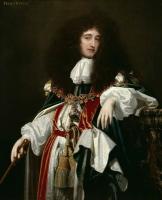
John Evelyn's Diary. 30th November 1672. I was chosen Secretary to the Royal Society.
In 1544 Maurice Berkeley [aged 38] was appointed Chief Banner Bearer of England succeeding his elder brother John Berkeley [aged 38].
Ralph Egerton was appointed Standard Bearer.
In 1871 Poulett George Henry Somerset [aged 48] was appointed Steward of the Chiltern Hundreds.
Patent Rolls. 8th May 1461. York [Map]. Grant for life to William Herbert [aged 38], knight, of the offices of office of chief justice and chamberlain of South Wales, steward of the commontes in the counties of Caermarthen and Cardigan, and chief forester in those counties (Carmarthenshire,Cardiganshire).
Patent Rolls. 8th May 1461. York [Map]. Grant for life to William Herbert [aged 38], knight, of the offices of office of chief justice and chamberlain of South Wales, steward of the commontes in the counties of Caermarthen and Cardigan, and chief forester in those counties (Carmarthenshire,Cardiganshire).
The History of William Marshal was commissioned by his son shortly after William’s death in 1219 to celebrate the Marshal’s remarkable life; it is an authentic, contemporary voice. The manuscript was discovered in 1861 by French historian Paul Meyer. Meyer published the manuscript in its original Anglo-French in 1891 in two books. This book is a line by line translation of the first of Meyer’s books; lines 1-10152. Book 1 of the History begins in 1139 and ends in 1194. It describes the events of the Anarchy, the role of William’s father John, John’s marriages, William’s childhood, his role as a hostage at the siege of Newbury, his injury and imprisonment in Poitou where he met Eleanor of Aquitaine and his life as a knight errant. It continues with the accusation against him of an improper relationship with Margaret, wife of Henry the Young King, his exile, and return, the death of Henry the Young King, the rebellion of Richard, the future King Richard I, war with France, the death of King Henry II, and the capture of King Richard, and the rebellion of John, the future King John. It ends with the release of King Richard and the death of John Marshal.
Available at Amazon in eBook and Paperback format.
In 1459 John Neville 1st Marquess Montagu [aged 28] was appointed Steward of the Honour of Pontefract.
Patent Rolls. 7th May 1461. Middleham Castle [Map]. The like (Grant for life) to the said earl [aged 32] of the offices of steward of the manor or lordship of Fekenham, co Worcester, and master forester and rider of the kings forst of Fekenham with the custody of the king's park of Fekenham and the stank there, with the accustomed fees. By other latters patent.
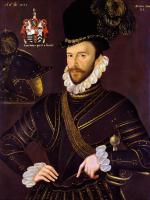
In 1590 Richard Drake [aged 55] was appointed Steward of the Manor of Woking.
In 1589 Richard Drake [aged 54] was appointed Surveyor of Game in Woking Park.
In 1578 Thomas Blagrave was appointed Surveyor of the Queen's Works which post he held until 1590.
On 4th March 1675 John Flamsteed [aged 28] was appointed The King's Astronomical Observator with an allowance of £100 a year.
In 1566 Christopher Wray [aged 42] was appointed Treasurer of Lincoln's Inn at Lincoln's Inn.
In 1871 George Byng 3rd Earl Strafford [aged 40] was appointed Under Secretary of State for Foreign Affairs.
In 1880 George Byng 3rd Earl Strafford [aged 49] was appointed Under Secretary of State for India.
In June 1841 Edward Adolphus Seymour 12th Duke of Somerset [aged 36] was appointed Under Secretary of State for the Home Department.

Chronicle of Abbot Ralph of Coggeshall
The Chronicle of Abbot Ralph of Coggeshall (Chronicon Anglicanum) is an indispensable medieval history that brings to life centuries of English and European affairs through the eyes of a learned Cistercian monk. Ralph of Coggeshall, abbot of the Abbey of Coggeshall in Essex in the early 13th century, continued and expanded his community’s chronicle, documenting events from the Norman Conquest of 1066 into the tumultuous reign of King Henry III. Blending eyewitness testimony, careful compilation, and the monastic commitment to record-keeping, this chronicle offers a rare narrative of political intrigue, royal power struggles, and social upheaval in England and beyond. Ralph’s work captures the reigns of pivotal figures such as Richard I and King John, providing invaluable insights into their characters, decisions, and the forces that shaped medieval rule. More than a simple annal, Chronicon Anglicanum conveys the texture of medieval life and governance, making it a rich source for scholars and readers fascinated by English history, monastic authorship, and the shaping of the medieval world.
Available at Amazon in eBook and Paperback format.
In 1554 Bishop William Glynne [aged 50] was elected Vice-Chancellor of Cambridge University.
In 1640 Bishop John Cosins [aged 45] was appointed Vice-Chancellor of Cambridge University of Cambridge University.
In 1552 Bishop James Brooks [aged 39] was appointed Vice-Chancellor of Oxford University whic position he held until 1553.
In Bishop Richard Fitzjames was appointed Vice-Chancellor of Oxford University.
In 1897 Henry Byng 4th Earl Strafford [aged 65] was appointed Knight Commander of the Victorian Order.
In 1945 Sidney Herbert 16th Earl of Pembroke, 13th Earl of Montgomery [aged 38] was appointed Knight Commander of the Victorian Order.
In 1997 Bishop John Bernard Taylor [aged 67] was appointed Knight Commander of the Victorian Order.
In 1737 Baptist Noel 4th Earl Gainsborough [aged 29] was appointed Warden and Chief Ranger of Lyfield Forest.
In 1506 David Cecil [aged 46] was appointed Yeoman of the Chamber.